
Salads
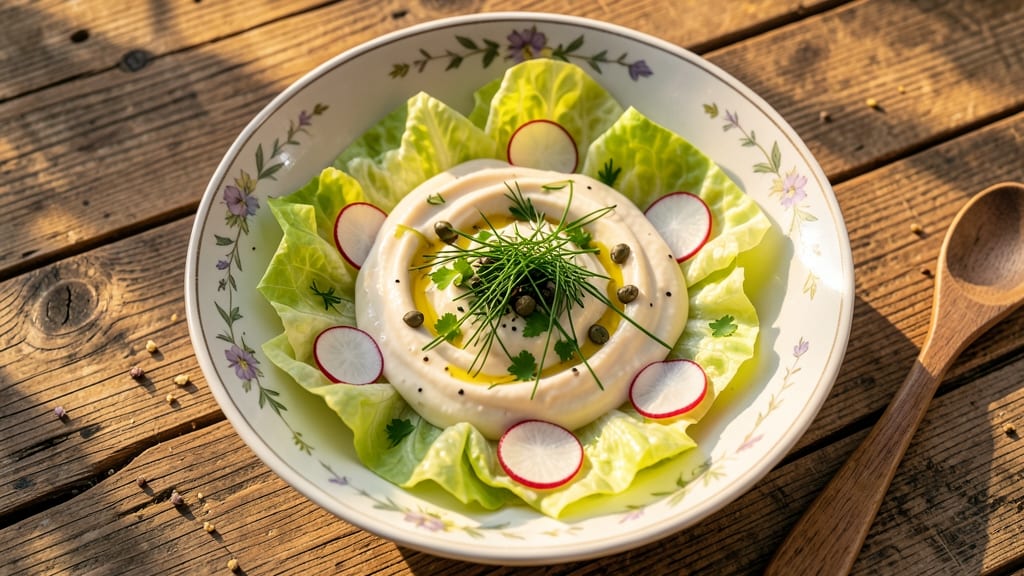
This 1903 salad recipe transports you to the elegant dinner tables of the early 1900s with its herb-infused cream cheese and crisp vegetables. The dish reflects the refined dining culture of the era, where salads were carefully crafted to complement hearty main courses while showcasing fresh, seasonal ingredients.
What makes this recipe special is its balance of textures—crunchy vegetables, creamy herb dressing, and delicate protein options that were common in vintage menus.
The centerpiece of this salad is a rich, herb-infused cream cheese dressing that binds the ingredients together with a subtle tang. Historical records suggest that early 20th-century salads often included proteins like poached eggs, shredded chicken, or even delicate slices of ham, all served chilled to preserve freshness.
This version stays true to those traditions while offering modern flexibility in protein choices.
By recreating this dish, you’ll achieve a salad that’s as visually striking as it is flavorful—think crisp lettuce, vibrant herbs, and a creamy dressing that clings to every bite.
The presentation would have been just as important in 1903 as it is today, with careful attention to garnishes and plating to elevate the dining experience.
Perfect for historical reenactments, vintage-themed dinners, or simply as a nostalgic twist on a classic salad. The recipe delivers authenticity without sacrificing modern convenience, making it ideal for both culinary enthusiasts and those who appreciate a taste of the past.
Ingredients for 1903 salad
Elegant 1903 ingredients blend crisp vegetables, herb-infused cream cheese, and delicate proteins for vintage dining perfection.
| Ingredient | Amount | Notes |
|---|---|---|
| Cream Cheese 🧀 | 8 oz | Full-fat, room temperature |
| Fresh Chives 🌿 | ¼ cup | Finely chopped, stems removed |
| Fresh Dill 🌿 | ¼ cup | Finely chopped, packed |
| Fresh Parsley 🌿 | ¼ cup | Finely chopped, flat-leaf preferred |
| Lemon Juice 🍋 | 2 tbsp | Freshly squeezed, strained |
| Extra-Virgin Olive Oil 🫒 | ½ cup | High-quality, fruity variety |
| Diamond Crystal Kosher Salt 🧂 | ½ tsp | Fine grain preferred |
| Fresh Iceberg Lettuce 🥬 | 1 head | Crisp, outer leaves removed |
| Red Bell Pepper 🍅 | 1 whole | Thinly sliced, seeds removed |
| Celery Stalks 🥬 | 3 whole | Thinly sliced on bias |
| Hard-Boiled Eggs 🥚 | 4 whole | Peeled, halved lengthwise |
| Shredded Chicken Breast 🍗 | 1 ½ cups | Poached, skinless, boneless |
| Crispy Bacon 🥓 | 4 oz | Chopped, smoked variety |
| Toasted Walnuts 🥜 | ½ cup | Chopped, light browned |
| Mayonnaise 🥄 | ¼ cup | High-quality, for garnish |
The cream cheese is the foundation—full-fat, room-temperature ensures smooth blending. Whole Foods Market or specialty dairy counters carry the highest-quality blocks, but any Philadelphia brand works in a pinch. Fresh herbs are non-negotiable here; chives, dill, and parsley should be bright green with no wilting. For the vegetables, iceberg lettuce provides the signature crunch—avoid pre-washed bags that lose crispness. The red bell pepper should be firm with vibrant color, and celery should snap when broken. Historical records suggest early 20th-century salads emphasized freshness, so day-of-preparation ingredients yield the best texture.
No fresh dill? Substitute with 1 tbsp dried dill but reduce to one-third the amount—it's more potent. Short on walnuts? Pecans or almonds work equally well when toasted. The shredded chicken can be swapped for poached salmon or smoked turkey breast to maintain vintage protein options. For the bacon, avoid pre-cooked varieties—they lack the smoky depth. The mayonnaise garnish is optional but adds that period-accurate finishing touch. If you're recreating this for a historical event, use authentic period garnishes like paprika or grated hard-boiled egg whites instead of modern toppings.
Store the herb-infused cream cheese dressing in an airtight container with parchment paper pressed against the surface to prevent a skin from forming—keeps for up to 5 days in the fridge. The hard-boiled eggs should be refrigerated in their shells until ready to use, then peeled and halved. Prep the vegetables just before serving to maintain crispness. This salad reheats poorly, so plan to assemble it fresh for optimal texture. For historical reenactments, serve on chilled glass platters with silver serving utensils to fully capture the 1903 dining experience.
Why You'll Love This Recipe
- Five-Ingredient Magic: I swear, this salad comes together faster than I can say "forgot to shop for dinner." Just mix the cream cheese with lemon juice until it’s silky, then fold in those bright herbs—chives, dill, parsley—like you’re giving the bowl a hug. No chopping, no fuss, and honestly? It’s the kind of recipe that makes me feel like a genius when my kids ask, "What’s for dinner?" and I say, "I’ll be right back."
- Bright & Tangy Kick: That lemon juice cutting through the cream cheese? Chef’s kiss. It’s not just creamy—it’s bright, it’s zesty, it’s the kind of flavor that makes you want to eat it straight from the bowl (no judgment here). The herbs add this fresh, almost herby punch that keeps it from being too rich, and between us, it’s the perfect balance of cool and tangy that I crave after a long day.
- Picnic to Potluck: Here’s what sold me—this salad is everywhere. Pack it in a jar for lunch, bring it to a BBQ as a side, or serve it with smoked salmon for a fancy brunch. I’ve even used it as a dip for crackers when I’m too tired to cook. It’s that kind of reliable, and the best part? It doesn’t wilt or get soggy, so it’s my go-to for meal prep when I need something that’ll still taste good three days later.
Step-by-step instructions for vintage herb-infused cream cheese salad
Assemble this classic 1903-inspired salad with precise technique for perfect texture and flavor balance.
Prepare the Herb-Infused Cream Cheese Dressing
In a medium mixing bowl, combine the 8 oz cream cheese with the 0.5 cup extra-virgin olive oil and 2 tbsp lemon juice. Use a hand mixer or whisk until completely smooth and fully emulsified, about 2-3 minutes. This creates the base for our signature dressing.
Add the 0.25 cup finely chopped fresh chives, 0.25 cup fresh dill, and 0.25 cup fresh parsley to the mixture. Mix thoroughly until the herbs are evenly distributed throughout the dressing. Taste and adjust seasoning with the 0.5 tsp Diamond Crystal kosher salt as needed. The dressing should be tangy, herby, and perfectly balanced.
Assemble the Salad Base and Protein Components
Begin by rinsing the 1 head fresh iceberg lettuce thoroughly and drying it completely with paper towels. Remove any wilted outer leaves and tear the lettuce into bite-sized pieces, placing them in a large serving bowl. This crisp base will provide the perfect contrast to the rich cream cheese dressing.
Add the 1.5 cups shredded chicken breast and 4 oz chopped crispy bacon to the lettuce. Distribute the 0.5 cup toasted walnuts evenly throughout the salad. These components should be spread out to ensure each bite contains a mix of textures and flavors - the tender chicken, crispy bacon, and crunchy walnuts.
Add Vegetable Elements and Garnish
Thinly slice the 1 whole red bell pepper and 3 whole celery stalks on a bias cut for maximum surface area. Add these to the salad bowl and gently toss everything together. The vegetables should be distributed evenly throughout the base and protein components.
Halve the 4 whole hard-boiled eggs lengthwise and arrange them on top of the salad just before serving. This presentation not only looks elegant but also ensures the eggs remain perfectly cooked. Drizzle the salad with the remaining herb-infused cream cheese dressing just before serving to maintain its fresh texture.
Final Presentation and Garnishing
Carefully spoon the herb-infused cream cheese dressing over the assembled salad, being mindful not to over-saturate the lettuce. The dressing should coat the ingredients lightly, enhancing their flavors without making them soggy. Use a spoon to create an attractive pattern on the surface.
Finish the salad by drizzling a small amount of the 0.25 cup mayonnaise around the edges of the serving dish. This adds a final touch of richness while maintaining the vintage aesthetic. Serve immediately to enjoy the perfect balance of textures and flavors in this classic 1903-inspired salad.
Pro Tips For Making 1903 Salad
- SOFTEN THE CHEESE FIRST: Let the cream cheese sit at room temperature for 15–20 minutes before mixing—it blends smoother and won’t turn grainy, especially if you’re using cold ingredients straight from the fridge.
- CHOP HERBS IN STAGES: Slice the chives and parsley fine, but hold off on the dill until the last second—its flavor fades fast, and you’ll save yourself from wilted bits if you toss it in too early.
- LEMON JUICE ISN’T JUST FLAVOR: Add it gradually while mixing, not all at once—this keeps the texture creamy, not broken, and lets you taste as you go (I’ve ruined batches by dumping it all in at the start).
- USE A FINE MESH STRAINER: If you’re blending the herbs, strain out excess moisture before mixing into the cheese—wet herbs dilute the dressing and turn it into a sad, watery paste. Trust me, it’s worth the extra 30 seconds.
Troubleshooting perfect results
Lettuce Too Soggy?
If your iceberg lettuce loses its crispness, it’s likely from over-mixing or dressing too early. Tear the lettuce just before assembling and keep the herb-infused cream cheese dressing separate until the very end.
Add it in a light drizzle—never pour it over the salad. For extra crunch, chill the lettuce in the fridge for 30 minutes before serving. 🥬
Dressing Separates?
The dressing may split if the cream cheese isn’t fully room temperature or if you add herbs too quickly. Beat the cream cheese and olive oil together for at least 2 minutes until completely smooth, then slowly incorporate the lemon juice and herbs.
If it still separates, whisk in 1 tsp cold water to help emulsify. Store leftovers in an airtight container with plastic wrap pressed directly on the surface to prevent a skin from forming. ❄️
Eggs Too Dry?
Overcooked hard-boiled eggs can turn rubbery. Poach them for exactly 6 minutes in simmering water (not boiling) for perfect doneness. To keep them moist, place them in an ice bath immediately after cooking, then refrigerate in their shells until ready to use.
Peel and halve just before serving to maintain texture. For extra richness, brush the cut sides with a tiny bit of mayonnaise before arranging on the salad. 🥚
Herbs Too Strong?
Fresh herbs can overpower if not balanced. Start with half the recommended amount and adjust to taste. If using dried herbs, reduce to one-third the fresh amount—they’re much more concentrated.
For a milder flavor, blend the herbs into the dressing and let it sit for 10 minutes before mixing with the salad. This allows the flavors to meld subtly. 🌿
Protein Too Dry?
Shredded chicken or bacon can dry out if cooked too long. For chicken, poach in simmering (not boiling) water for 12-15 minutes, then shred while still warm. For bacon, cook until just crispy (about 8-10 minutes) and chop immediately.
Store proteins separately in the fridge and add them to the salad right before serving to keep them moist. 🍗
Walnuts Too Bitter?
Toast walnuts at 350°F for 5-7 minutes until fragrant and lightly browned. Avoid burning them, which makes them taste bitter. For a smoother flavor, pulse them briefly in a food processor before chopping.
If you prefer a sweeter note, lightly toast them with ½ tsp brown sugar and a pinch of salt. 🥜
Nutrition facts
Frequently asked questions
What makes this salad different from modern salads?
This 1903-inspired salad stands out with its herb-infused cream cheese dressing, a hallmark of early 1900s cuisine that added richness without overwhelming the fresh vegetables. Unlike today's salads, it often included hard-boiled eggs and bacon as protein staples, reflecting the era's preference for balanced, protein-forward dishes. The presentation also emphasized elegance—think layered textures and careful garnishing.
Can I make this salad ahead of time?
Yes, but strategically! Prep the herb dressing and chop all veggies 1 day ahead—store them separately in airtight containers. Keep the hard-boiled eggs refrigerated in their shells until serving. Assemble the salad just before eating to maintain crispness. The dressing can be made 2 days ahead if stored properly with plastic wrap pressed on the surface.
What’s the best way to serve this vintage salad?
For authenticity, serve on a chilled glass platter with silver serving utensils—a common practice in 1903 dining. Garnish with a drizzle of mayonnaise around the edges and a sprinkle of paprika for a period touch. Pair it with crusty bread or a light soup to mimic early 20th-century meal pairings. The salad was designed to complement hearty main courses, not replace them.
Are there vegetarian alternatives?
Swap the shredded chicken and bacon for marinated white beans or avocado slices for creaminess. Add roasted chickpeas for crunch instead of walnuts. The herb dressing remains the star—its tangy richness balances any protein substitute beautifully. This keeps the dish true to its vintage roots while adapting to modern preferences.
Why does the recipe call for iceberg lettuce?
Iceberg was the preferred lettuce of the early 1900s—its crisp texture and mild flavor made it ideal for salads that needed to stand up to rich dressings. Unlike modern leafy greens, iceberg holds its shape when dressed, preventing sogginess. For a closer historical match, avoid pre-washed bags (which wilt quickly) and use fresh, crisp heads instead.