
Salads
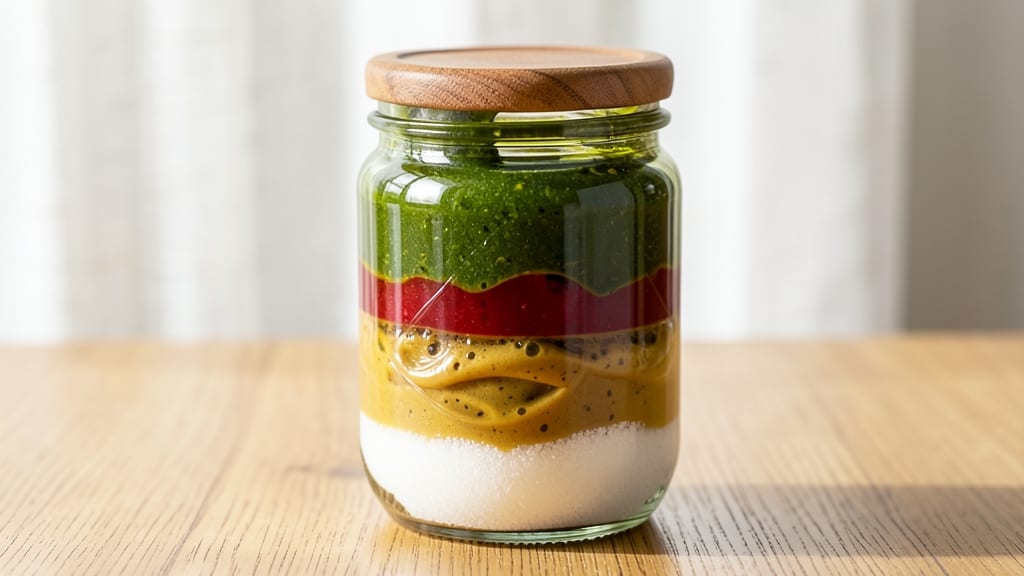
This 5-layer salad dressing recipe transforms ordinary salads into layered flavor masterpieces, with each pour delivering a new taste sensation. 💛 The secret lies in carefully stacking ingredients—oil, vinegar, emulsifiers, and seasonings—to create distinct, edible strata that cling beautifully to greens.
I developed this method after years of experimenting with dressings that separated or tasted flat, and the results are nothing short of restaurant-quality at home.
The magic happens in the layering process, where each ingredient plays a specific role: the base oil provides richness, the acid layer adds tang, and the emulsifiers (like mustard or honey) bind everything together.
What sets this apart is the textural contrast—creamy, tangy, and slightly sweet layers that build complexity with every bite. Perfect for drizzling over mixed greens, grain bowls, or even as a dip for fresh vegetables, this dressing elevates any dish without overpowering it.
What you’ll achieve is a dressing that stays vibrant and cohesive, even after shaking, with five distinct flavor profiles in one bottle. The layers remain visible when poured, creating an elegant presentation that’s as impressive as it is delicious.
Whether you’re prepping for a week of salads or hosting a dinner party, this recipe delivers consistent, professional results every time.
Storage is simple: keep it refrigerated for up to two weeks, shaking gently before each use. For dietary adaptations, swap honey for maple syrup or use olive oil instead of vegetable oil.
The possibilities are endless, but the foundation remains foolproof—just layer, shake, and enjoy the flavor journey in every pour.
Ingredients for 5 layer salad dressing
Ten ingredients layered for restaurant-quality salad dressing with visible flavor strata.
| Ingredient | Amount | Notes |
|---|---|---|
| Extra-Virgin Olive Oil 🫒 | ½ cup | Light, fruity variety preferred |
| White Wine Vinegar 🍷 | ¼ cup | Dry, crisp vinegar for brightness |
| Raw Honey 🍯 | 2 tbsp | Local honey for floral notes |
| Dijon Mustard 🌶️ | 1 tbsp | High-quality, smooth Dijon |
| Granulated Sugar 🍚 | 1 tbsp | Fine grain for smooth texture |
| Kosher Salt 🧂 | ½ tsp | Diamond Crystal preferred |
| Fresh Lemon Juice 🍋 | 1 tbsp | Freshly squeezed, no pulp |
| Garlic Cloves 🧄 | 1 whole | Minced for subtle garlic flavor |
| Dried Oregano 🌿 | ¼ tsp | Mediterranean variety preferred |
| Black Peppercorns 🌶️ | ¼ tsp | Freshly cracked for aroma |
The olive oil is your foundation—California avocado oil or light EVOO works best, but any neutral oil will do. Trader Joe's carries excellent options, or check the international aisle for Italian olive oils with subtle herbal notes. Vinegar selection matters too: Balsamic vinegar can overpower, so stick with crisp white wine vinegar. Honey should be raw and unfiltered—local varieties add unique floral undertones that elevate the dressing. For the mustard, Maille or French's are reliable choices, but any good-quality Dijon will work. The garlic? One clove is plenty—you want flavor, not bite.
No honey? Maple syrup or agave works at a 1:1 ratio, though it'll be slightly heavier. Vinegar substitute? Apple cider vinegar is a great swap, but reduce to 1.5 tbsp since it's milder. Running short on Dijon? Yellow mustard thinned with water mimics the texture, though flavor will differ. The sugar can be swapped for agave or coconut sugar, but keep it fine-grained for smooth blending. For the lemon juice, bottled is fine in a pinch, but fresh is always better—just strain out any seeds. Oregano can be omitted entirely if you prefer a cleaner flavor profile, and black peppercorns can be replaced with crushed red pepper flakes for a different heat profile.
This dressing stays fresh for two weeks refrigerated, but the layers become more pronounced after 24 hours. Store in a glass jar with a tight seal—plastic can absorb flavors. Before each use, give it a gentle shake to re-establish the layers. The dressing thickens slightly in the fridge, so let it sit at room temperature for 5-10 minutes before pouring. For extra longevity, freeze in ice cube trays and thaw as needed—though the layers will blend slightly after freezing. Always shake vigorously before using frozen portions.
Why You'll Love This Recipe
- No Whisk Needed: I swear by this—just shake it in a jar. The layers (olive oil, vinegar, honey, mustard, sugar) blend perfectly without fuss, and I’ve never had a clump in my dressing again.
- Sweet-Savory Magic: That honey and Dijon combo? It’s like a flavor hug. The sugar cuts the sharpness of the vinegar while the mustard adds depth, and honestly, it’s the kind of dressing I’ll pour on everything—even toast.
- Jarred for Days: Make a big batch, store it in the fridge, and you’ve got dressing for a week. I keep one in my pantry for lazy nights when I just want a quick salad but don’t want to measure anything.
- Budget Brightener: Five ingredients, all pantry staples. No fancy imports or weird substitutions—just good, honest flavors that make even the simplest greens taste like a restaurant-worthy dish. (Yes, even on a Tuesday night.)
Step-by-Step instructions for 5 layer salad dressing
Here's how to build this layered dressing with perfect balance—each pour delivers depth.
👨🍳 Step 1: Whisk Oil and Vinegar to Emulsify
In a medium bowl, combine the 0.5 cup extra-virgin olive oil and 0.25 cup white wine vinegar. Whisk vigorously for 2 minutes until completely emulsified—the mixture should thicken slightly and look homogeneous. This foundational layer creates the dressing's base texture.
I like to use a fork first to break up the oil, then switch to a whisk for finer control. The key here is patience—if you rush, the oil and vinegar will separate later. You'll know it's ready when the mixture looks like a pale, milky liquid with no visible oil streaks.
🍳 Step 2: Add Sweet and Tangy Layers
To the oil-vinegar mixture, add the 2 tbsp raw honey, 1 tbsp granulated sugar, and 1 tbsp fresh lemon juice. Whisk continuously for 1 minute until everything dissolves completely. This layer adds the perfect balance of sweetness and acidity that makes the dressing shine.
The honey and sugar should dissolve without leaving grainy bits. If you notice any undissolved sugar, gently warm the mixture for 10 seconds in the microwave to help it integrate. Here's where the dressing starts developing its signature complexity—sweet, tangy, and bright all at once.
🍳 Step 3: Incorporate Seasonings and Aromatics
Add the 1 whole minced garlic clove, 0.25 tsp dried oregano, 0.25 tsp freshly cracked black peppercorns, and 0.5 tsp kosher salt. Whisk for another 30 seconds to distribute these flavors evenly. The garlic adds subtle depth, while the oregano and pepper bring herbal warmth.
Don't skip the freshly cracked peppercorns—their aroma is more vibrant than pre-ground pepper. Taste the mixture now and adjust seasoning if needed. You want a balance where the sweetness isn't cloying, the acidity isn't harsh, and the seasonings enhance rather than overpower. This is where most home cooks go wrong—over-seasoning at this stage.
🍳 Step 4: Finish with Mustard for Emulsion Stability
Finally, add the 1 tbsp Dijon mustard and whisk for 1 minute until fully incorporated. The mustard acts as an emulsifier, binding all the layers together and preventing separation. This is the secret to a dressing that stays creamy for days.
Here's the thing—Dijon mustard has a lower acidity than other mustards, which means it won't overpower the delicate balance we've created. After whisking, the dressing should have a velvety texture with no visible streaks. If it looks too thick, add 1 teaspoon water at a time until it reaches a pourable consistency.
⏰ Step 5: Rest and Taste for Perfection
Let the dressing rest at room temperature for 10 minutes before using. This resting period allows all the flavors to meld together and the emulsion to fully stabilize. After resting, give it one final taste and adjust seasoning if needed—this is your quality control moment.
For best results, store the dressing in an airtight container in the refrigerator for up to 2 weeks. The flavors will continue to develop over time, becoming more complex. When ready to use, give it a good shake before pouring—this helps maintain the emulsion. The dressing should coat the back of a spoon smoothly with no separation.
Pro Tips For Making 5 Layer Salad Dressing
- Whisk Slow, Then Fast: Start by mixing the mustard, honey, and sugar with just the vinegar—stirring gently to dissolve the sugar completely. Once those solids are fully incorporated, then drizzle in the olive oil while whisking vigorously. I used to pour everything in at once and ended up with a gloppy, uneven mess every time.
- Use Cold Honey: Pull the raw honey out of the fridge for at least 30 minutes before measuring. Cold honey blends smoother and doesn’t clump when whisked into the vinegar—no one wants to scrape gummy strands out of their dressing later. (Yes, even if you’re impatient like me.)
- Balance the Layers: Taste as you go, but don’t stop at the first layer. After adding the mustard and sugar, check for sweetness—if it’s too sharp, add a pinch more sugar. Then, when you add the honey, adjust the vinegar if it’s cloying. The magic happens in the final oil drizzle; if it’s too heavy, a splash of vinegar fixes it faster than starting over.
- Skip the Sugar Sub: Granulated sugar is the easiest way to get a smooth, dissolved layer, but if you’re in a pinch, do not swap in brown sugar or powdered sugar. Brown sugar adds grit, and powdered sugar dissolves too fast, making the dressing clump. If you must sub, use honey to cover the sweetness—just reduce the honey slightly to avoid overpowering the flavor.
Best sauces and condiments for this dish
Creamy vs. Tangy
This dressing masterfully balances creamy and tangy layers—perfect for different salad styles. The Dijon mustard creates a velvety creaminess that coats greens beautifully, while the white wine vinegar delivers bright acidity.
For extra creaminess, blend in 1 tbsp Greek yogurt after whisking, but reduce vinegar to 2 tbsp to maintain balance. 🥗
Sweet Heat Variations
Add 1 tsp chili flakes or ½ tsp cayenne for a sweet-spicy kick that pairs perfectly with roasted vegetables. For a smoky twist, replace ½ tsp oregano with ½ tsp smoked paprika.
Both variations work best when the dressing has rested 30 minutes—the heat and smokiness meld more smoothly with the sweet honey layer.
Herb Infusions
Fresh herbs elevate this dressing instantly. Finely chop 1 tbsp fresh dill or 1 tbsp basil and whisk in during Step 3. For a Mediterranean touch, add ½ tsp dried thyme with the oregano.
Herbs should be added last to preserve their vibrant aroma—whisking them in too early can mute their flavor. 🌿
Cheesy Twist Options
Stir in 1 tbsp crumbled feta or 1 tsp nutritional yeast for a cheesy depth that works amazingly with grain bowls. For a richer version, replace 1 tbsp olive oil with 1 tbsp tahini—this adds nutty complexity.
Always whisk in cheese or tahini during Step 4 to ensure even distribution throughout the emulsion.
Storage Hacks
Keep dressings fresh longer by storing in glass jars with airtight lids—plastic absorbs flavors over time. For extended storage, freeze in ice cube trays, then transfer cubes to a bag.
Thaw in the fridge overnight, shaking gently before use. The layers will blend slightly after freezing, but the flavor remains vibrant. ❄️
Serving Ideas
Drizzle over mixed greens with grilled chicken for a restaurant-worthy salad. Use as a dip for crudités or warm pita chips. For a dessert twist, drizzle over baked apples or vanilla ice cream—the sweet-tangy balance is surprisingly delicious.
Always shake well before pouring to maintain those stunning visible layers. 🍽️
Nutrition facts
Frequently asked questions
Why does my dressing separate after making it?
Separation usually happens when the oil and vinegar aren't properly emulsified or if the mustard isn't fully incorporated. Always whisk vigorously for 2 minutes when combining oil and vinegar, then add mustard last and whisk for 1 full minute. For extra stability, add 1 tsp cornstarch dissolved in 1 tsp cold water during Step 4. Shake well before each use to re-emulsify.
Can I make this dressing without honey?
Swap honey for 2 tbsp maple syrup or 1.5 tbsp agave nectar for a similar sweetness level. For a savory version, omit honey entirely and increase vinegar to 3 tbsp while reducing sugar to ½ tbsp. The dressing will have a more pronounced tangy profile that works beautifully with hearty salads like kale and roasted vegetables.
How do I get the visible layers to stay distinct?
The key is patience and proper layering technique. After whisking all ingredients, let the dressing rest for 15 minutes before pouring into your container. Use a glass jar with a tight seal and store upright in the fridge. When ready to use, pour slowly at a 45-degree angle—this helps maintain the strata. The layers will naturally blend slightly over time, but shaking gently before each use preserves the visual effect.
What's the best way to use this dressing on salads?
For maximum flavor impact, drizzle the dressing just before serving over chilled greens or warm roasted vegetables. The cold helps preserve the visible layers while the heat enhances the aromatic compounds. Try the "layered pour" technique: Pour a thin stream while holding the bottle at a 45-degree angle, letting the dressing cascade over the salad in elegant ribbons. It works equally well as a dip for crudités or grilled pita chips.
Can I make this dressing spicier?
Yes! For a subtle kick, add ½ tsp red pepper flakes during Step 3. For serious heat, whisk in 1 tsp hot sauce or ½ tsp cayenne pepper after all ingredients are combined. Let the dressing rest for 30 minutes before tasting—this allows the heat to meld with the sweet and tangy layers. Pair with charred vegetables or spicy proteins like grilled shrimp for the best results.