
Salads
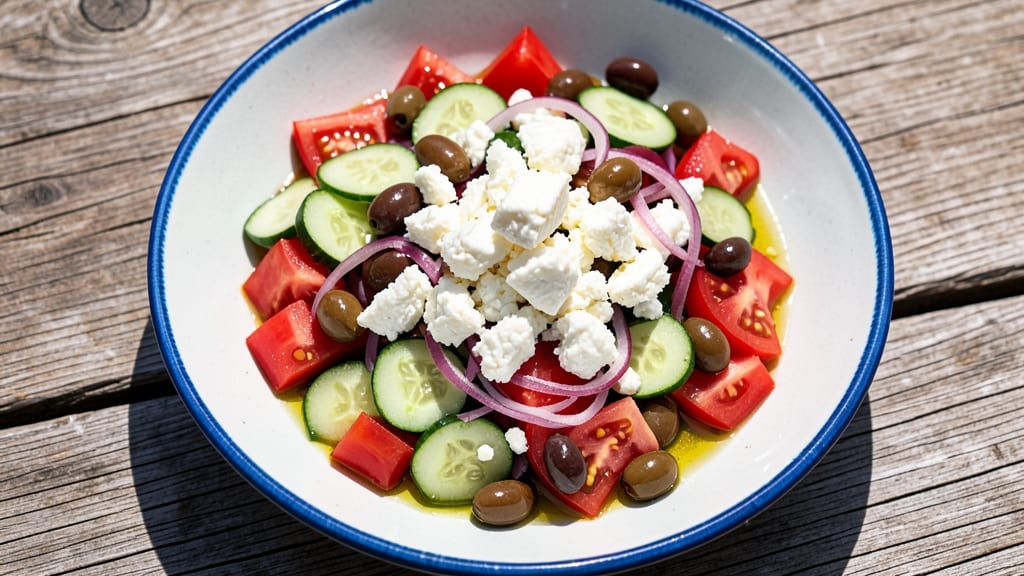
This Aegean salad recipe brings the flavors of Greece to your table in just 15 minutes, proving that fresh, vibrant dishes don't require hours in the kitchen.
The secret lies in its perfect balance of crisp vegetables, briny olives, and tangy feta—each component carefully chosen to reflect the island's coastal traditions. What makes this salad special is its simplicity; no cooking required, just chopping and assembling ingredients that come together in minutes.
The foundation of any great Aegean salad is the vegetables: ripe tomatoes, cool cucumbers, and crisp red onions that provide the perfect crunch. Adding Kalamata olives and crumbled feta cheese introduces Mediterranean flavors that elevate this dish beyond a simple side.
The dressing—a simple blend of extra virgin olive oil and oregano—ties everything together with a bright, aromatic finish. This salad is not only vegetarian but also packed with nutrients and bold flavors that make it a standout main dish.
What you'll end up with is a bright, refreshing salad that captures the essence of Greek cuisine in every bite. The tomatoes burst with juicy sweetness, the cucumbers provide a crisp contrast, and the feta adds a satisfying saltiness that balances the dish perfectly.
The olives lend a briny depth, while the olive oil and oregano dressing brings everything together in harmony. This is the kind of salad that transforms a simple meal into a celebration of Mediterranean flavors.
Perfect for summer lunches, picnic spreads, or as a light main course, this Aegean salad is as versatile as it is delicious. Serve it alongside grilled fish or crusty bread for a complete meal, or enjoy it on its own as a refreshing side.
The best part? It keeps well in the fridge for up to two days, making it an ideal make-ahead option for busy weeknights. Let's get started on creating this classic dish!
Ingredients for aegean salad
These vibrant ingredients capture Greece's coastal magic in every bite—no cooking required.
| Ingredient | Amount | Notes |
|---|---|---|
| Ripe Tomatoes 🍅 | 2 cups | Diced, seedless, vine-ripened preferred |
| English Cucumbers 🥒 | 2 medium | Peeled, seeded, chopped |
| Red Onion 🧅 | 1 medium | Thinly sliced, white rings removed |
| Kalamata Olives 🫒 | ½ cup | Pitted, halved lengthwise |
| Feta Cheese 🧀 | 1 cup | Crumbled, aged 6+ months |
| Extra-Virgin Olive Oil 🫒 | ½ cup | Light, fruity variety |
| Dried Oregano 🌿 | 1 tsp | Fresh preferred if available |
| Fresh Dill 🌿 | ¼ cup | Chopped, stems removed |
| Lemon Juice 🍋 | 2 tbsp | Freshly squeezed |
| Diamond Crystal Kosher Salt 🧂 | ½ tsp | Fine grain preferred |
| Freshly Ground Black Pepper 🌶️ | ¼ tsp | Coarse grind preferred |
The tomatoes are everything here—vine-ripened with that perfect burst of sweetness. Heirloom varieties from a local farmers market have the best flavor, but any ripe grocery store tomatoes work in a pinch. Cucumbers should be crisp and cool—skip the pre-sliced ones from the plastic container, they get soggy fast. The olives? Kalamata are non-negotiable for that briny depth, but if you can't find them, Manzanilla olives work too. For the feta, aged 6+ months is key—it should crumble easily and have that tangy bite. I always buy the block form and crumble it myself; pre-crumbled feta gets mushy. The olive oil is where you can splurge—light, fruity varieties from Greece or Italy elevate everything.
No fresh dill? Dried works at half the amount, but honestly, fresh is worth hunting down. Short on Kalamata olives? Green olives pitted and chopped get you close, but you'll lose that Mediterranean character. The lemon juice should be freshly squeezed—bottled lemon juice tastes flat in comparison. For the oregano, Greek oregano has a different profile than Mexican or Italian, but any dried oregano will work. Want extra crunch? Add 1/4 cup chopped red bell pepper. Need to make it ahead? Toss everything together and let it sit for 30 minutes before serving—the flavors meld beautifully.
This salad keeps for 2 days in the fridge, but the feta will get saltier over time. To prevent sogginess, store components separately—tomatoes, cucumbers, and onions in one container, olives and feta in another, dressing last. The dressing stays fresh for 5 days if stored in a sealed jar. For serving, I always double the dressing—it's perfect for drizzling over grilled fish or crusty bread. The best part? It tastes even better the next day as the flavors develop.
Why You'll Love This Recipe
- No Knife Drama: I swear by this one—just slice the cucumbers and tomatoes into big chunks, no fancy techniques. The onions? Tear them by hand if you’re in a rush. Ten minutes tops, and you’re done.
- Salty-Sweet Magic: That briny feta and buttery olives? They’re the stars. The tomatoes add juicy sweetness, while the onion gives just enough bite. Honestly, the first bite makes you want to eat it straight from the bowl.
- Lunch or Side: Pack it for work—it keeps well for days. Or serve it alongside grilled fish, lamb, or even a simple sandwich. I’ve had it as a light dinner when I didn’t feel like cooking anything else.
- Budget Brightener: Fresh veggies, a block of feta, and a jar of olives—this salad costs next to nothing but feels like a fancy spread. Plus, leftovers taste just as good the next day, so you’re not wasting a thing.
Step-by-step instructions for Aegean salad
Here's how to assemble this vibrant Mediterranean masterpiece in record time.
Prepare the Vegetable Base
Begin by dicing the 2 cups of ripe tomatoes into even ½-inch cubes, removing seeds if they're present. I like to work quickly here - the juices will start releasing immediately, so have a colander nearby to drain any excess liquid that forms. For the 2 medium English cucumbers, peel them first using a vegetable peeler, then slice lengthwise and scoop out the seeds with a spoon. Chop the cucumber flesh into ¼-inch dice - this size gives you that perfect crunch without overwhelming the salad.
Next, thinly slice the 1 medium red onion, removing the white root end first. I always use a sharp chef's knife for this and aim for slices no thicker than ⅛-inch. The onion should be translucent when sliced properly - if it's white, keep slicing thinner. Place all prepared vegetables in a large mixing bowl as you go, keeping them separate for now.
Add the Olives and Feta
Pit and halve the 0.5 cup Kalamata olives lengthwise using a small knife. The olives should be plump and dark purple - if they're shriveled, soak them in warm water for 10 minutes first. Add them to the bowl with the vegetables. For the 1 cup feta cheese, I always use aged feta (6+ months) because it's less crumbly and holds its shape better. Crumble it by hand into ¼-inch pieces - don't press too hard or it'll turn into feta dust.
Here's the thing - the feta should be at room temperature when you add it. If it's straight from the fridge, let it sit for 15 minutes first. This prevents the salad from getting watery as the cold cheese melts slightly in the warm olive oil. Sprinkle the feta over the vegetables and gently toss everything together just once to distribute it evenly.
Create the Dressing
In a small bowl, whisk together the 0.5 cup extra-virgin olive oil, 2 tablespoons lemon juice, 1 teaspoon dried oregano, 0.5 teaspoon Diamond Crystal kosher salt, and 0.25 teaspoon freshly ground black pepper. I use a light, fruity olive oil here - it should smell vibrant and fresh, not bitter. The dressing should be emulsified but not too thick - it should coat the back of a spoon when you stir it.
Add the 0.25 cup chopped fresh dill to the dressing and stir gently. The dill should be finely chopped with stems removed - you want the leaves only for maximum flavor. If you're using fresh oregano instead of dried, add 1 tablespoon at this stage. The dressing should have a bright, citrusy aroma with herbal notes - this is your quality check. If it smells flat, add a pinch more salt or a splash more lemon juice.
Combine and Rest
Pour the dressing over the vegetable and feta mixture in the large bowl. Using two large spoons or your hands, gently fold everything together until the vegetables are evenly coated. Be careful not to mash the tomatoes or cucumbers - we want to maintain that satisfying crunch. The salad should look vibrant with deep reds, greens, and purples.
Let the salad rest for 10 minutes before serving. This allows the flavors to meld together and the dressing to penetrate the vegetables. I know it's tempting to eat it immediately, but this short wait makes all the difference. The tomatoes will soften slightly, the cucumbers will release their juices, and the feta will begin to soften just enough to create that perfect Mediterranean texture.
Final Adjustments and Serving
Before serving, taste the salad and make any final adjustments. If it needs more brightness, add another ½ teaspoon lemon juice. For more saltiness, add ¼ teaspoon more kosher salt. If the dressing seems too thick, add 1 tablespoon of water and toss gently. The salad should be perfectly balanced - tangy from the lemon, salty from the feta and olives, and herby from the dill and oregano.
Serve immediately while the vegetables are still crisp. This salad tastes best when eaten within 30 minutes of assembly. The flavors continue to develop even as you eat, so take your time savoring each bite. The contrast of cool cucumbers, juicy tomatoes, briny olives, and salty feta with the bright dressing creates a symphony of Mediterranean flavors that's impossible to resist.
Pro Tips For Making Aegean Salad
- CHILL THE CUCUMBERS: Toss them in ice water for 10 minutes before chopping—English cucumbers are waterlogged by nature, and this step keeps your salad from turning into a sad, soggy mess. I learned this the hard way when my first batch looked like a swamp.
- SALT THE TOMATOES: Sprinkle a pinch of flaky salt on halved tomatoes and let them sit for 5 minutes before assembling. It draws out excess moisture, sharpens their flavor, and prevents the salad from wilting into a mushy pile by lunchtime.
- DRAIN THE OLIVES DRY: Skip the brine—pat Kalamata olives thoroughly with a paper towel before adding them. That way, they don’t turn your dressing into a diluted, oily soup. (Yes, I’ve made that mistake. No, I won’t do it again.)
- CRUMBLE THE FETA LAST: Add feta in the final step, right before serving, or it’ll dissolve into the dressing and turn your salad into a cheese sauce. If you’re prepping ahead, store it separately and crumble it just before eating—trust me, it’s worth the extra 10 seconds.
Creative variations of this recipe
Greek Island Twist
Transform this classic salad with a Santorini-inspired touch by adding ¼ cup chopped capers and 2 tablespoons finely chopped fresh mint to the dressing. The capers bring briny depth while the mint adds a refreshing twist that perfectly complements the island's coastal flavors.
I've found that using Greek capers from a jar (like those from Cucina Antica) makes all the difference—they're less salty and more flavorful than typical imports. 🌿
Protein-Packed Version
Make this salad a complete meal by adding ½ cup cooked chickpeas or ½ cup grilled shrimp. For the chickpeas, rinse a can of low-sodium chickpeas and toss them with 1 teaspoon olive oil and ½ teaspoon smoked paprika before adding to the salad.
For shrimp, grill or sauté 6-8 medium shrimp with 1 teaspoon lemon zest and ½ teaspoon dried oregano until pink. Both options work beautifully! 🍤
Vegetarian Veggie Boost
Add ½ cup roasted red peppers (jarred or homemade) and ¼ cup crumbled halloumi cheese for a richer, creamier texture. The halloumi holds its shape when grilled or pan-fried, adding a satisfying bite.
I like to grill the halloumi for 2 minutes per side until golden, then crumble it over the salad just before serving. The roasted peppers add natural sweetness that balances the saltiness of the feta. 🌶️
Spicy Mediterranean Kick
For a fiery twist, add 1 teaspoon harissa paste to the dressing and top with 2 tablespoons chopped fresh chili peppers (like serrano or Fresno). The harissa brings smoky heat while the fresh peppers add a bright, spicy crunch.
I also like to sprinkle ½ teaspoon smoked paprika over the top for extra depth. This version is perfect for those who love bold flavors! 🌶️
Herb-Infused Dressing
Elevate the dressing by infusing it with 1 tablespoon chopped fresh rosemary and 1 tablespoon chopped fresh thyme while whisking. Let the herbs steep in the olive oil for 5 minutes before adding the lemon juice and other ingredients.
This creates a fragrant, aromatic dressing that takes the salad to the next level. Strain out the herbs before tossing with the salad to avoid texture issues. ✨
Seasonal Adaptations
In summer, swap in ½ cup diced watermelon for extra juiciness and sweetness. In winter, add ¼ cup toasted pine nuts for crunch and warmth. For a spring version, include ¼ cup thinly sliced radishes and 2 tablespoons chopped fresh parsley.
Each seasonal twist keeps the salad vibrant and exciting year-round. 🌸
Nutrition facts
Frequently asked questions
Why does traditional Aegean salad omit lettuce?
The classic version skips lettuce to maintain the salad's signature Mediterranean brightness and crunch. Lettuce would make the dish watery and dilute the vibrant flavors of tomatoes, cucumbers, and olives. The traditional approach focuses on fresh, juicy vegetables that shine without needing a base.
Can I use store-bought feta instead of crumbling my own?
Pre-crumbled feta works in a pinch, but it often gets soggy faster in the salad. For best results, buy a block of aged feta (6+ months) and crumble it yourself. The texture stays firmer and the flavor more pronounced. If using pre-crumbled, drain it well and add it just before serving.
How do I prevent the cucumbers from getting watery?
Peel the cucumbers first to remove excess moisture, then pat them dry with paper towels before chopping. Also, store the salad components separately in the fridge—keep cucumbers and tomatoes in one container with a paper towel underneath to absorb moisture. Only combine everything when ready to serve.
What's the best way to store leftover Aegean salad?
Keep components separate for up to 2 days: store vegetables in one container, feta and olives in another, and dressing in a sealed jar. When ready to eat, reassemble and toss gently. The salad actually tastes better the next day as flavors meld! For longer storage, freeze the dressing separately for up to 1 month.
Can I make this salad ahead for a party?
Yes! Prepare all ingredients separately and store them in airtight containers in the fridge. When ready to serve, assemble the salad and let it sit for 10 minutes before serving. This method keeps the vegetables crisp and prevents sogginess. For a crowd, double the recipe and use a large platter for serving.