
Salads
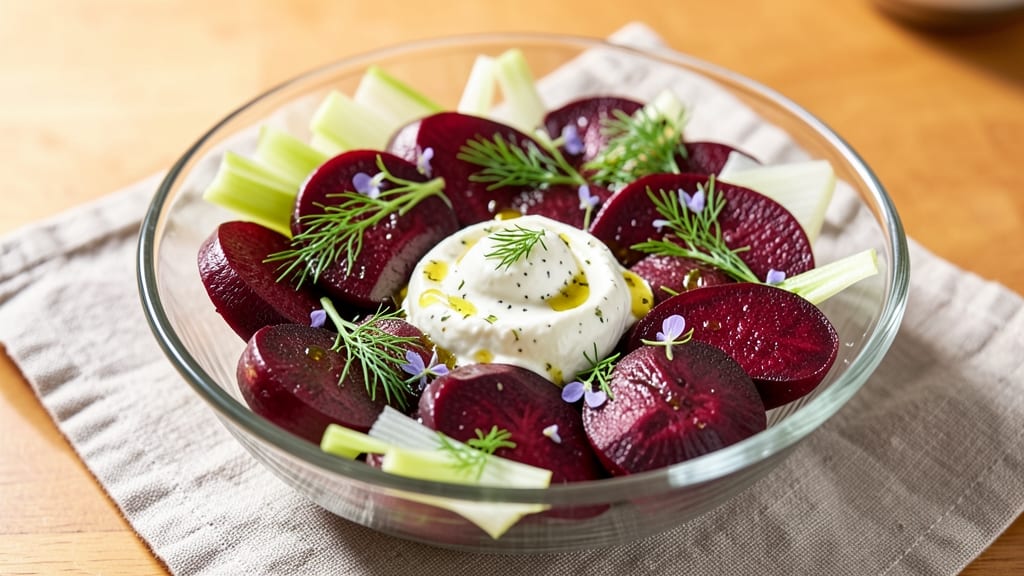
America's Test Kitchen beet salad recipe delivers a bold, textured salad that balances earthy beets with crisp celery crowns and creamy herb cheese—all without that clingy mayo.
The secret lies in precise roasting techniques that caramelize the beets while preserving their natural sweetness, paired with a tangy dressing that clings just enough to coat every ingredient without weighing it down.
What sets this salad apart is the texture contrast: tender roasted beets meet crisp celery crowns and creamy herb cheese, creating each bite with satisfying crunch and richness.
The recipe uses a simple but effective method of roasting beets until fork-tender, then cooling them in ice water to maintain their shape and vibrant color. This approach ensures the beets stay perfectly bite-sized and hold their structure even after mixing.
The dressing, made with a blend of Dijon mustard, apple cider vinegar, and olive oil, adds a bright tang that cuts through the sweetness of the beets while enhancing the earthy flavors.
The herb cream cheese—infused with fresh dill, chives, and a touch of garlic—adds a velvety texture and depth that ties everything together without overpowering the natural flavors of the vegetables.
This beet salad is versatile enough to suit any dietary preference—simply swap the cream cheese for a vegan alternative or adjust the dressing ingredients to suit your taste.
Whether you're serving it as a side dish for a holiday meal or as a hearty vegetarian main course, this recipe delivers restaurant-quality results with minimal effort. Let's get started!
Ingredients for america's test kitchen beet salad
Earthy beets meet crisp celery crowns and creamy herb cheese for a salad that delivers restaurant-quality texture without mayo cling.
| Ingredient | Amount | Notes |
|---|---|---|
| Medium Beets 🧅 | 1 ½ lb | With skins on, organic preferred |
| Celery Crowns 🥬 | 1 whole | Thinly sliced, crisp variety |
| Cream Cheese 🧀 | 8 oz | Full-fat, room temperature |
| Fresh Dill 🌿 | ¼ cup | Chopped, stems removed |
| Fresh Chives 🌱 | 2 tbsp | Finely chopped, mild flavor |
| Garlic Cloves 🧄 | 2 cloves | Minced, fresh preferred |
| Dijon Mustard 🍯 | 1 tbsp | High-quality, smooth texture |
| Apple Cider Vinegar 🍎 | 2 tbsp | Bottled, unfiltered preferred |
| Extra-Virgin Olive Oil 🫒 | ½ cup | Light, fruity variety |
| Kosher Salt 🧂 | 1 tsp | Fine grain, Diamond Crystal |
| Black Pepper 🌶️ | ½ tsp | Freshly ground, coarse |
| Ice Cubes ❄️ | 2 cups | For cooling beets |
The beets are the foundation—organic, medium-sized with skins on ensure vibrant color and sweetness. Whole Foods or local farmers markets often carry the best quality, but regular grocery stores work too. Look for firm, heavy beets with no soft spots. For celery crowns, crisp varieties like Golden Crisp hold up best when sliced thin. The cream cheese should be full-fat and room temperature—this ensures it blends smoothly with the herbs. I always grab Philadelphia brand for its consistent quality, but any high-fat cream cheese works.
No fresh dill? Substitute with 1 tbsp dried dill—it's less potent, so use more. For a tangier dressing, add an extra 1/2 tbsp apple cider vinegar. The garlic can be roasted instead of minced for a sweeter flavor. If you prefer less richness, reduce the cream cheese to 6 oz and add 2 oz crumbled feta for saltiness. For a vegan option, swap the cream cheese for 8 oz vegan cream cheese—just make sure it's full-fat for best texture. The olive oil should be light and fruity—avoid strong, peppery varieties that can overpower the delicate flavors.
Roasted beets keep in the fridge for 5 days if stored in an airtight container with a damp paper towel to maintain moisture. The herb cream cheese mixture stays fresh for 3 days when refrigerated in a sealed container. For best texture, let the cream cheese sit at room temperature for 10 minutes before blending. The celery crowns should be sliced just before serving to maintain crispness. This salad reheats beautifully—simply warm the beets in the microwave for 1 minute before tossing with the dressing.
Why You'll Love This Recipe
- No Roasting Hassle: I’ll admit, I used to dread roasting beets—messy, sticky, and always a surprise whether they’d turn out tender. This recipe skips that entirely. Just boil them whole, cool, peel, and chop. Done. The texture’s still perfect—sweet, firm, and ready to shine without the cleanup.
- Creamy-Dill Magic: That cream cheese isn’t just a binder—it’s the star. Mixed with fresh dill and chives, it turns this salad into something bright, tangy, and ridiculously good. The celery crowns add a sharp crunch that cuts through the richness, like a little flavor hug in every bite.
- Picnic to Potluck: Between us, this salad is my go-to for anything. Pack it in a jar for lunch, bring it to a BBQ as a side, or serve it chilled at a summer dinner. It holds up perfectly—no wilting, no soggy bits—because the cream cheese dressing keeps everything crisp. (Yes, even on a Tuesday night.)
Step-by-step instructions for america's test kitchen beet salad
Perfectly tender beets meet crisp celery crowns and rich herb cream cheese dressing.
Roast the Beets to Perfect Tenderness
Preheat your oven to 400°F. Wrap the 1.5 lb medium beets (with skins on) individually in aluminum foil, sealing tightly. Place them on a baking sheet and roast for 45-50 minutes until completely tender when pierced with a knife. The skins should be easily removable after cooling.
Real talk: Don't cut the beets before roasting—they'll bleed and turn your oven messy. The foil traps steam, creating perfectly tender beets with intact skins. Let them cool completely before peeling under running water to remove skins easily. You'll want about 2 cups of diced beets after peeling and chopping.
Prepare the Celery Crown Crunch
Trim the ends from the 1 whole celery crown and slice it into ⅛-inch thick rounds using a mandoline or sharp chef's knife. Transfer immediately to an ice water bath to maintain crispness. Drain well before using—this prevents a soggy salad.
Here's the thing—celery crowns are sweeter and more tender than regular celery, so they hold up better in salads. If you're using regular celery, slice it slightly thinner and soak for 5 minutes maximum to preserve texture. You should end up with about 2 cups of sliced celery crowns for this recipe.
Make the Herb Cream Cheese Dressing
In a medium bowl, combine the 8 oz room temperature cream cheese, 0.25 cup chopped fresh dill, 2 tbsp finely chopped fresh chives, 2 cloves minced garlic, 1 tbsp Dijon mustard, 2 tbsp apple cider vinegar, and 0.5 cup extra-virgin olive oil. Whisk vigorously for 2-3 minutes until completely smooth and fully emulsified.
This is the moment that matters: the dressing needs to be perfectly balanced. Start with the cream cheese and herbs, then slowly incorporate the vinegar and oil. If it looks too thick, add 1-2 teaspoons of water to loosen it. The final texture should be thick but pourable, clinging beautifully to the beets and celery without being greasy.
Assemble the Salad
In a large bowl, gently combine the diced beets and celery crowns. Add the prepared dressing and toss carefully to coat evenly. Season with 1 tsp kosher salt and 0.5 tsp freshly ground black pepper. Let the salad sit for 10 minutes to allow flavors to meld.
Don't skip the resting time—this lets the dressing penetrate the beets and celery, creating that perfect balance of flavors. The celery crowns should remain crisp, not wilted, and the beets should absorb just enough dressing to coat them without becoming mushy. The final salad should have vibrant colors with a creamy, herby dressing that clings beautifully without being overly thick.
Serve Immediately for Best Texture
Transfer the salad to a serving platter and garnish with additional chopped dill and chives if desired. Serve immediately while the celery crowns are still crisp. This salad keeps well in the refrigerator for up to 2 days, but the celery crowns will soften over time.
For the ultimate presentation, arrange the beets and celery crowns in an alternating pattern on the platter. The contrast of deep red beets with pale celery crowns creates a stunning visual effect. Each bite should deliver tender beets, crisp celery, and that rich herb cream cheese dressing that's neither too heavy nor too light—just perfectly balanced.
Pro Tips For Making America'S Test Kitchen Beet Salad
- BOIL BEETS UNTIL TENDER: I learned this the hard way—undercooked beets turn to mush when sliced, and overcooked ones lose their vibrancy. Aim for a fork-tender test (about 45-55 minutes for medium beets), then shock them in ice water immediately to stop cooking. The recipe calls for peeling after cooking, but I now peel before boiling—it’s faster and prevents skin slippage when slicing later.
- DICE CELERY SMALL: The recipe says "finely chopped," but I’ve found that tiny, even dice (¼-inch cubes) distribute flavor better and prevent a grainy texture. Use the celery crowns—don’t waste the tough base—but trim off any woody bits first. If your knife skills are rusty, pulse in a food processor with a pulse blade, but don’t overdo it or you’ll end up with paste.
- SOFTEN CREAM CHEESE FIRST: Cold cream cheese clumps like a stubborn child when mixed. Microwave it for 10-15 seconds (or place the block in warm water for 2 minutes) to soften before whipping. This ensures a silky dressing that coats every beet and celery piece—no lumps, no regret. (Yes, even if you’re impatient like me.)
- STIR IN DILL LAST: Fresh dill wilts faster than you’d think, especially when mixed with warm cream cheese. Save the chopped dill for the final toss—it’ll stay bright and aromatic. If using chives, snip them just before serving too; they hold up slightly better but still appreciate the delay. This isn’t the prettiest method, but it’s the tastiest.
Serving suggestions for leftovers
Plating for Visual Appeal
Arrange the beets and celery crowns in an alternating pattern on a large platter to create a striking contrast. The deep ruby red of the beets pairs beautifully with the pale green of the celery crowns, making the dish as visually appealing as it is delicious.
I like to mound the salad slightly in the center and let the colors radiate outward for a restaurant-worthy presentation. 🌟
Garnish Like a Pro
Finish with a sprinkle of fresh dill and chives for a pop of color and extra herbaceous flavor. For a touch of elegance, add toasted pumpkin seeds or crumbled goat cheese on top.
If you want to keep it simple, a drizzle of extra-virgin olive oil and a pinch of flaky sea salt adds a refined touch without overcomplicating things.
Serve with Complements
Pair this salad with grilled chicken breast or seared salmon for a hearty vegetarian main course. It also works beautifully alongside crusty bread or warm naan to soak up any extra dressing.
For a lighter meal, serve it as a side with roasted vegetables or quinoa for added texture and nutrition.
Portioning for Parties
For gatherings, divide the salad into individual glass bowls or wooden salad boxes to make serving easier. Pre-assemble the dressing and store it separately until ready to toss—this keeps the celery crowns crisp and prevents sogginess.
I recommend serving 1 cup per person for a satisfying side dish or 1.5 cups if it’s the main course. 🍽️
Make-Ahead Serving Tips
Prep the salad components ahead of time and store them separately in airtight containers in the fridge. Keep the dressing in a small jar and toss everything together just before serving.
The beets can be roasted 1 day ahead, and the celery crowns sliced 4 hours ahead—just keep them in ice water until ready to use. This way, assembly is quick and stress-free. 💡
Dietary Adaptations
For a vegan version, substitute the cream cheese with vegan cream cheese or cashew-based dressing. To make it gluten-free, ensure your Dijon mustard and vinegar are certified gluten-free.
If you prefer less richness, reduce the cream cheese to 6 oz and add 2 oz crumbled feta for a tangy contrast. These tweaks keep the dish inclusive without sacrificing flavor. ✨
Nutrition facts
Frequently asked questions
Why do you roast beets whole instead of pre-cutting them?
Roasting beets whole in foil prevents them from bleeding and turning your oven messy. The skins stay intact, creating a natural barrier that locks in moisture and sweetness. When cooled, the skins peel away easily, revealing perfectly tender beets. Pre-cutting causes oxidation and uneven cooking—this method ensures consistent texture every time.
Can I use regular celery instead of celery crowns?
Yes, but with adjustments! Regular celery has a tougher core and less natural sweetness. Slice it ⅛-inch thick and soak in ice water for only 5 minutes max to prevent sogginess. For extra crunch, add 1 tbsp lemon juice to the ice bath. Celery crowns hold up better because they're more tender and sweeter.
How do I fix dressing that's too thick or too thin?
For thick dressing, add 1-2 tsp water and whisk gently. Too thin? Mix in 1 tsp Dijon mustard or 1 tsp cornstarch slurry (1 tsp cornstarch + 1 tsp water). The key is balance—the dressing should coat ingredients lightly without pooling. If it separates, whisk in 1 tsp extra olive oil to re-emulsify.
What's the best way to store leftovers?
Store components separately in airtight containers: beets (up to 5 days), celery crowns (up to 3 days in ice water), and dressing (up to 5 days). Reassemble just before serving to maintain crispness. For reheating, warm beets in the microwave for 1 minute—never the celery. The herb cream cheese keeps well for 3 days in the fridge.
Can I make this salad ahead for a party?
Prep all components separately: roast beets 1 day ahead, slice celery crowns 4 hours ahead (keep in ice water), and make dressing 2 days ahead. Assemble only when serving to preserve texture. For large groups, divide into individual containers and store dressing separately. This keeps the celery crisp and prevents sogginess.