
Salads
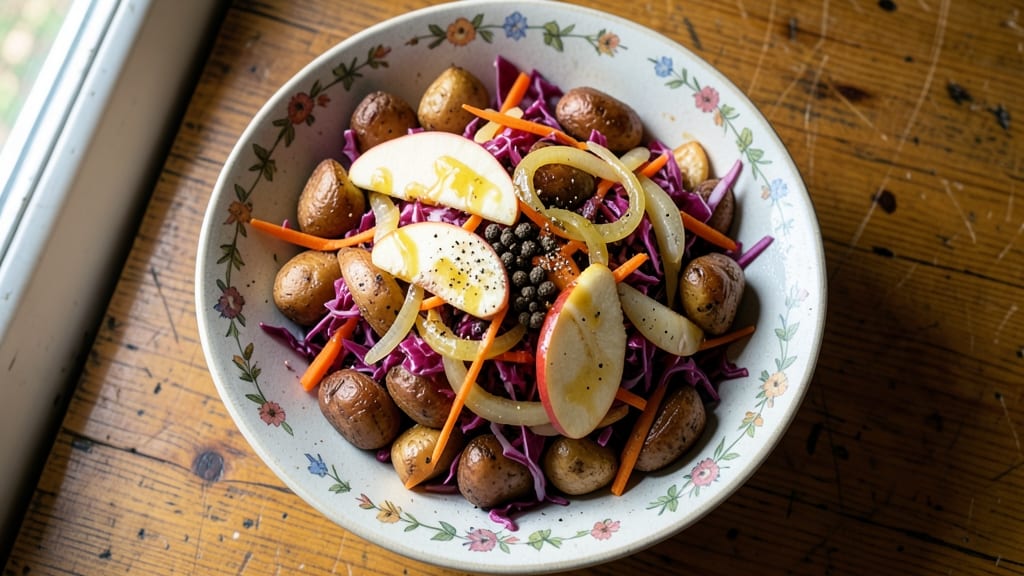
This Amish salad recipe brings the heart of Pennsylvania farmhouse kitchens to your table with its perfect balance of crunchy vegetables and creamy vinegar dressing.
The traditional approach skips mayo entirely, relying instead on tangy apple cider vinegar and a touch of sweetness from honey—just like my grandmother used to make.
What sets this salad apart is the careful layering of textures: crisp potato cubes, shredded cabbage, and tender carrots all come together in a way that feels both rustic and refined.
The beauty of this recipe lies in its simplicity and versatility. You’ll start with pantry staples like potatoes, cabbage, and onions, all cooked or shredded to achieve that signature Amish crunch.
The dressing, made with just five ingredients, ties everything together with a bright, tangy flavor that cuts through the richness of the vegetables. It’s the kind of dish that tastes even better the next day, making it perfect for meal prep or potlucks.
By the time you’re done, you’ll have a salad that’s creamy in texture thanks to the vinegar dressing, yet still light enough to enjoy as a main dish. The colors are vibrant—deep reds from the cabbage, golden potatoes, and bright orange carrots—while the flavors are bold but balanced.
This isn’t just a side dish; it’s a celebration of homestyle cooking that brings comfort and tradition to every bite.
Serve this salad alongside grilled meats, sandwiches, or even as a standalone meal with crusty bread. The recipe adapts beautifully to seasonal produce, so you can swap in whatever’s fresh from the garden or market. Let’s get started on bringing this classic Amish flavor to your kitchen!
Ingredients for amish salad
Pantry staples meet farmhouse tradition for this crunchy, creamy Amish salad that tastes like home.
| Ingredient | Amount | Notes |
|---|---|---|
| Russet Potatoes 🥔 | 2 lb | Yielding about 6 cups cubed |
| Green Cabbage 🥬 | 2 whole | Shredded finely for crunch |
| Carrots 🥕 | 2 lb | Peeled and julienned thin |
| Yellow Onions 🧅 | 2 whole | Thinly sliced for bite |
| Apple Cider Vinegar 🍎 | 1 cup | Raw unfiltered preferred |
| Honey 🍯 | ½ cup | Pure liquid honey |
| Diamond Crystal Kosher Salt 🧂 | 1 ½ tbsp | For dressing seasoning |
| Fresh Dill 🌿 | ¼ cup | Chopped for brightness |
| Extra-Virgin Olive Oil 🫒 | ¼ cup | For dressing emulsification |
| Black Pepper 🌶️ | ½ tsp | Freshly cracked preferred |
Russet potatoes are the backbone here—buy organic if possible for that extra sweetness, but even conventional works fine. Costco sells them pre-washed in bulk, saving time. For the cabbage, green is ideal but red works too—just know it’ll add a different color contrast. The carrots should be firm and bright orange—any soft spots mean they’re past their prime. I always grab the yellow onions for that subtle sweetness, but white works in a pinch. The key is getting evenly sized pieces for consistent crunch throughout.
No apple cider vinegar? White vinegar with 1 tbsp maple syrup gets you close, though the flavor won’t be quite as complex. Dried dill at half the amount works if fresh isn’t available, but it lacks that fresh herbal punch. The honey should be pure liquid—avoid granulated substitutes. For the olive oil, any extra-virgin will work, but cheaper brands can make the dressing taste flat. You can actually make this salad vegetarian by omitting the meat pairing—it’s delicious on its own with crusty bread.
This salad tastes better the next day as flavors meld—keep it refrigerated for up to 5 days. Store dressing separately and toss just before serving. The vegetables keep 4 days in an airtight container with a paper towel to absorb moisture. For meal prep, I portion the dressing into small jars and keep the veggies separate until ready to eat. The flavors develop beautifully over time, making this perfect for potlucks or Sunday suppers.
Why You'll Love This Recipe
- No Chopping Chaos: Honestly, the only chopping here is julienning those carrots—that’s it. The cabbage and onions take care of themselves with a box grater and sharp knife. I’ve made this with my 10-year-old helping, and we’re done in under 20 minutes of active time. The potatoes just simmer while you prep the rest, and the dressing comes together in seconds.
- Sweet-Tangy Balance: That apple cider vinegar and honey combo? Chef’s kiss. It’s not sweet like a coleslaw, not vinegary like a pickled mess—it’s this perfect middle ground where the sharpness of the onions and cabbage gets tamed just enough to make every bite satisfying. The fresh dill ties it all together like a warm hug for your taste buds.
- Leftover Legend: This salad demands to be made ahead. The flavors deepen overnight, and honestly, it’s even better the second day. I keep it in my fridge all week, tossing in a little extra dressing if it gets dry. My husband’s been known to sneak seconds at work—no shame in that.
- Budget-Friendly Feast: Two pounds of russet potatoes and cabbage? That’s a steal for a meal that’ll feed a crowd. The honey and vinegar are pantry staples, and the fresh dill is just enough to make it feel special. I’ve made this on a dime, and it still tastes like a restaurant-worthy side dish.
Step-by-step instructions for Amish salad
Here's the method that delivers that signature creamy texture with layers of crunch and homestyle warmth.
Prepare the Vegetable Base
Start by peeling the 2 lb carrots and julienning them into thin, even strips—about ¼-inch wide. This size ensures they'll hold their shape while adding satisfying texture. While you work, peel and finely shred the 2 green cabbage, removing any tough outer leaves. For the 2 yellow onions, slice them thinly to create bite without overwhelming the dish.
In a large mixing bowl, combine the julienned carrots, shredded cabbage, and sliced onions. Toss them gently but thoroughly with 1½ tablespoons of the diamond crystal kosher salt. Let them sit for 10 minutes while you prepare the potatoes—this draws out moisture and prevents a soggy salad. The vegetables should look vibrant and slightly wilted after this resting time, which is exactly what we want for the perfect texture balance.
Cook the Potatoes for Creamy Texture
Cut the 2 lb russet potatoes into ½-inch cubes, yielding about 6 cups total. Place them in a large pot and cover with cold water by about 1 inch. Add ½ teaspoon of the black pepper and bring to a boil over medium-high heat. Once boiling, reduce heat to medium-low and simmer for 12-15 minutes until the potatoes are fork-tender but still hold their shape when pierced.
Drain the potatoes immediately and transfer them to a clean kitchen towel to absorb excess moisture. This step is crucial for that signature Amish salad creaminess—the potatoes should be warm but not mushy. Once cooled slightly, return them to your mixing bowl with the prepared vegetables. Gently fold everything together, reserving any liquid that forms during the process.
Create the Signature Creamy Dressing
In a separate bowl, whisk together the 1 cup apple cider vinegar and ½ cup honey until the honey dissolves completely. This forms the base of our dressing—tangy yet sweet with natural depth. Slowly drizzle in the ¼ cup extra-virgin olive oil while whisking continuously. The mixture will begin to emulsify, creating a creamy texture right in the bowl.
Add the chopped ¼ cup fresh dill to the dressing and stir until evenly distributed. Taste and adjust seasoning with additional diamond crystal kosher salt if needed—this dressing should balance the salad's natural sweetness with just enough acidity. Here's the thing: the dressing should coat the back of a spoon with a velvety consistency, not be watery or clumpy. If it separates, whisk vigorously for another 30 seconds to re-emulsify.
Combine and Chill for Perfect Texture
Pour the dressing over the vegetable-potato mixture and toss gently but thoroughly. You'll notice the vegetables immediately begin to absorb the creamy coating, creating those characteristic layers of texture. If the salad seems too dry after tossing, add 1-2 tablespoons of the reserved vegetable liquid to help distribute the dressing evenly.
Transfer the salad to an airtight container and refrigerate for at least 2 hours before serving. This chilling time allows all the flavors to meld together while maintaining that perfect balance of crunchy vegetables and creamy potatoes. The longer it chills (up to 24 hours), the more pronounced the flavors become—this is where the magic happens for that authentic Amish salad experience.
Pro Tips For Making Amish Salad
- Salt Veggies First: Tossing the shredded cabbage, julienned carrots, and sliced onions with 1½ tablespoons of kosher salt before mixing with potatoes is non-negotiable. I used to skip this step, and the salad always turned mushy—salting draws out moisture, so the veggies wilt just enough to soak up the dressing without turning limp. Give them that full 10 minutes; it’s the difference between a fresh salad and a sad one.
- Whisk Dressing Slowly: When emulsifying the apple cider vinegar, honey, and olive oil, drizzle the oil in a thin, steady stream while whisking like your life depends on it. I’ve seen people pour it all at once, and the dressing separates every time. The goal is a velvety coating, not a split dressing—think of it like making mayo, but with less chaos.
- Potatoes Must Cool: Drain those potatoes, pat them dry on a towel, and let them cool slightly before folding into the veggies. Hot potatoes steam the cabbage and turn the salad into a sad, soggy mess. I learned this after serving a batch where the potatoes were still piping hot—now I wait until they’re just warm to the touch.
- Reserve That Liquid: Save the liquid that pools in the bowl after mixing the potatoes and veggies—it’s liquid gold. If the salad seems dry after tossing with dressing, add 1-2 tablespoons of it to help distribute the coating evenly. I’ve had to start over twice because I dumped it out; trust me, it’s worth keeping.
Troubleshooting your amish salad
Salad Too Wet?
If your salad ends up soggy, it’s likely from overcooked potatoes or excess moisture. I’ve found that simmering potatoes for 12-15 minutes is perfect—any longer, and they turn mushy. After draining, always pat them dry with a clean kitchen towel to remove excess water before mixing with vegetables.
If you still have a wet salad, add 1 extra tablespoon of kosher salt to the vegetables for 5 minutes before tossing to absorb moisture. 💧
Dressing Won’t Emulsify
The dressing should coat the back of a spoon smoothly, but sometimes it separates. If this happens, whisk vigorously for 30 seconds to re-emulsify. For extra stability, add 1 tablespoon of Dijon mustard to the vinegar and honey mixture before drizzling in the olive oil.
This trick helps create a more stable emulsion. Honestly, I’ve used this fix countless times when my dressing looked like it was giving up!
Vegetables Too Soft
If your cabbage or carrots lose their crunch, they’ve likely soaked up too much moisture. To prevent this, I recommend using a colander lined with a clean towel to drain the vegetables after salting.
Avoid over-salting the vegetables—the 1½ tablespoons mentioned in the recipe is perfect for 2 lbs of vegetables. If you’re using red cabbage, it’s naturally sweeter and holds its shape better than green.
Flavor Too Mild
If the salad tastes bland, it’s often because the dressing needs more acidity or seasoning. Add an extra ½ teaspoon of apple cider vinegar or a pinch of hot sauce to the dressing to brighten it up.
I also recommend tasting the dressing before mixing it with the vegetables—this way, you can adjust seasoning before it’s absorbed. Fresh dill is key for brightness, so if you’re using dried, double the amount.
Salad Separates
If the dressing pools at the bottom, it’s likely because the vegetables absorbed too much liquid. To fix this, toss the salad gently and add 1-2 tablespoons of reserved vegetable liquid to help redistribute the dressing evenly.
Another trick is to let the salad rest for 10 minutes after tossing to allow flavors to meld. This also helps the dressing cling better to the vegetables. 💡
Nutrition facts
Frequently asked questions
Why does this salad taste better after chilling?
The flavors develop and meld beautifully during chilling, creating a more complex taste profile. The vegetables soften slightly while the dressing absorbs into the potatoes and cabbage, resulting in that signature creamy texture you love. Chilling for at least 2 hours (or up to 24 hours) allows all components to harmonize perfectly.
Can I make this salad vegetarian?
This recipe is naturally vegetarian—no meat is involved. The creamy dressing and hearty vegetables make it a satisfying meal on its own. Serve it alongside crusty bread or over a bed of greens for an even heartier dish.
What if my dressing separates?
Whisk vigorously for 30 seconds to re-emulsify. For extra stability, add 1 tablespoon of Dijon mustard to the vinegar and honey mixture before drizzling in the olive oil. This trick creates a more stable emulsion that clings beautifully to the vegetables.
How do I prevent soggy vegetables?
After salting the vegetables, use a colander lined with a clean kitchen towel to drain them thoroughly. Avoid over-salting—1½ tablespoons is perfect for 2 lbs of vegetables. Pat the potatoes dry with a towel after cooking to remove excess moisture before combining with the other ingredients.
Can I use red cabbage instead of green?
Yes! Red cabbage adds a beautiful color contrast and holds its shape well. It’s also naturally sweeter, which pairs beautifully with the tangy dressing. Just shred it finely to maintain the same texture as green cabbage.