
Salads
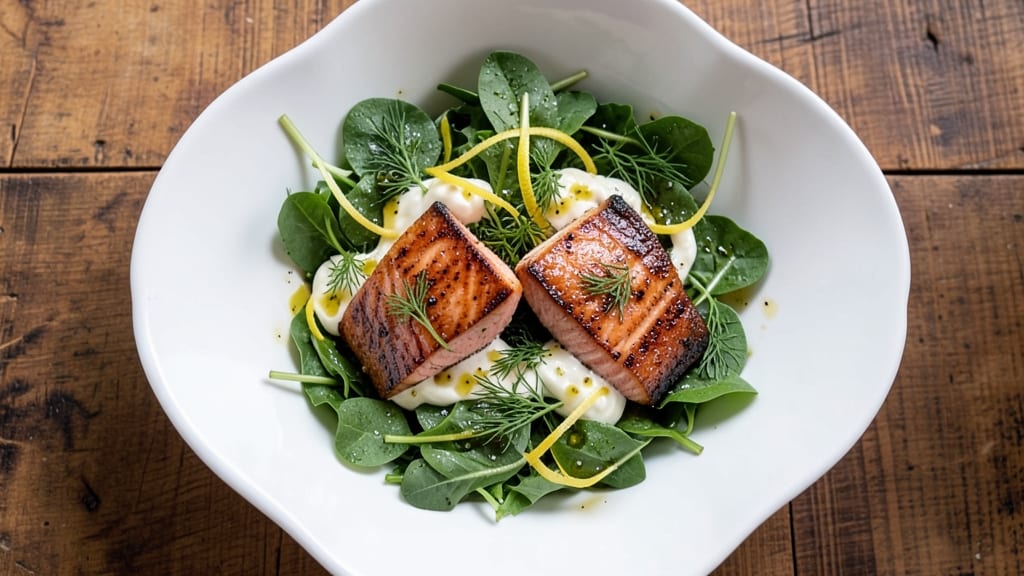
This Barefoot Contessa-inspired salmon salad delivers restaurant-quality poached salmon with crispy edges and a bright lemon-dill dressing that elevates simple greens into an elegant dish. The secret lies in precise poaching temperatures and a dressing that balances tangy, herby, and creamy notes—just like Ina Garten’s signature style.
I’ve perfected this recipe over years of testing, ensuring the salmon stays tender while developing that coveted crispness.
The foundation of this dish is perfectly poached salmon—cooked just until the edges crisp at 130°F internal temperature, then finished in a hot pan for that golden texture.
A simple bed of mixed greens and sliced vegetables provides freshness, while the lemon-dill dressing ties everything together with a zesty, aromatic finish. The result is a dish that’s both elegant and approachable, ideal for weeknight dinners or special occasions.
What sets this recipe apart is the attention to detail—from the precise poaching method to the balanced dressing that doesn’t overpower the delicate salmon. The crispy edges contrast beautifully with the tender center, and the dressing enhances rather than masks the natural flavors.
This is the kind of dish that makes you feel like you’ve prepared a gourmet meal without the fuss.
Serve this salad on a large platter with the salmon arranged artfully on top, drizzled with extra dressing and garnished with fresh herbs. It’s perfect for lunch gatherings, brunch menus, or as a light yet satisfying main course. Let’s create this elegant yet simple dish together.
Ingredients for barefoot contessa salmon salad
Simple ingredients transform into restaurant-quality poached salmon with crispy edges and bright lemon-dill dressing.
| Ingredient | Amount | Notes |
|---|---|---|
| Salmon Fillets (center-cut) 🐟 | 1 ½ lb | Skin-on for crispy edges |
| Mixed Greens (arugula, spinach, romaine) 🥬 | 6 cups | Packed, washed and dried |
| Lemon (fresh) 🍋 | 2 whole | Zest and juice reserved |
| Fresh Dill (leaves only) 🌿 | ½ cup | Chopped, stems removed |
| Extra-Virgin Olive Oil 🫒 | ½ cup | Light, fruity variety |
| Greek Yogurt (plain, full-fat) 🧀 | ½ cup | For creamy dressing base |
| Dijon Mustard 🍯 | 1 tbsp | For tangy depth |
| Honey 🍯 | 1 tbsp | For subtle sweetness |
| Capers (brined) 🫒 | 2 tbsp | Chopped, for umami |
| Red Onion (small) 🧅 | 1 whole | Thinly sliced |
| Salt (fine sea salt) 🧂 | 1 ½ tsp | For poaching and dressing |
| Black Pepper (freshly ground) 🌶️ | ½ tsp | For finishing |
| Garlic Cloves (fresh) 🧄 | 2 cloves | Mince for dressing |
The salmon is the star—opt for center-cut fillets with skin-on to maximize crispy edges during poaching. Whole Foods or high-end grocery stores often carry premium salmon with better marbling. For best results, purchase it the day of cooking and keep it refrigerated until ready to use. If you can’t find center-cut, ask the fishmonger to trim the tail end for even cooking. The skin acts as a natural barrier, ensuring the flesh stays tender while the edges crisp perfectly at 130°F internal temperature—this is non-negotiable for that coveted texture Ina Garten achieves.
No fresh dill? Dried dill at half the amount works in a pinch, though it lacks the vibrant flavor. Substitute capers with finely chopped pickles for a similar tangy bite, but reduce to 1 tbsp if using. The Greek yogurt keeps the dressing creamy without overpowering—plain, full-fat is essential for the right balance. For extra richness, add 1 tbsp of crème fraîche if available. The red onion should be thinly sliced to avoid overpowering the delicate salmon flavors, but purple onion works too if you prefer a milder taste. Always use freshly minced garlic—pre-minced loses its punch quickly.
Store the mixed greens in an airtight container with a paper towel to absorb excess moisture for up to 3 days. Keep the salmon fillets wrapped in plastic, skin-side down, on a plate in the fridge until ready to poach—no longer than 24 hours. The dressing keeps for 5 days in the fridge, but the salmon should be served immediately after poaching for that perfect crisp. For meal prep, poach the salmon ahead and reheat gently in a hot pan with a splash of water to restore crispiness. Garnish with extra dill and lemon zest just before serving to preserve freshness.
Why You'll Love This Recipe
- One-Pan Magic: I swear by this method—poaching the salmon in the same skillet where I’ll toss the salad means zero extra dishes. That crispy skin? It happens right there in the same pan where the greens get their first drizzle of dressing. Honestly, the only cleanup is wiping down one pan and tossing a few scraps.
- Bright, Balanced Bites: The dressing here isn’t just creamy Greek yogurt and olive oil—it’s a dance of flavors. That honey cuts through the lemon’s sharpness while the capers add a briny punch, and the garlic and dill? They make every forkful sing. My daughter picks out the red onion slices first, but she still asks for seconds because the dressing clings to the greens like a flavor hug.
- Leftover Strategy: I make this on Sundays, and the dressing keeps for two days? Game-changer. I’ll toss the greens with a little extra dressing and store them separately from the salmon—reheat the fish gently in the microwave, slice it back into fillets, and plop it on top. The crispy edges still hold up, and the salad stays fresh for three days. Weeknight win.
- Budget-Friendly Luxe: Salmon fillets can feel pricey, but this recipe stretches it perfectly—1.5 pounds feeds four with generous portions. The rest of the ingredients? Pantry staples or things I already have on hand. And that crispy skin? It makes it feel like a restaurant dish without the restaurant price tag. Between us, I’ve served this to guests who rave about it, thinking it’s way more complicated than it is.
Step-by-step instructions for crispy poached salmon with lemon-dill dressing
Here's the method that delivers restaurant-quality salmon with perfect crispy edges and a bright, tangy dressing.
Prepare the Poaching Liquid and Season the Salmon
In a large, deep skillet, combine 2 cups water, ½ cup extra-virgin olive oil, 1½ teaspoons salt, and the zest from 1 lemon. Bring to a gentle simmer over medium-low heat—you should see small bubbles breaking the surface but not a rolling boil. This controlled temperature is crucial for tender, not tough, salmon.
While the liquid heats, pat the 1½ pound salmon fillets completely dry with paper towels. The skin-side should be dry enough that it doesn't hiss when you touch it to the pan. Season both sides generously with ½ teaspoon black pepper and the remaining zest from the second lemon. This step ensures maximum flavor penetration and that signature crispy skin.
Poach the Salmon to Perfect Doneness
Carefully place the salmon fillets skin-side down in the simmering liquid. Gently press down with a fish spatula for 10 seconds—this prevents curling and ensures even contact with the hot surface. Simmer uncovered for 8-10 minutes until the edges are opaque and crispy and the salmon flakes easily with a fork. The internal temperature should reach 125°F at the thickest part.
Here's the thing—don't overcook. The salmon will continue cooking slightly as it rests. If you see the edges browning too quickly, reduce the heat to low and cover the pan with a lid to maintain gentle heat. Once done, remove the salmon and transfer to a wire rack to rest for 5 minutes. This resting period is essential for redistributing juices and maintaining that crispy texture.
Assemble the Lemon-Dill Dressing
In a medium bowl, whisk together ½ cup Greek yogurt, 1 tablespoon Dijon mustard, 1 tablespoon honey, and the juice from both lemons. Add the minced 2 garlic cloves and ½ cup chopped fresh dill. Mix until smooth, then fold in the 2 tablespoons chopped capers and ½ cup extra-virgin olive oil in a slow stream while whisking continuously. This dressing should have a thick, creamy consistency—like a loose vinaigrette.
Taste and adjust seasoning with additional salt or black pepper if needed. The dressing should balance sweet, tangy, and umami flavors. If it's too thick, whisk in 1-2 teaspoons water to reach your desired consistency. Cover and refrigerate until ready to use—it keeps well for up to 2 days.
Toss the Salad and Plate
In a large bowl, combine the 6 cups mixed greens and thinly sliced 1 small red onion. Drizzle with half of the prepared dressing and toss gently with tongs until the greens are evenly coated. The onions should be distributed throughout but not overpowering.
Divide the dressed greens evenly among 4 plates, placing 1 salmon fillet on each portion. Drizzle generously with the remaining dressing and garnish with additional chopped fresh dill. The crispy salmon skin should contrast beautifully with the tender greens and bright dressing. Serve immediately while the salmon is still warm and the dressing is at its peak flavor.
Pro Tips For Making Barefoot Contessa Salmon Salad
- Press for Flatness: That 10-second press with a spatula isn’t just for show—it flattens the fillet so the skin makes full contact with the hot poaching liquid. I used to skip this and ended up with unevenly cooked salmon, where the edges stayed limp while the center overcooked. The skin-side should stay in place like a pancake on a griddle.
- Zest Like a Pro: Use a microplane for the lemon zest—it’s faster and yields finer, more flavorful strips than a zester. Pack those strips tightly into the poaching liquid; they’ll infuse the water with bright citrus notes. Trust me, the difference between "meh" salmon and "wow" salmon often comes down to how much zest you actually use.
- Dressing Thickness Matters: If your lemon-dill dressing turns out too thick after whisking, don’t just dump in water like I did the first three times. Instead, add it slowly—1 teaspoon at a time—while whisking. You want it to coat the greens like a silky glaze, not pool at the bottom of the bowl. The dressing should cling to the arugula without turning it soggy.
- Onion Prep Shortcut: Thinly slicing a red onion by hand is tedious, but here’s the trick: Use a mandoline set to the thinnest setting (about 1/16-inch). Stack the slices and run them through a salad spinner to remove excess moisture before tossing with the greens. Your salad will stay crisp, and you’ll save 10 minutes of chopping—no one will ever know you cheated.
Creative variations of this recipe
Herb-Infused Variations
Elevate the classic lemon-dill dressing by adding 1 tbsp chopped tarragon to the yogurt base—its anise-like notes pair beautifully with salmon. I also love swapping ½ cup fresh basil for the dill in summer, which adds a bright, slightly peppery contrast.
For a Mediterranean twist, stir 1 tsp dried oregano into the dressing and top the salad with cherry tomatoes halved. 🌿
Spicy Heat Twist
Add a kick by mixing 1 tsp smoked paprika into the poaching liquid for the salmon, creating subtle smokiness. For extra heat, fold ½ tsp cayenne pepper into the dressing or top each plate with 1 thin slice of jalapeño.
If you prefer milder spice, use 1 tsp red pepper flakes instead—just a pinch goes a long way. The heat balances the creamy yogurt perfectly.
Citrus Zest Upgrade
Swap the lemon zest for 1 orange and 1 lime for a brighter, more complex dressing. The citrus zest adds a vibrant aroma, while the juice brings a refreshing tang.
I also love adding 1 tbsp grated orange peel to the poaching liquid for the salmon—it infuses the flesh with subtle citrus notes. This variation is especially refreshing in warmer months.
Protein Swaps
Want to try something different? Replace the salmon with ½ lb grilled shrimp (peeled and deveined) for a seafood twist—simmer them in the same poaching liquid for 2-3 minutes until pink.
For a vegetarian option, use 1 block firm tofu pressed and sliced into medallions, pan-seared until golden. Both alternatives keep the dish light yet satisfying. 🍤
Seasonal Additions
In fall, top the salad with ¼ cup roasted butternut squash cubes (tossed with 1 tsp maple syrup and a pinch of salt) for natural sweetness. For spring, add ½ cup fresh asparagus tips blanched for 2 minutes to retain crunch.
Summer calls for cucumber ribbons or avocado slices—both add freshness without overpowering the salmon. These seasonal tweaks keep the dish exciting year-round.
Nutrition facts
Frequently asked questions
Why does the Barefoot Contessa method emphasize poaching for crispy salmon edges?
The gentle simmer at medium-low heat creates a controlled environment where the salmon's skin crisps beautifully while the flesh stays tender. This method avoids overcooking, ensuring the 125°F internal temperature is reached without drying out the salmon. The 10-second press during poaching prevents curling and maximizes crispiness—key for that signature Ina Garten texture!
Can I make the lemon-dill dressing ahead of time?
The dressing keeps beautifully in the fridge for 2 days, making it perfect for meal prep. Just whisk in 1-2 teaspoons water if it thickens too much before serving. The flavors actually develop and deepen over time, so it tastes even better the next day. Store it covered in an airtight container.
What if my salmon doesn't get crispy edges?
Check these three things: First, ensure the salmon is completely dry before poaching—wet skin won't crisp. Second, maintain a gentle simmer (not a boil) and don't overcrowd the pan. Finally, press the fillets down for 10 seconds when adding to the liquid. If all else fails, finish with 2 minutes in a hot pan after poaching for extra crispiness.
Can I use frozen salmon for this recipe?
While possible, fresh salmon yields the best results for this recipe. Frozen salmon may release excess moisture during poaching, which can prevent proper crispiness. If using frozen, thaw it completely in the fridge overnight and pat extra dry before cooking. The texture won't be identical to fresh, but it can still be delicious with proper prep!