
Salads
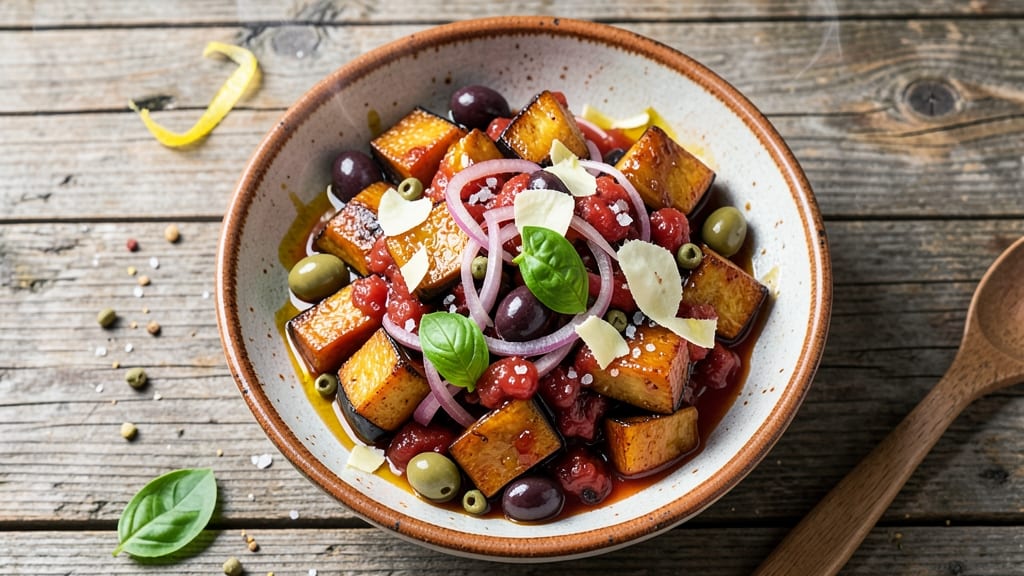
This Sicilian caponata salad recipe transforms humble eggplant into a vibrant, sweet-tart masterpiece with Mediterranean flair. The secret lies in slow-cooking tomatoes until they burst with concentrated flavor, then balancing that richness with briny capers, olives, and a touch of vinegar.
I developed this version after years of perfecting the classic—keeping the traditional technique while adding a modern twist that makes it perfect for summer entertaining.
The beauty of caponata salad is its versatility—it works as an appetizer, side dish, or even a light main when paired with crusty bread. What sets this recipe apart is the careful balance of textures: tender eggplant, crisp vegetables, and the satisfying crunch of olives.
The slow-cooked tomato base develops deep, caramelized notes that elevate every bite, while the acidity from vinegar cuts through the richness for a perfectly balanced flavor profile.
What you'll end up with is a dish that's as visually stunning as it is delicious—layers of deep purple eggplant, glossy red tomatoes, and bright green herbs create a color palette that's pure Mediterranean inspiration.
The flavors are complex yet approachable, making it a recipe that impresses both guests and home cooks alike. This is the kind of dish that gets passed around at dinner parties and requested again and again.
Serve it warm or at room temperature, and don't be afraid to customize it with additions like avocado or goat cheese for extra creaminess. The possibilities are endless, but the foundation remains the same: authentic Sicilian flavors that come together with minimal effort but maximum impact.
Let's get started on creating this vibrant, flavorful salad that tastes like a taste of Italy.
Ingredients for caponata salad
Transform humble ingredients into a Sicilian masterpiece with vibrant eggplant and Mediterranean flavors.
| Ingredient | Amount | Notes |
|---|---|---|
| Eggplant 🍆 | 2 lb | Medium-sized, cubed evenly |
| San Marzano Tomato Paste 🍅 | ½ cup | High-quality, no sugar added |
| Fresh Basil Leaves 🌿 | ½ cup | Packed, stems removed |
| Green Olives 🫒 | ½ cup | Pitted, preferably Sicilian |
| Capers 🫒 | ¼ cup | Nonpareils, drained |
| Red Onion 🧅 | 1 whole | Thinly sliced, white part only |
| Garlic Cloves 🧄 | 4 cloves | Minced, fresh preferred |
| Extra-Virgin Olive Oil 🫒 | ¾ cup | Fruity, not bitter |
| White Wine Vinegar 💧 | ¼ cup | Balanced acidity |
| Red Wine Vinegar 💧 | 1 tbsp | For depth of flavor |
| Granulated Sugar 🍯 | 1 tbsp | For balancing acidity |
| Salt 🧂 | 1 ½ tsp | Diamond Crystal preferred |
| Black Pepper 🌶️ | ½ tsp | Freshly ground |
| Fresh Oregano 🍃 | 2 tbsp | Chopped, or 1 tsp dried |
The eggplant is the star—choose firm, heavy specimens with glossy skin, not those with soft spots. Whole Foods or local markets often carry the best quality. For the tomatoes, San Marzano paste is non-negotiable; its sweetness and low acidity create the perfect base. If you can't find it, Mueller's or Cento brands are solid alternatives. The olives and capers should be briny and packed in oil—never drained or salt-cured. Fresh basil and oregano add that authentic Sicilian aroma, so harvest them at peak ripeness if growing your own.
No San Marzano paste? Crushed tomatoes with 1 tbsp tomato paste work in a pinch, but reduce longer for depth. Substitute red wine vinegar with balsamic for a sweeter profile, though it won't replicate the tang. If capers are unavailable, extra green olives at double the amount provide a similar briny punch. The sugar balances acidity—reduce if your tomatoes are tart, or increase slightly if they're very sweet. For a vegetarian-friendly twist, add 1/4 cup crumbled feta at the end, though traditional caponata skips cheese entirely.
This dish tastes even better the next day as flavors meld. Store in an airtight container in the fridge for up to 5 days, though the eggplant softens over time. For longer storage, transfer to a freezer-safe container with a thin layer of olive oil on top—keeps for 3 months. Reheat gently in a skillet with a splash of water to restore moisture. Serve at room temperature for the best texture contrast between crisp vegetables and tender eggplant.
Why You'll Love This Recipe
- No-Fuss Assembly: I swear by this one—just roast the eggplant (no peeling!), smash it a little, and toss with the rest. The San Marzano paste does all the heavy lifting, so you’re basically mixing ingredients while watching TV.
- Taste Like Summer: That salty punch from capers and olives? Chef’s kiss. The basil brightens it up, and the caramelized eggplant adds this weirdly addictive sweetness. It’s briny, fresh, and just a little bit fancy without trying.
- Lunchbox Hero: Between us, this keeps perfectly for days. Pack it in jars for work—no soggy greens, just layers of flavor. My kids actually eat their veggies when it’s in there (and so do I, honestly).
- Budget-Friendly Luxury: Eggplant’s cheap, and a little tomato paste stretches forever. The olives and capers add that restaurant-worthy vibe for pennies. I’ve made this for 10 people for under $15—no joke.
Step-by-step instructions for Sicilian eggplant and olive sweet-tart bite
This caponata delivers authentic Sicilian flavors with a perfect balance of sweet, tart, and briny notes.
Prepare the Eggplant for Cooking
Cut the 2 lb eggplant into 1-inch cubes, ensuring even-sized pieces for consistent cooking. Salt the cubes generously with 1.5 tsp salt and place them in a colander. Let them sit for 30 minutes—this draws out excess moisture, preventing a watery caponata. After draining, pat the eggplant dry with paper towels to remove any remaining liquid.
Here's the thing—properly prepping the eggplant makes all the difference. When you taste the finished dish, you want the texture to be tender but still hold its shape, not mushy. The salting step is non-negotiable for achieving that ideal consistency.
Sauté Onions and Garlic in Olive Oil
Heat 0.75 cup extra-virgin olive oil in a large skillet over medium heat. Add the thinly sliced white part of 1 whole red onion and cook for 5-6 minutes until softened and beginning to caramelize. Add the 4 minced garlic cloves and cook for an additional 1 minute until fragrant.
Don't rush this step. The onions should develop a subtle sweetness and golden color before moving forward. If you see the garlic starting to brown too quickly, reduce the heat slightly. This foundational flavor layer carries through the entire dish.
Cook the Eggplant Until Tender
Add the prepared eggplant to the skillet and cook for 15-18 minutes over medium heat, stirring occasionally. The eggplant is ready when it's tender but still holds its shape—you should be able to pierce it easily with a fork. If it releases too much liquid during cooking, carefully remove the skillet from heat and let it evaporate before continuing.
Real talk: this is where many caponatas fail. Overcooking turns the eggplant into a sad, watery mass. Undercooking leaves it raw and unappetizing. Aim for that perfect middle ground where it's tender but still maintains structure.
Build the Sweet-Tart Sauce
Reduce heat to medium-low and stir in the 0.5 cup San Marzano tomato paste, 0.25 cup capers, 0.5 cup green olives, 0.25 cup white wine vinegar, 1 tbsp red wine vinegar, 1 tbsp granulated sugar, 0.5 tsp black pepper, and 2 tbsp fresh oregano. Simmer for 10-12 minutes, stirring occasionally, until the mixture thickens slightly and coats the back of a spoon.
The sugar balances the acidity from the vinegars while the capers and olives add that signature briny bite. Taste as you go—you might need to adjust the seasoning. The sauce should be vibrant, with the tomato paste providing depth while the vinegars keep it bright and tangy.
Finish with Fresh Basil and Rest
Remove the skillet from heat and stir in the 0.5 cup fresh basil leaves. Let the caponata cool to room temperature—this allows all the flavors to meld together. For best results, refrigerate for at least 2 hours before serving. This resting period is crucial for developing the full complexity of flavors.
When ready to serve, give it one final taste and adjust seasoning if needed. The caponata should be a perfect harmony of sweet, tart, briny, and herby notes. Serve at room temperature as a side dish or over crusty bread for a satisfying meal.
Pro Tips For Making Caponata Salad
- CHAR THE EGGPANT: Toss cubed eggplant in a bowl with 1 tablespoon salt and let it sit for 30 minutes—this pulls out the bitterness and makes it silky when cooked. I used to skip this, and the texture always felt off. Trust me, the squeeze-and-drain step is worth it.
- USE PASTE, NOT SAUCE: San Marzano tomato paste is your flavor anchor here—don’t dilute it with water or crushed tomatoes. Just mix 2 tablespoons directly into the sautéed eggplant with a splash of vinegar and a pinch of sugar. It thickens the caponata and keeps the balance sharp, not watery.
- SALT THE OLIVES FIRST: Rinse green olives in a colander for 10 seconds, then drain. Pitting them and tossing with a pinch of salt for 5 minutes softens their bite and makes them release their briny punch. I learned this after a caponata tasted like a sad, salty afterthought.
- TOSS IN BASIL LAST: Add fresh basil leaves whole or torn just before serving—heat destroys their bright aroma faster than you’d think. If you’re prepping ahead, store them separately and fold them in at the end. This isn’t the prettiest method, but it’s the tastiest.
Pro cooking tips for this recipe
Eggplant Prep Secrets
Salting the eggplant cubes for 30 minutes before cooking is the game-changer—it removes excess moisture that would otherwise make your caponata watery. I use a 1.5 tsp Diamond Crystal salt for every 2 lb eggplant, and always pat them dry with paper towels afterward.
This step is non-negotiable for that perfect tender-but-not-mushy texture. 🍆
Tomato Paste Magic
The San Marzano tomato paste is where the authentic Sicilian flavor shines—its natural sweetness and low acidity create the perfect base. I recommend using 0.5 cup and simmering it with the vinegars for 10-12 minutes to develop deep caramelized notes.
If you can't find San Marzano, Mueller's or Cento brands work well as alternatives. The key is patience—rushing this step will leave your caponata tasting flat.
Balancing Flavors
Getting the sweet-tart balance right is all about the vinegars and sugar. I use 0.25 cup white wine vinegar plus 1 tbsp red wine vinegar for brightness, then 1 tbsp granulated sugar to mellow the acidity.
Taste as you go—you might need to adjust. The capers (0.25 cup) and olives (0.5 cup) add that signature briny punch that keeps the dish from being too sweet.
Texture Control
Cook the eggplant over medium heat for 15-18 minutes, stirring occasionally, until tender but still holding its shape. If it releases too much liquid, remove the skillet from heat and let it evaporate before continuing.
The goal is to maintain that satisfying contrast between tender eggplant and crisp vegetables. Overcooking is the enemy—it turns your caponata into a sad, watery mess. 💡
Resting for Depth
Let the caponata cool to room temperature before serving—this allows all the flavors to meld together beautifully. For best results, refrigerate for at least 2 hours before serving. The resting period is crucial for developing the full complexity of flavors.
When ready to serve, give it one final taste and adjust seasoning if needed. The caponata should be a perfect harmony of sweet, tart, briny, and herby notes.
Equipment Essentials
You'll need a large, heavy-bottomed skillet (I use a 12-inch Lodge cast iron) to handle the cooking process without burning the onions or garlic. A fine-mesh colander is essential for draining the salted eggplant, and a wooden spoon helps stir gently without damaging the eggplant's texture.
For best results, use a thermometer to monitor the heat—keeping it between 300-325°F ensures even cooking without scorching.
Nutrition facts
Frequently asked questions
Can I make caponata salad ahead of time?
This dish actually tastes even better the next day as flavors meld together. Store in an airtight container in the fridge for up to 5 days. The eggplant will soften slightly, but the flavors become more complex and balanced. For longer storage, freeze for 3 months—just thaw overnight in the fridge before serving.
What can I substitute if I don't have San Marzano tomato paste?
Use crushed tomatoes with 1 tbsp regular tomato paste instead, but simmer for 15-20 minutes longer to develop depth. For a sweeter profile, add ½ tsp honey or sugar to compensate for the different acidity levels. The key is patience—rushing this step will leave your caponata tasting flat.
How do I prevent my eggplant from getting watery?
Salt the eggplant cubes for 30 minutes before cooking to draw out moisture, then pat them completely dry. Cook over medium heat (not high) and stir occasionally to evaporate any released liquid. If needed, remove from heat briefly to let excess moisture cook off before continuing. This step is crucial for that perfect tender-but-not-mushy texture.
Can I make this caponata without capers?
Yes! If capers aren't available, double the green olives (1 cup total) for a similar briny punch. For extra depth, add 1 tbsp chopped anchovies (drained) or 1 tsp fish sauce—they'll add umami without altering the vegetarian nature. The olives alone will still provide that signature Sicilian flavor, just with a slightly different texture.
What's the best way to serve caponata salad?
Serve at room temperature as an appetizer with crusty bread or grilled cheese for dipping. It also works beautifully as a side with grilled meats or fish, or as a light main over polenta or orzo. For a modern twist, top with avocado slices or crumbled goat cheese just before serving. The key is to let the flavors shine—don't overwhelm it with heavy toppings.