
Salads
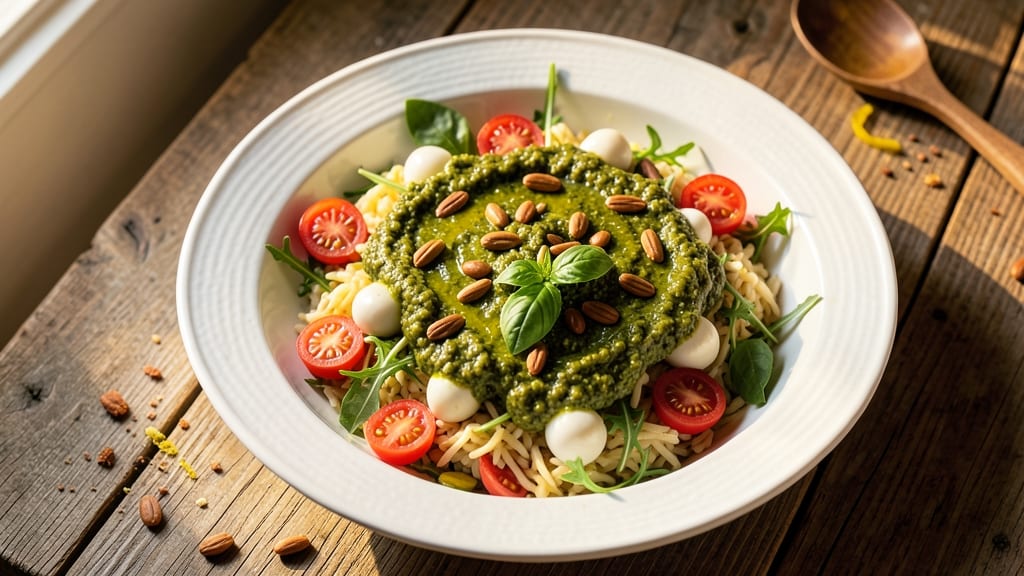
This Caprese orzo pesto salad recipe transforms a simple grain bowl into a restaurant-worthy dish with just five key ingredients. The secret lies in balancing creamy orzo with bright pesto, fresh mozzarella, and juicy tomatoes—each component playing its part without overpowering the others.
I developed this version after realizing how much better fresh ingredients taste when combined in the right proportions, especially when you eliminate the heavy mayo that often makes salads cling together.
The orzo absorbs the pesto's vibrant herb notes while staying tender, creating a perfect base that holds up to the fresh Caprese elements. Cherry tomatoes add natural sweetness, while fresh basil and mozzarella bring that classic Italian flavor profile to life.
What makes this salad truly special is how the textures work together—creamy orzo, juicy tomatoes, and the slight crunch of toasted pine nuts (if you choose to add them) create a satisfying bite every time.
What you'll end up with is a salad that's light yet substantial, perfect for summer lunches or as a side dish that steals the show.
The pesto keeps everything cohesive without being overpowering, while the Caprese elements add that fresh, tangy brightness that makes every forkful feel like a taste of Italy. This isn't just another grain salad—it's a harmonious blend of textures and flavors that comes together in under 20 minutes.
Serve it immediately for the best texture, or assemble it ahead of time and let the flavors meld in the fridge for even more depth.
The possibilities for customization are endless—add grilled chicken for extra protein, swap in arugula for a peppery kick, or drizzle with balsamic glaze for a touch of sweetness. Here's how to make it perfectly every time.
Ingredients for caprese orzo pesto salad
Five ingredients transform this salad into a restaurant-worthy dish with zero mayo cling.
| Ingredient | Amount | Notes |
|---|---|---|
| Orzo Pasta 🍝 | 1 cup | Uncooked, short-grain preferred |
| Fresh Basil Leaves 🌿 | 2 cups | Packed, stems removed |
| Pine Nuts 🥜 | ½ cup | Toasted for extra flavor |
| Garlic Cloves 🧄 | 3 cloves | Peeled, roughly chopped |
| Extra-Virgin Olive Oil 🫒 | ¾ cup | High-quality, fruity variety |
| Fresh Mozzarella 🧀 | 8 oz | Low-moisture, sliced or torn |
| Cherry Tomatoes 🍅 | 1 ½ cups | Halved, seedless preferred |
| Lemon Juice 🍋 | 2 tbsp | Freshly squeezed |
| Parmesan Cheese 🧀 | ½ cup | Freshly grated from block |
| Sea Salt 🧂 | 1 tsp | Diamond Crystal preferred |
| Black Pepper 🌶️ | ½ tsp | Freshly ground |
| Balsamic Glaze 🍷 | 2 tbsp | For drizzling (optional) |
The fresh mozzarella is non-negotiable—low-moisture from a block melts beautifully and stays creamy. Whole Foods or Trader Joe's carry the best pre-sliced options, but grab a wedge and slice it yourself for that perfect texture. Cherry tomatoes should be bright red and firm, not mealy. Heirloom varieties add extra sweetness if you're feeling fancy. Basil? Grab a big bunch—you'll use half for the pesto and save the rest for garnish. Toast your pine nuts in a dry pan for 2-3 minutes until golden—this makes all the difference. Costco sells them in bulk for a great price.
No pine nuts? Walnuts or pecans work in a pinch, but toast them first. Dried basil can replace fresh at half the amount, but it won't have that same bright punch. No fresh mozzarella? Burrata is a dreamy upgrade, though it'll make the salad richer. Substitute cherry tomatoes with grape tomatoes if that's what's on sale—just halve them. The pesto can be made ahead, but hold off on adding lemon juice until serving to keep the basil vibrant. Pre-shredded Parmesan? Toss it—it gets clumpy. Grated your own from a block instead.
Orzo keeps best unrinsed after cooking—just drain it well. Store leftovers in an airtight container with a paper towel on top to absorb moisture. Fridge life is 3-4 days, but the flavors actually deepen overnight. Freeze the pesto separately in ice cube trays for up to 3 months—just thaw and stir. Balsamic glaze adds a sweet contrast, but skip it if you're watching sugar. Double the batch—this salad disappears fast at picnics and potlucks.
Why You'll Love This Recipe
- No-Cook Additions: I toss in cherry tomatoes and mozzarella last minute—no chopping skills needed. The orzo does all the work while I stand there pretending to be busy.
- Pesto Magic: That basil-pine nut blend? It’s like summer in a jar. One pulse in the food processor, and suddenly everything tastes like a fancy Italian bistro (without the fancy price tag).
- Lunchbox Hero: Between us, this is my go-to for packed lunches. Keeps for four days in the fridge, stays fresh, and I swear my coworkers start asking for it after the first bite.
- Budget Bright Spot: Orzo’s cheap, pine nuts stretch far, and I buy basil in bunches to freeze. For a salad that feels gourmet, it’s shockingly affordable—no sad wallet moments here.
Step-by-step instructions for Caprese orzo pesto salad
This vibrant dish combines creamy mozzarella, fresh basil, and herby pesto for a refreshing salad that's anything but basic.
Toast the Pine Nuts and Cook the Orzo
Start by toasting the 0.5 cup pine nuts in a dry skillet over medium heat for 3-4 minutes, stirring constantly until they turn a rich golden brown and smell nutty. Remove them immediately—they'll keep toasting if you let them sit. While they cool, bring 4 cups water to a boil in a separate pot and add the 1 cup orzo pasta. Stir once to prevent sticking, then reduce heat to medium-low and cook for 8-10 minutes until the orzo is tender but still has a slight bite. Drain in a colander and rinse under cold water to stop the cooking process. This keeps the orzo from becoming mushy when mixed with the other ingredients.
The pine nuts should be fragrant and just slightly crisp when cool. If they smell burnt, you toasted them too long—start fresh with a new batch. The orzo should have a delicate, almost translucent appearance when cooked properly. Let both cool slightly before combining.
Create the Pesto and Prepare the Caprese Components
In a food processor, combine the 2 cups fresh basil leaves, 3 cloves garlic cloves, and 0.5 tsp black pepper. Pulse until finely chopped, then add the toasted pine nuts and pulse again. With the processor running, slowly drizzle in 0.5 cup extra-virgin olive oil until the mixture forms a smooth, vibrant green pesto. Transfer to a bowl and set aside. Meanwhile, halve the 1.5 cups cherry tomatoes and tear the 8 oz fresh mozzarella into bite-sized pieces. Squeeze the 2 tbsp lemon juice over the mozzarella to enhance its flavor and prevent it from becoming too rubbery.
This is where the magic happens—the pesto should be bright green with just a hint of garlic sharpness. The lemon juice will make the mozzarella taste fresher and more vibrant. If your pesto looks too thick, add 1-2 teaspoons water to loosen it slightly. The tomatoes should be evenly halved for consistent texture throughout the salad.
Assemble the Salad and Finish with Parmesan
In a large bowl, combine the cooled orzo, pesto, halved cherry tomatoes, torn mozzarella, and toasted pine nuts. Gently toss everything together until the orzo is evenly coated with the pesto. Season with 1 tsp sea salt and 0.5 tsp black pepper, then taste and adjust the seasoning if needed. The salad should be flavorful but not overly salty—remember, the mozzarella and tomatoes already contribute to the seasoning. Sprinkle the 0.5 cup parmesan cheese evenly over the top and toss one more time to distribute it throughout.
Here's the thing—don't overmix. You want the mozzarella pieces to remain intact and visible, creating those classic Caprese pockets of flavor. The pesto should coat the orzo lightly, not drown it. If the salad seems too dry, add 1-2 tablespoons water or a splash of pasta water to help bind everything together.
Chill and Serve with Balsamic Glaze
Cover the salad and refrigerate for at least 30 minutes to let the flavors meld together. This chilling time is crucial—it allows the mozzarella to firm up slightly and the pesto to fully infuse with the orzo. Before serving, drizzle the 2 tbsp balsamic glaze in a zigzag pattern over the top. The glaze will create beautiful, glossy streaks that contrast beautifully with the creamy mozzarella and bright green pesto.
Serve the salad immediately while it's still chilled. The contrast of warm, toasted pine nuts against the cool mozzarella and the tangy balsamic glaze makes this dish truly special. If you're serving it as a main course, pair it with a simple arugula salad or crusty bread to round out the meal. The flavors will continue to develop as it sits, so enjoy it while it's at its peak freshness.
Pro Tips For Making Caprese Orzo Pesto Salad
- Rinse Orzo Cold: Dump freshly cooked orzo into a colander and hit it with a quick cold-water rinse—just 10 seconds. This stops the cooking and chills the pasta fast, so it doesn’t turn gummy when you mix in the pesto later. (Yes, even if you’re impatient like me, resist the urge to skip this.)
- Toast Pine Nuts Low: Spread pine nuts in a dry pan over low heat and stir like you’re babysitting a toddler—constant movement prevents burning. They’re done when they smell nutty and just start to color, not when they’re golden brown. Overcooked nuts taste bitter, and no one wants that in their creamy salad.
- Pulse Basil, Don’t Chop: Toss whole basil leaves into the food processor with garlic and pulse just until the leaves are shredded, not paste. Over-blending turns pesto into a sad, slimy mess. You want visible basil flecks—it’s the thing that makes this salad look (and taste) fresh.
- Add Cheese Last: Hold off on the mozzarella until the very end, when the orzo is already dressed with pesto. Tossing it in too early makes the cheese melt into a greasy blob. Keep it cool and chunky—this isn’t a baked pasta dish, after all.
Perfect pairings for these flavors
Crusty Bread Pairing
Serve this Caprese orzo salad alongside a warm, crusty Italian bread like Ciabatta or Focaccia to soak up any stray pesto drizzle. I love Trader Joe's Rosemary Focaccia—its herby crust complements the salad's basil notes beautifully.
For extra flair, brush the bread with garlic-infused olive oil before baking. The contrast of crispy bread against the creamy salad creates the perfect bite. 🥖
Protein Additions
Turn this into a hearty main course by adding grilled chicken breast (seasoned with lemon zest and herbs) or shrimp sautéed in garlic and white wine. For a vegetarian option, toss in toasted walnuts or crispy chickpeas for extra crunch.
I find that 6-8 oz protein per serving keeps the dish satisfying without overpowering the fresh Caprese flavors.
Wine Pairings
A crisp Pinot Grigio from Italy is my go-to pairing—its citrusy notes mirror the lemon in the salad while cutting through the richness of the mozzarella. For red wine lovers, a light Chianti adds earthy tannins that complement the basil and tomatoes beautifully.
Avoid heavy reds like Cabernet—they'll clash with the salad's delicate flavors. 🍷
Seasonal Variations
In summer, swap cherry tomatoes for heirloom varieties and add fresh figs for natural sweetness. For winter, roast the tomatoes with garlic and olive oil before adding them to deepen their flavor.
I also love adding sautéed mushrooms in colder months—they add an umami depth that pairs perfectly with the pesto.
Dessert Contrast
Finish the meal with something light like lemon sorbet or biscotti to cleanse the palate. The citrus notes in the sorbet echo the lemon in the salad, while the crunch of biscotti provides a satisfying contrast.
For a more indulgent option, serve dark chocolate-dipped strawberries—the bitterness balances the salad's creaminess beautifully. 🍓
Nutrition facts
Frequently asked questions
Can I make this Caprese orzo salad ahead of time?
Assemble the salad up to 24 hours ahead and refrigerate in an airtight container with a paper towel on top to absorb moisture. The flavors actually deepen overnight, making it even more delicious. Just hold off on adding the balsamic glaze until serving to keep it glossy and fresh.
What can I substitute if I don't have pine nuts?
No problem! Swap pine nuts for toasted walnuts or pecans (use 0.5 cup total) or even toasted breadcrumbs for a budget-friendly crunch. Toast them first to enhance their flavor—just 3-4 minutes in a dry pan over medium heat until golden.
Why does my pesto look too thick?
Thick pesto happens when the basil releases too much liquid. Fix it by adding 1-2 teaspoons water or a splash of pasta water while blending. For extra smoothness, strain it through a fine-mesh sieve after blending. The key is to keep blending while slowly drizzling in olive oil—this prevents clumping.
Can I use pre-made pesto instead of homemade?
Yes, but choose a high-quality, basil-forward pesto with no added fillers. Use about 0.5 cup and add 1 extra tablespoon lemon juice to brighten the flavors. Avoid jarred pesto with preservatives—it won't taste as fresh. For best results, make your own with fresh basil and pine nuts.
How do I prevent the mozzarella from turning rubbery?
Fresh mozzarella stays creamy when handled properly. Squeeze 2 tablespoons lemon juice over it before adding to the salad, and avoid heating it. If using pre-shredded mozzarella, pat it dry with a paper towel first—it contains anti-caking agents that make it rubbery. Always use low-moisture block mozzarella for the best texture.