
Salads
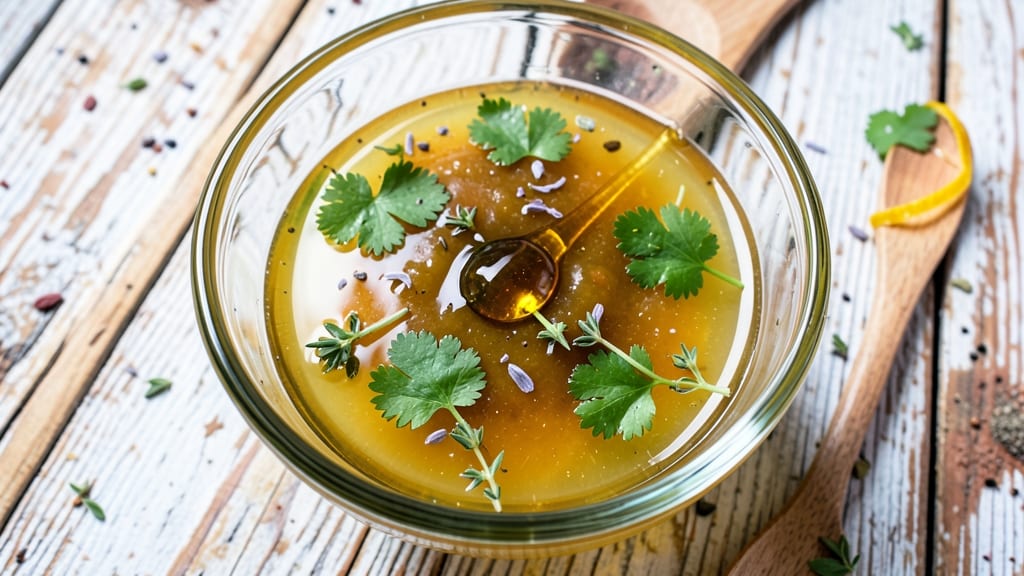
This Caribbean salad dressing recipe transforms any salad into a tropical escape with just five simple ingredients. The bright citrus-lime and pineapple zing creates a dressing that's tangy, sweet, and impossibly refreshing—perfect for summer greens or grilled meats.
I developed this recipe after craving that vacation-worthy flavor without the heavy cream or artificial ingredients found in store-bought versions.
The secret lies in balancing fresh lime juice with pineapple juice for natural sweetness, while olive oil and honey create a silky emulsion that clings beautifully to leaves. Fresh cilantro and thyme add aromatic depth, making this dressing more than just a topping—it's a flavor experience.
Unlike traditional vinaigrettes, this version stays vibrant even after sitting for hours, thanks to the pineapple's natural preservative properties.
What you'll end up with is a dressing that's as versatile as it is delicious—drizzle it over mixed greens, use it as a marinade for chicken, or toss it with grilled vegetables.
The texture is perfectly balanced: light enough to coat without weighing down your salad, yet rich enough to satisfy any craving. Best of all, it comes together in under 5 minutes with ingredients you likely already have on hand.
Store any leftovers in an airtight container in the refrigerator for up to 5 days, where the flavors will continue to meld and deepen. This isn't just another salad dressing—it's a taste of the Caribbean that elevates every dish it touches. Let's make it together!
Ingredients for caribbean salad dressing
Five tropical ingredients transform ordinary salads into vibrant Caribbean-inspired dishes.
| Ingredient | Amount | Notes |
|---|---|---|
| Fresh Lime Juice 🍋 | ½ cup | Strained, seeds removed |
| Pineapple Juice 🍍 | ½ cup | Freshly squeezed, no pulp |
| Extra-Virgin Olive Oil 🫒 | ½ cup | Light, fruity variety preferred |
| Raw Honey 🍯 | ¼ cup | Wildflower or clover preferred |
| Fresh Cilantro 🌿 | ¼ cup | Stems removed, finely chopped |
| Fresh Thyme Leaves 🌿 | 1 tbsp | Stems removed, finely chopped |
| Diamond Crystal Kosher Salt 🧂 | ½ tsp | Adjust to taste |
| Freshly Ground Black Pepper 🌶️ | ¼ tsp | Lightly cracked |
The lime and pineapple juices form the dressing's vibrant heart—freshly squeezed is non-negotiable for authentic flavor. For lime, Mexican Key limes from specialty stores add extra zing, but regular limes work perfectly. Pineapple juice should be 100% pure with no added sugars; brands like Del Monte or Dole work well. The olive oil should be light and fruity—avoid heavy, peppery varieties that can overpower the citrus notes. Honey selection matters too: raw wildflower adds subtle floral undertones that complement the tropical profile.
No fresh lime? Key lime juice from a bottle works in a pinch, though fresh is ideal. Pineapple juice substitutes? Mango nectar at half the amount mimics the tropical sweetness. Short on cilantro? Fresh mint or basil at the same quantity provides aromatic depth. The thyme can be swapped for fresh oregano, though its piney notes are uniquely Caribbean. For a vegan adaptation, replace honey with agave nectar—the texture remains identical. Always taste before emulsifying; salt and pepper adjustments are the final touch.
This dressing maintains peak freshness for 5 days when refrigerated in an airtight container. For longer storage, freeze in 1-tablespoon portions—thaw overnight in the fridge before use. The pineapple juice's natural acidity acts as a preservative, preventing separation. When using as a marinade, never reuse—discard after 24 hours of contact with raw proteins. The dressing's vibrant color fades slightly over time, but flavor remains robust. For best results, shake vigorously before each use.
Why You'll Love This Recipe
- Five-Ingredient Magic: I swear by this combo—just lime, pineapple, oil, honey, and cilantro. No fancy tools, no waiting for anything to cool, and honestly? It’s the kind of dressing that makes me feel like I’ve earned a little vacation in every bite.
- Bright Tang Alert: That lime and pineapple juice hit different—sharp, sweet, and just enough heat to wake up any salad. The honey softens the edges, and the cilantro? It’s the little herb that ties the whole thing together like a fresh, tropical hug.
- Meal Prep MVP: I make a big batch on Sundays and keep it in the fridge for the week. It’s perfect for greens, grilled chicken, or even drizzled over roasted veggies—no one ever complains when this shows up at the table.
- No-Waste Winner: Between us, this recipe uses up random lime peels, leftover pineapple juice, and a handful of cilantro that was about to bolt. Plus, the honey and olive oil are pantry staples that stretch forever, so it’s cheap to keep around.
Step-by-step instructions for Caribbean salad dressing
This vibrant dressing balances tropical sweetness with bright acidity—perfect for island-inspired salads.
Whisk Together the Citrus Juices
In a medium bowl, combine the 0.5 cup fresh lime juice and 0.5 cup pineapple juice. The lime juice should be strained to remove seeds and pulp for a smooth texture. This citrus base creates the dressing's signature tangy foundation—essential for cutting through rich ingredients like avocado or grilled meats.
Use a whisk to blend thoroughly, ensuring no pockets of undiluted juice remain. The mixture should look uniform and slightly cloudy from the pineapple's natural enzymes. Taste at this stage—you'll notice the sharp citrus notes that will brighten your entire dish.
Gradually Incorporate the Olive Oil
With the whisk moving continuously, slowly drizzle in the 0.5 cup extra-virgin olive oil. This gradual approach prevents the oil from separating and creates an emulsified texture right from the start. The olive oil adds richness that balances the acidity while maintaining the dressing's lightness.
Stop whisking occasionally to scrape the bowl's sides—this ensures all ingredients are fully incorporated. The dressing should begin to thicken slightly as the oil emulsifies with the citrus juices. If it looks too thin at this point, we'll adjust the honey later, but trust the process—this is where the magic happens.
Add Sweetness and Herbs
Pour in the 0.25 cup raw honey while whisking continuously. The honey not only sweetens but also helps stabilize the emulsion by adding natural thickeners. Next, fold in the 0.25 cup finely chopped fresh cilantro and 1 tablespoon finely chopped fresh thyme leaves using a rubber spatula.
Here's where the dressing develops its complex flavor profile. The cilantro brings fresh, grassy notes while the thyme adds earthy depth. Stir gently to avoid breaking up the herbs—you want them distributed evenly but still visible for texture. The mixture should now have a vibrant green hue with visible herb flecks.
Season and Emulsify
Add the 0.5 teaspoon Diamond Crystal kosher salt and 0.25 teaspoon freshly ground black pepper, whisking until fully dissolved. Taste the dressing at this stage—it should balance sweet, tangy, and herbal notes with proper seasoning. If needed, adjust the salt or pepper to your preference.
For the final emulsification, transfer the dressing to a blender or use an immersion blender to process for 10-15 seconds. This step ensures a silky, homogeneous texture without any visible separation. The dressing should coat the back of a spoon smoothly when you lift it—this is your indicator of success.
Rest and Adjust Consistency
Let the dressing sit at room temperature for 10 minutes before using. This resting period allows all flavors to meld completely and any slight separation to re-emulsify naturally. If the dressing is too thick after resting, thin it with 1-2 teaspoons of water at a time until it reaches your desired consistency.
The final product should be vibrant, with a glossy sheen that indicates proper emulsification. The aroma should be intoxicating—bright citrus, sweet honey, and fresh herbs working in harmony. This dressing will elevate any salad, from tropical fruit combinations to hearty grain bowls, with its perfect balance of sweet, tangy, and herbal notes.
Pro Tips For Making Caribbean Salad Dressing
- STRAIN THE CILANTRO: Toss the chopped cilantro into a fine-mesh strainer over your mixing bowl, then press it with the back of a spoon—this gets rid of the bitter stems and keeps your dressing silky smooth. I used to just chop and dump, and the texture always felt uneven.
- BALANCE THE SWEET: Start with half the honey called for, taste, then add the rest gradually. Pineapple juice is deceptively strong, and lime juice can get lost in the mix—this way, you won’t end up with a cloying or sour mess.
- WHISK IN STAGES: Combine the lime and pineapple juices first, then slowly drizzle in the olive oil while whisking vigorously. Stopping to stir halfway through lets the citrus emulsify properly, so you don’t end up with a split dressing that separates in minutes.
- CHILL BEFORE SERVING: Let the dressing sit at room temperature for 10 minutes after mixing—this lets the flavors meld. Then refrigerate for at least 30 minutes. Skipping this step makes the honey taste harsh and the lime too sharp. (Yes, even if you’re impatient like me.)
Regional styles of caribbean salad dressing
Jamaican Jerk-Inspired
For a spicier Caribbean twist, add 1 tablespoon of Scotch bonnet hot sauce (like Pepper Tree) and 1 teaspoon ground allspice to the base recipe. The heat from the Scotch bonnet complements the sweetness beautifully while giving it that signature Jamaican jerk kick.
I like to add ½ teaspoon grated ginger for extra depth—it enhances the dressing's complexity when paired with grilled jerk chicken or pineapple salsa. 🌶️
Bahamian Citrus Twist
In the Bahamas, they love a bright, citrus-forward dressing. Swap the honey for ¼ cup orange marmalade> and add 1 teaspoon finely grated orange zest>. The marmalade adds a subtle jammy sweetness that pairs perfectly with the lime and pineapple.
For extra Bahamian flair, stir in 1 tablespoon chopped fresh mint>—it’s a staple in Bahamian cuisine and adds a refreshing contrast to the thyme. This version works wonderfully with conch salad or grilled lobster.
Puerto Rican Mango-Lime
Puerto Rican cuisine loves tropical fruit, so replace the pineapple juice with ½ cup mango nectar> and add 1 tablespoon lime zest>. The mango brings a richer, fruitier sweetness that’s pure island vibes.
For an extra touch, fold in 1 teaspoon finely chopped fresh culantro (recao)>, a herb commonly used in Puerto Rican cooking. This dressing is a game-changer for tropical fruit salads or grilled plantains.
Trinidadian Rum-Infused
For a boozy, grown-up version, replace 2 tablespoons of the honey> with 2 tablespoons dark rum> (like Appleton Estate). The rum adds warmth and depth, making this dressing perfect for adult gatherings.
Add ½ teaspoon ground nutmeg> for a spiced twist that nods to Trinidad’s love of warm, aromatic flavors. This version is ideal for seafood salads or grilled octopus—just a splash of rum elevates everything.
Cuban Mojo-Inspired
Cuban mojo sauce is all about garlic and citrus, so blend 1 clove roasted garlic> into the dressing after emulsifying. Add ½ teaspoon ground cumin> and 1 teaspoon smoked paprika> for a smoky, earthy depth.
This version works beautifully with Cuban-inspired salads like black bean and corn or grilled pork. The garlic and cumin give it a bold, savory edge that still keeps the tropical brightness intact. 💫
Nutrition facts
Frequently asked questions
Can I make this dressing without fresh herbs? Yes, you can substitute with dried herbs—but use sparingly! For cilantro, try 1 teaspoon dried cilantro (or ½ teaspoon dried oregano) and for thyme, use ½ teaspoon dried thyme. Fresh herbs add vibrant flavor, but dried versions work in a pinch. Just
How do I prevent the dressing from separating?
Emulsification is key! Always whisk the oil in slowly while blending the citrus juices first. For extra stability, add 1 teaspoon of Dijon mustard or ½ teaspoon of xanthan gum (a pinch is enough) when combining ingredients. Shake well before each use, and store in a tightly sealed container. The pineapple juice's natural enzymes also help maintain the emulsion.
What's the best way to use this dressing beyond salads?
This versatile dressing works as a marinade for grilled chicken, shrimp, or tofu—just let it sit for 30-60 minutes before cooking. It also makes a fantastic dip for fresh fruit skewers, plantain chips, or even tacos. For extra flair, drizzle it over grilled vegetables or roasted sweet potatoes to add tropical brightness to any dish.
Can I make this dressing sugar-free?
Replace the honey with ¼ cup sugar-free maple syrup or agave nectar for a vegan-friendly option. For a zero-sugar version, use 2 tablespoons of liquid stevia or monk fruit sweetener (adjust to taste). The dressing will still maintain its tropical flavor profile while being diabetic-friendly. Just remember that the texture may be slightly lighter without honey's natural thickening properties.
Why does my dressing taste too sweet?
This usually happens when the citrus juices aren't fresh or the honey is too dominant. Try adding 1 extra tablespoon of lime juice to cut through the sweetness, or reduce the honey to 2 tablespoons next time. For immediate balance, add ½ teaspoon of apple cider vinegar or a pinch of salt—both enhance acidity and brighten the flavors.