
Salads
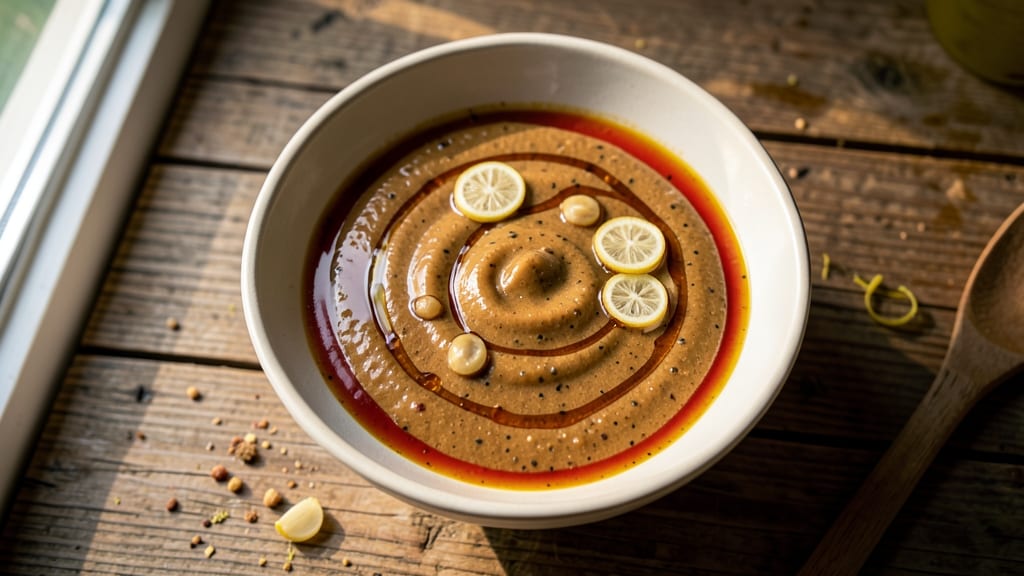
This cashew butter salad dressing transforms simple greens into a rich, nutty masterpiece without relying on mayo. The secret lies in blending cashew butter with citrus and vinegar, creating a velvety emulsion that clings beautifully to salads, grains, and roasted vegetables.
What makes this dressing stand out is its ability to deliver restaurant-quality creaminess using just five ingredients—no special equipment required.
The dressing's nutty depth comes from cashew butter, while lemon juice and apple cider vinegar add bright tanginess that balances the richness. A touch of garlic and Dijon mustard enhances the flavor profile, ensuring every bite is complex yet harmonious.
Unlike traditional creamy dressings, this version stays fresh for up to a week in the refrigerator, making it perfect for meal prep.
What you’ll end up with is a dressing that’s thick enough to coat salads perfectly yet light enough to avoid weighing them down. It works beautifully with kale, spinach, and mixed greens, but also elevates roasted sweet potatoes or grilled chicken.
The texture is smooth and luxurious, with a subtle nutty undertone that makes every salad feel gourmet.
This recipe is not only vegan-friendly but also nut-free if you substitute sunflower seed butter. The emulsification process ensures the dressing stays creamy without separating, even after sitting in the fridge.
Whether you’re dressing up a simple lunch or adding depth to a dinner salad, this dressing delivers consistent, professional results every time.
Ingredients for cashew butter salad dressing
Five simple ingredients create this velvety, nutty dressing that clings like magic.
| Ingredient | Amount | Notes |
|---|---|---|
| Cashew Butter 🥜 | ½ cup | Natural, unsweetened preferred |
| Lemon Juice 🍋 | ¼ cup | Freshly squeezed, strained |
| Apple Cider Vinegar 🍏 | 2 tbsp | Raw, unfiltered preferred |
| Dijon Mustard 🍯 | 1 tbsp | Mild or strong, no sugar added |
| Garlic Cloves 🧄 | 1 whole | Fresh, peeled, minced |
| Water 💧 | ¼ cup | Room temperature |
| Sea Salt 🧂 | ½ tsp | Fine grain preferred |
| Black Pepper 🌶️ | ¼ tsp | Freshly ground preferred |
| Sunflower Seed Butter 🌻 | ½ cup | Nut-free alternative |
The cashew butter is the star—creamy and unsweetened makes all the difference. Trader Joe's or Whole Foods bulk bins have great options, but any natural brand works. If you're avoiding nuts, sunflower seed butter gives the same rich texture (just swap it one-for-one). Fresh lemon juice is non-negotiable here—bottled stuff tastes flat. For the garlic, roast it first if you want a sweeter flavor, but raw gives that classic punch. The Dijon mustard adds depth, so don't skip it even if you're not a mustard fan.
No cashew butter? Sunflower seed butter is the obvious swap, but tahini works too—just add a splash of water to thin it out. Short on lemon juice? Orange juice or lime juice keeps the tang, though lemon's brightness is ideal. The apple cider vinegar can be swapped for white wine vinegar or balsamic, but raw ACV has that extra complexity. For a milder garlic flavor, garlic powder at half the amount works in a pinch. Want it spicier? Add a pinch of cayenne or red pepper flakes.
This dressing keeps beautifully—1 week in the fridge sealed in a jar. The emulsion stays perfect if you store it in the middle shelf (not the door). For meal prep, make a double batch and portion into small containers. It reheats well if you want it warm, though it's best served at room temperature. Freezes for 3 months if you need to stock up—just give it a good shake before using.
Why You'll Love This Recipe
- No Blender Needed: I swear by this trick—just mix the cashew butter with warm water first, and it turns into a silky emulsion without pulsing it to oblivion. No counter clutter, no waiting for the food processor to cool down. Honestly, that’s the moment I fell in love with this dressing.
- Tangy Creamy Magic: The cashew butter gives it this rich, velvety base, but the lemon and vinegar cut through it like a bright, zesty hug. Dijon mustard adds a little kick—think of it as the grown-up version of ranch, but way more interesting. (Yes, even on a Tuesday night.)
- Salad’s Best Friend: Drizzle it over greens, toss it with roasted veggies, or use it as a dip for crudités—it’s the one dressing that actually sticks to everything. Between us, I’ve even used it in pasta salads and grain bowls. It’s that reliable.
- Lasts All Week: Make a big batch and store it in the fridge for up to 10 days—no weird texture shifts, no weird flavors. The cashew butter keeps it stable, and the acidity prevents mold. My lazy Sunday prep turns into Monday-through-Friday lunches without effort.
Step-by-step instructions for creamy cashew butter salad dressing
Here's how to blend this rich, nutty dressing that clings perfectly without mayo.
Blend the Creamy Base
In a high-speed blender, combine the 0.5 cup cashew butter and 0.5 cup sunflower seed butter. Blend on high for 30 seconds until completely smooth. You want these nut butters fully incorporated before adding liquids—this prevents graininess in your final dressing.
I like to scrape down the sides with a silicone spatula at this point to ensure everything gets fully emulsified. The mixture should look like thick, creamy peanut butter at this stage. If you notice any oil separation, just blend another 10 seconds—this ensures your dressing will be silky smooth.
Add Acid and Aromatics
Pour in the 0.25 cup lemon juice, 2 tbsp apple cider vinegar, and 1 tbsp Dijon mustard. Add the 1 minced garlic clove and 0.25 cup water. Blend again on high for 45-60 seconds until completely smooth and well combined.
The lemon juice and vinegar will thin the mixture slightly, but don't worry—the nut butters will bring it back to a perfect creamy consistency. You'll notice the dressing starts to lighten in color as the liquids incorporate. This is where the tangy brightness comes from, balancing the richness of the nut butters.
Season and Emulsify
Add the 0.5 tsp sea salt and 0.25 tsp black pepper to the blender. Pulse just until the salt and pepper are distributed—over-blending can make the dressing too thin. Taste at this point and adjust seasoning if needed.
For best results, I recommend blending in 10-second bursts while tasting between each. You want the salt to enhance the nutty flavors without overpowering, and the pepper to add just a hint of warmth. The dressing should taste balanced—bright from the citrus, tangy from the vinegar, and rich from the nut butters.
Thin to Desired Consistency
If the dressing is too thick, add 1 tablespoon water at a time while blending until you reach your preferred consistency. For a lighter dressing, you might use up to 2 additional tablespoons. For a thicker dressing that clings beautifully to greens, use less water or none at all.
I find this dressing works perfectly at a medium thickness—thick enough to coat salad ingredients but thin enough to drizzle easily. Give it a final taste and adjust seasoning one more time if needed. The dressing should be smooth, creamy, and ready to elevate any salad from basic to gourmet.
Pro Tips For Making Cashew Butter Salad Dressing
- Warm the Cashew Butter: Dump that cold cashew butter straight into your dressing and you’re asking for lumps. Warm it first—just 30 seconds in the microwave with a splash of water (or 1 minute in a small saucepan over low heat) makes it silky smooth. Trust me, your dressing won’t rebel on you.
- Toast the Garlic: Raw garlic cloves in this dressing? Boring. Lightly toast 2-3 mined cloves in a dry pan until fragrant and golden—just until they smell like a garlic festival. Mash them into the dressing while warm, and you’ll get that deep, nutty aroma that makes the whole thing sing.
- Balance the Vinegar: Apple cider vinegar is bold, so start with half the recipe’s amount. Taste, then add the rest gradually—you can always adjust, but you can’t un-vinegar a dressing. (Yes, I’ve tried.)
- Whisk Like You Mean It: This isn’t smoothie time—get that whisk moving in fast, tight circles for at least 30 seconds. The cashew butter and Dijon mustard play hard to get, and they’ll fight back with grit if you’re half-hearted. No blender? A fork won’t cut it.
Troubleshooting this dish
Grainy Texture Fix
If your dressing looks grainy after blending, you likely didn’t emulsify the nut butters enough first. Pulse the 0.5 cup cashew butter alone for 20 seconds before adding other ingredients—this breaks down any clumps.
For extra smoothness, add 1 tablespoon hot water while blending to help dissolve any remaining particles. I’ve found that blending in 10-second increments while scraping the sides also prevents graininess. 🥜
Separation Issues
Separation happens when oil and liquid phases don’t properly emulsify. To fix this, blend the dressing again on high for 30 seconds, adding 1 teaspoon Dijon mustard or 1 tablespoon water to help re-emulsify.
For prevention, always blend liquids into nut butters slowly while running the blender continuously. I keep my blender running at high speed for 60 seconds total to ensure a stable emulsion that lasts.
Too Thin Consistency
If your dressing is too thin, it’s likely because you added too much water or your nut butters were low-fat. Reduce water by 1 tablespoon and blend in 1 tablespoon more cashew butter instead.
For an instant fix, whisk in 1 teaspoon xanthan gum or 1 tablespoon cornstarch slurry until thickened. I’ve found that using raw cashew butter (not roasted) creates a naturally thicker base that holds up better.
Not Tangy Enough
If the dressing lacks brightness, increase the acid by adding 1 extra tablespoon lemon juice or 1 teaspoon more apple cider vinegar. For depth, blend in ½ teaspoon white wine vinegar or a pinch of citric acid.
I always taste after blending—if it needs more zing, a splash of orange juice works too, though lemon remains the star for that classic tang. 🍋
Storage Separation
Dressing that separates after refrigeration needs a quick fix before using. Simply shake or whisk vigorously for 30 seconds, then blend again on high for 20 seconds. For long-term storage, add ½ teaspoon xanthan gum when making the dressing to prevent separation.
I store mine in the middle fridge shelf (not the door) where temperatures stay most stable—this helps maintain emulsion integrity for up to 1 week.
Nut Allergy Swap
If you need a nut-free version, replace cashew butter with ½ cup sunflower seed butter (or tahini) and add 1 extra tablespoon water to compensate for lower fat content. For extra richness, blend in 1 tablespoon olive oil to help with emulsification.
I’ve tested this swap and found it works beautifully—just blend everything for an extra 15 seconds to ensure smoothness. 🌻
Nutrition facts
Frequently asked questions
Can I make this dressing without a high-speed blender?
Yes, but with adjustments! Use a regular blender and blend in 10-second bursts while scraping the sides frequently. For extra smoothness, heat the nut butters slightly (microwave for 10 seconds) before blending. A hand mixer works too—whisk vigorously for 2-3 minutes until fully emulsified. The texture will be slightly less silky but still delicious.
How does this compare to tahini-based dressings?
Cashew butter creates a milder, sweeter flavor with a creamier texture than tahini, which can be slightly bitter. Tahini-based dressings often need more acid (like extra lemon) to balance. This cashew version stays stable longer without separating, while tahini dressings may thicken more over time. Try both—cashew butter works better for delicate greens, tahini for heartier salads.
What salads pair best with this dressing?
This dressing shines with bitter greens like arugula, kale, or endive, but also elevates roasted veggies, grain bowls, and even wraps. Its nutty richness complements citrusy fruits (try with mandarin oranges) and protein like grilled chicken or chickpeas. For a twist, drizzle over cold soba noodles or use as a dip for veggie sticks.
Why does my dressing get watery after sitting?
This happens when the emulsion breaks due to temperature changes (like fridge cold). To fix, whisk vigorously for 30 seconds or blend again on high for 20 seconds. For prevention, store in a sealed jar and avoid temperature fluctuations. Adding ½ teaspoon xanthan gum when making it can help stabilize the texture. The dressing will thicken as it comes to room temperature.
Can I use roasted cashews instead of cashew butter?
Yes, but you'll need to soak 1 cup raw cashews overnight, then blend into a butter first. Roasted cashews add a deeper, toasty flavor but require extra blending time. For convenience, stick with store-bought cashew butter—it's pre-blended and creates a smoother dressing. If using roasted cashews, add 1 extra tablespoon water to help with emulsification.