
Salads
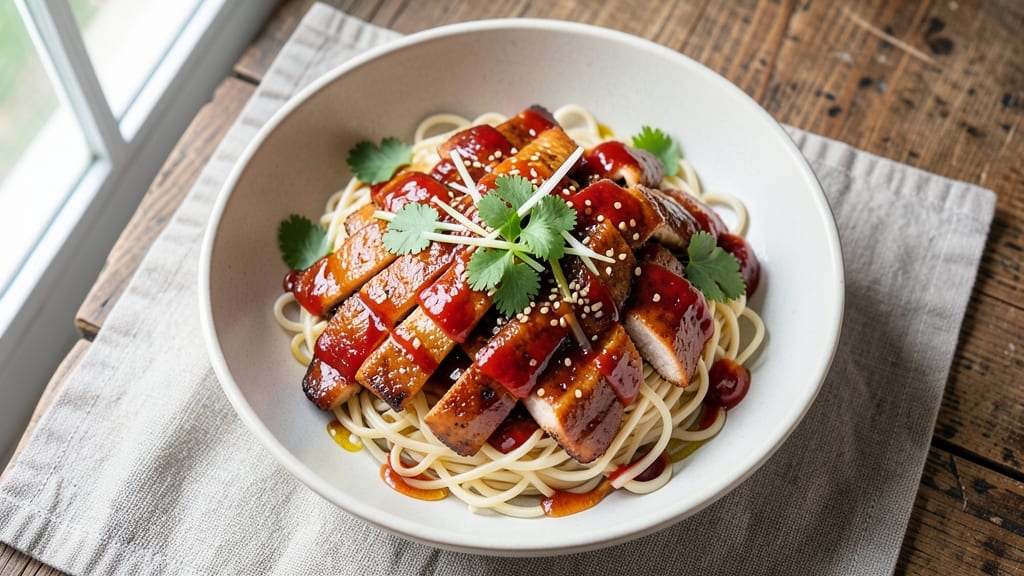
This chicken galbi noodle salad transforms Korean BBQ into a refreshing, handheld meal that’s perfect for hot days or quick lunches. The secret lies in marinating thinly sliced chicken in a sweet-spicy gochujang glaze, then tossing it with chewy ramen noodles and a tangy dressing that balances heat and umami.
I developed this recipe after craving something lighter than traditional galbi but still packed with bold flavors—no heavy sauces or frying required.
The beauty of this dish is its flexibility: swap beef galbi for chicken if you prefer authenticity, or use soba noodles for a gluten-free twist.
The marinade—soy sauce, sesame oil, and gochujang—infuses the chicken with smoky depth, while the dressing (rice vinegar, sesame oil, and a touch of honey) keeps everything bright.
Cooking the chicken quickly over high heat ensures tenderness without drying it out, and the noodles absorb just enough flavor to make every bite cohesive.
What you’ll end up with is a spicy-sweet salad that’s crisp, satisfying, and impossible to eat just one bowl of. The chicken stays juicy, the noodles hold their chew, and the dressing ties everything together with a perfect balance of heat and sweetness.
Garnish with cucumber ribbons, sesame seeds, and green onions for freshness and texture—this is the kind of meal that feels both comforting and exciting.
Perfect for meal prep or serving at gatherings, this recipe scales easily and keeps well for up to 2 days in the fridge. The flavors only deepen as the salad sits, making it ideal for busy weeknights or potlucks. Let’s get started—your taste buds will thank you.
Ingredients for chicken galbi noodle salad
Sweet-spicy marinade meets chewy noodles—this salad delivers bold Korean flavors in every bite.
| Ingredient | Amount | Notes |
|---|---|---|
| Boneless Chicken Breast 🍗 | 1 ½ lb | Thinly sliced against grain |
| Dried Ramen Noodles 🍜 | 2 packages | Discard seasoning packets |
| Gochujang Paste 🌶️ | ¼ cup | Korean fermented chili paste |
| Soy Sauce 🥄 | ⅓ cup | Low-sodium preferred |
| Sesame Oil 🫒 | 2 tbsp | Toasted for aroma |
| Rice Vinegar 💧 | ⅓ cup | White vinegar substitute |
| Honey 🍯 | 2 tbsp | Light or wildflower |
| Garlic Cloves 🧄 | 4 cloves | Minced for marinade |
| Fresh Ginger 🌿 | 1 tbsp | Grated, not powdered |
| Cucumber 🥒 | 1 whole | Julienned for garnish |
| Green Onions 🧅 | 4 whole | Thinly sliced |
| Toasted Sesame Seeds 🌰 | 2 tbsp | For crunchy texture |
| Vegetable Oil 🫒 | 2 tbsp | High smoke point |
| Salt 🧂 | 1 tsp | Kosher or sea salt |
| Black Pepper 🌶️ | ½ tsp | Freshly ground |
The chicken is where all the magic happens. Thinly sliced against the grain ensures tenderness, and the marinade—gochujang, soy sauce, and a touch of honey—creates that signature sweet-spicy balance. I always grab Korean gochujang from the international aisle at H Mart or Whole Foods—it’s worth the extra flavor. The sesame oil? Toast it first (heat in a dry pan for 30 seconds) to wake up those nutty aromas. Chicken should marinate at least 30 minutes, but overnight is even better if you're planning ahead.
No gochujang? Mix 1 tbsp sriracha with 2 tbsp tomato paste for a quick substitute. Swapping ramen for soba noodles? Use gluten-free tamari instead of soy sauce to keep it authentic. Fresh ginger is non-negotiable here—powdered just won't cut it. For the cucumber, peel it first if you prefer less texture, but I love the slight bitterness of the skin. The green onions add freshness, but if you're short on time, substitute with scallions or even extra cilantro. And if you're avoiding honey, maple syrup works 1:1—just know the flavor will be slightly different.
This salad tastes even better the next day—flavors meld perfectly in the fridge. Store components separately: chicken and dressing in one container, noodles and veggies in another. Reassemble right before serving to keep everything crisp. Keeps for 2 days in the fridge, but the noodles get soggy after day one if you don't separate them. For meal prep, double the marinade and use it for grilled chicken skewers too—zero waste!
Why You'll Love This Recipe
- No-Chop Nightmare: I swear, this is the only time I’ve ever sliced chicken breast once and called it a day. Thin strips, quick sear—no fancy techniques, just a hot pan and 5 minutes of your life. The gochujang and soy sauce do the heavy lifting while you’re still debating whether to watch one more episode.
- Spicy-Savory Magic: That first bite? Chef’s kiss. The gochujang gives it this deep, sticky heat that clings to the noodles like a hug, while the sesame oil adds this nutty finish that makes you want to close your eyes. Honestly, it’s the kind of flavor that turns a Tuesday into a “maybe I’ll skip the gym” moment.
- Lunchbox Hero: Between us, this is my secret weapon for meal prep. Toss the cooled salad into containers with a sprinkle of sesame seeds, and boom—you’ve got a lunch that feels fancy but costs less than takeout. My kids even eat it (yes, even the picky ones), and I’ve packed it for work when I’m too tired to care.
- Budget Win: Ramen noodles + chicken breast = a protein-packed meal that won’t break the bank. I’ve made this for $3 a serving, and it still tastes like I spent an hour in the kitchen. Leftovers? They’re even better the next day—cold or reheated, it’s always a hit.
Step-by-step instructions for chicken galbi noodle salad
Here's how to transform simple ingredients into a bold, flavor-packed Korean-inspired dish that balances spicy-sweet BBQ chicken with chewy ramen noodles.
Marinate and Cook the Chicken Galbi-Style
Slice the 1.5 lb boneless chicken breast thinly against the grain into ¼-inch thick strips. In a bowl, whisk together 0.33 cup soy sauce, 0.25 cup gochujang paste, 2 tbsp honey, 2 tbsp sesame oil, 1 tbsp grated fresh ginger, 4 minced garlic cloves, 1 tsp salt, and 0.5 tsp black pepper. Add the chicken strips and coat thoroughly. Marinate for at least 30 minutes (or up to 2 hours for deeper flavor).
Heat 2 tbsp vegetable oil in a large skillet over medium-high heat. Working in batches, cook the marinated chicken for 3-4 minutes per side until deep golden brown and cooked through. The chicken should caramelize beautifully with a sticky glaze. Transfer to a plate and tent with foil to keep warm.
Prepare the Noodles and Dressing
Cook the 2 packages dried ramen noodles according to package instructions, but undercook by 1 minute for a chewier texture. Drain and rinse briefly under cold water to stop the cooking process, then drain again thoroughly. Toss the noodles with 1 tbsp toasted sesame seeds while still warm to help them crisp slightly.
In a small bowl, whisk together 0.33 cup rice vinegar, 1 tbsp sesame oil, 1 tbsp honey, and 1 tsp soy sauce to create the dressing. This light, tangy sauce will brighten the rich flavors of the chicken and noodles. Keep it separate until ready to combine.
Assemble the Salad with Fresh Garnishes
Julienne the whole cucumber into thin matchsticks and thinly slice the 4 green onions. Arrange the cooked noodles on a large serving platter or in individual bowls. Top with the caramelized chicken strips, spreading them evenly over the noodles. Scatter the cucumber and green onions throughout for fresh crunch and color.
Drizzle the dressing generously over the salad and toss gently to combine. The noodles should be lightly coated with the dressing while still maintaining their chewy texture. Sprinkle with the remaining 1 tbsp toasted sesame seeds for extra crunch and visual appeal.
Serve Immediately for Maximum Freshness
Serve the Chicken Galbi Noodle Salad immediately while the noodles are still warm and the chicken is sizzling with residual heat. The contrast between the warm, caramelized chicken and the cool, crisp cucumber creates an irresistible balance of textures and temperatures. Each bite should deliver a perfect harmony of spicy-sweet BBQ flavors with the satisfying chew of ramen noodles.
For an extra touch, serve with additional green onions on the side for garnish. This dish tastes even better the next day as the flavors meld together, but the noodles will be slightly firmer if you wait. Enjoy your homemade Korean-inspired creation that's packed with restaurant-quality flavors!
Pro Tips For Making Chicken Galbi Noodle Salad
- Marinate Chicken Thin: Forget slathering the chicken breast in sauce and calling it a day—slice it lengthwise into thin cutlets first, then pound them to an even ¼-inch thickness with a meat mallet or rolling pin. Thin slices cook faster, stay juicier, and absorb the gochujang-soy marinade (mix 2 tbsp gochujang + 1 tbsp soy sauce + 1 tsp sesame oil) in half the time. I used to skip this, and my chicken always ended up tough or unevenly seasoned.
- Boil Noodles Twice: Cook the ramen noodles al dente (1 minute less than package instructions), drain, rinse under cold water, and set aside. After tossing with the chicken and dressing, microwave them for 30 seconds with a splash of water—this rehydrates the edges and makes them silky. Sounds counterintuitive, but it’s the only way to avoid that sad, gummy texture when mixed with the sauce.
- Balance the Heat: Gochujang is sneaky—start with just 1 tablespoon and taste before adding more. If the heat feels overwhelming, cut it with ½ teaspoon honey or a dash of rice vinegar (yes, even in a savory dish). I learned this the hard way after serving a bowl that had my friend reaching for water instead of chopsticks.
- Crisp the Chicken Last: Cook the chicken in batches over medium-high heat (not high—it’ll stick) until the edges are golden and the center hits 165°F. Then, finish them under a broiler for 30 seconds to seal in juices and get a slight char. This keeps them tender while adding texture that turns a simple salad into something restaurant-worthy. (Pro move: Broil while the noodles are microwaving.)
Storing and reheating your leftovers
Fridge Storage Tips
Store the chicken and dressing separately in an airtight container for up to 2 days—this keeps everything fresh and prevents soggy noodles. I use glass containers with snap-on lids from Pyrex because they’re easy to stack and won’t absorb odors.
Keep the noodles and cucumber in another container to maintain their crispness. The flavors actually deepen overnight, so this salad tastes even better the next day! ❄️
Freezer Prep Tricks
If you want to prep ahead for longer storage, freeze the marinated chicken in a single layer on a tray before transferring to a freezer bag. This prevents clumping. The chicken stays good for 2 months—just thaw overnight in the fridge before cooking.
For the noodles, cook them fresh the day you plan to serve, as freezing makes them mushy. 🧊
Reheating for Best Texture
To reheat, warm the chicken in a skillet over medium heat for 2-3 minutes until it’s hot and the glaze is sticky again. For the noodles, toss them in the same pan with a splash of water or broth to restore moisture.
Microwave reheating works too—just cover with a damp paper towel and heat in 30-second bursts, stirring between each. The dressing can be warmed separately or added fresh for brightness. 🔥
Day-Old Flavor Boost
If your salad has been sitting in the fridge, give it a flavor refresh before serving. Toss in extra green onions, cucumber, or a sprinkle of sesame seeds for crunch. A drizzle of extra sesame oil or a squeeze of lemon juice can also wake up the flavors.
The noodles might be slightly firmer, but that’s actually a bonus—it adds texture contrast! 💫
Portioning for Meal Prep
Divide the salad into individual containers if you’re meal prepping. Store the chicken and dressing in one compartment, and the noodles in another. This way, you can reheat just what you need without dealing with a whole bowl.
I like using bento-style containers for easy grab-and-go lunches. Label everything with dates so you know when to enjoy it at its best! 📅
Nutrition facts
Frequently asked questions
Can I use beef galbi instead of chicken?
For authentic Korean flavors, use 1.5 lb beef galbi (short ribs) instead of chicken. Thinly slice the beef against the grain and marinate for 4-6 hours (overnight is best) since it needs more time to tenderize. Cook over medium-low heat for 8-10 minutes per side to render fat without overcooking. The beef will be richer and more decadent than chicken.
How do I make this gluten-free?
Swap the soy sauce for gluten-free tamari and use gluten-free ramen noodles (like soba or brown rice noodles). For the marinade, replace gochujang with 1 tbsp sriracha + 2 tbsp tomato paste to mimic the umami depth. Check all ingredients—sesame oil and rice vinegar are typically gluten-free, but always verify labels.
Why is my chicken tough instead of tender?
Overcooking or slicing against the grain incorrectly causes toughness. Always slice thinly against the grain (perpendicular to muscle fibers) and cook over medium-high heat for 3-4 minutes per side. For extra tenderness, marinate for at least 2 hours (overnight is ideal) and avoid overcrowding the pan—work in batches if needed.
Can I make this salad ahead of time?
Yes! Store the marinated chicken and dressing in one airtight container and the cooked noodles separately in another for up to 2 days. The flavors actually improve overnight. When ready to serve, reheat the chicken in a skillet for 2-3 minutes and toss with fresh noodles. Add cucumber and green onions just before serving to keep them crisp.
What's the best way to adjust the spice level?
For milder heat, reduce gochujang to 0.125 cup and add 1 tsp honey to balance. For extra spice, increase gochujang to 0.375 cup and add 1 tsp gochugaru (Korean chili flakes) to the dressing. Always taste as you go—you can adjust while cooking, but it's harder to fix after marinating.