
Salads
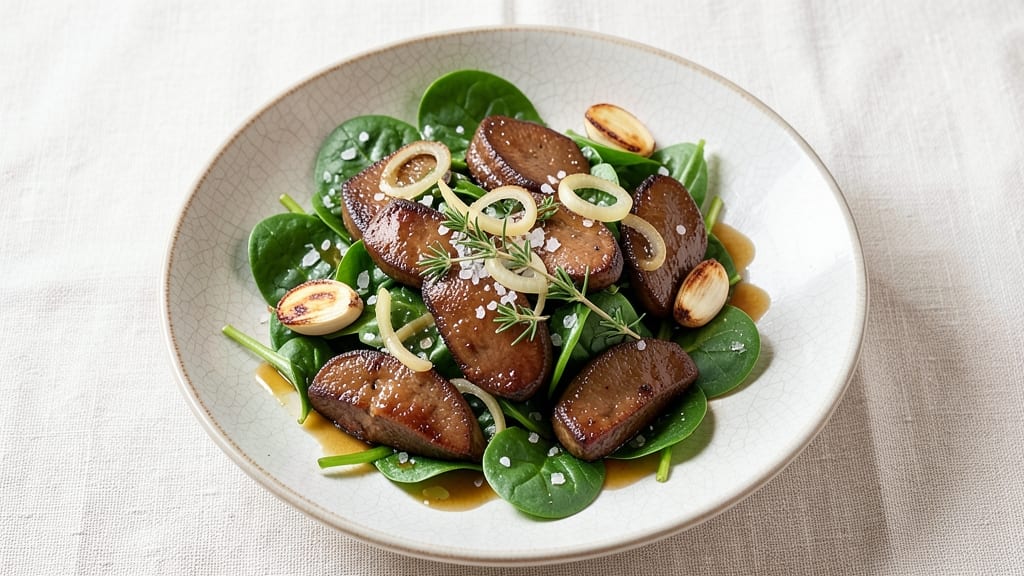
Pan-seared chicken livers deliver restaurant-quality richness that transforms simple spinach into an elegant, savory salad. ✨ I developed this recipe after years of perfecting the delicate balance between tender livers and vibrant greens—no bland salads here.
The secret lies in quick searing with shallots and herbs, which infuses the livers with deep, caramelized flavor while keeping them moist.
This dish starts with foolproof pan-searing—just 5 minutes in a hot skillet with butter, garlic, and thyme—then pairs those livers with fresh spinach, toasted walnuts, and a bright lemon vinaigrette.
The contrast between the tender, buttery livers and crisp greens creates a perfect bite, while optional additions like poached eggs or bacon crumbles take it to new heights. It's a salad that feels indulgent yet remains light enough for lunch or dinner.
What makes this recipe special is how it elevates humble ingredients into something extraordinary. The livers develop a golden crust while staying juicy inside, and the vinaigrette ties everything together with a tangy finish.
This isn't your average salad—it's a bold, flavor-packed dish that proves salads can be hearty and satisfying. Let's get started.
Safety note: Always handle raw chicken livers carefully, and cook them to an internal temperature of 165°F for food safety. The reward? A dish so rich and satisfying, you'll forget it's technically a salad. Here's how to make it perfectly every time.
Ingredients for chicken livers and spinach salad
Pan-seared chicken livers and vibrant spinach create a restaurant-worthy salad with rich, caramelized depth.
| Ingredient | Amount | Notes |
|---|---|---|
| Chicken Livers 🍗 | 1 lb | Fresh, trimmed of connective tissue |
| Fresh Baby Spinach 🌿 | 8 oz | Organic preferred for vibrant flavor |
| Unsalted Butter 🧈 | 4 tbsp | European-style preferred for richness |
| Shallots 🧅 | 2 whole | Finely minced for delicate flavor |
| Garlic Cloves 🧄 | 4 cloves | Fresh, minced for aromatic depth |
| Fresh Thyme Leaves 🌿 | 1 tbsp | Or 1 tsp dried thyme if unavailable |
| Extra-Virgin Olive Oil 🫒 | ¼ cup | For vinaigrette base |
| Fresh Lemon Juice 🍋 | 3 tbsp | From 1 medium lemon |
| Walnuts 🥜 | ½ cup | Toasted for nutty crunch |
| Diamond Crystal Kosher Salt 🧂 | 1 ½ tsp | Divided for seasoning |
| Freshly Ground Black Pepper 🌶️ | ½ tsp | For finishing |
| Red Wine Vinegar 🍷 | 1 tbsp | For bright acidity |
| Shaved Parmesan Cheese 🧀 | ¼ cup | Freshly shaved for texture |
The chicken livers are the star—freshness is non-negotiable. Source them from a trusted butcher or high-quality grocery store like Whole Foods or Eataly, where they're typically sold pre-trimmed for convenience. Look for livers that are bright red and moist, not gray or slimy. If you're feeling ambitious, trim any connective tissue yourself for the cleanest texture. For the spinach, organic baby spinach from the same quality grocer ensures tender leaves with maximum flavor. The butter should be European-style—it has a higher fat content that prevents burning during the quick sear. Shallots and garlic add nuanced sweetness; French's brand minced shallots work in a pinch, but fresh is ideal for that restaurant-quality finish.
No fresh thyme? Dried thyme at one-third the amount works, but fresh delivers that herbal punch. Substituting walnuts? Toasted pecans or almonds provide similar crunch, though walnuts' earthy flavor pairs best. For the vinaigrette, substitute apple cider vinegar if red wine vinegar isn't available, though the flavor profile shifts slightly. The lemon juice should be freshly squeezed—bottled lemon juice lacks brightness. If you're avoiding dairy, omit the Parmesan or use nutritional yeast for a cheesy note without the cheese. The kosher salt is crucial; Diamond Crystal measures differently than Morton's, so adjust to taste if using a different brand. For a vegetarian twist, swap livers for pan-seared mushrooms or crispy chickpeas—the technique remains identical.
Store raw livers in an airtight container in the coldest part of your fridge and use within 2 days for peak freshness. The vinaigrette keeps for 3 days in the fridge, though it's best used within 24 hours for maximum zing. Walnuts can be toasted ahead and stored in an airtight container for up to 1 week, though they're best when fresh. This salad tastes even better the next day as flavors meld—make a double batch for effortless leftovers. For meal prep, store components separately: livers and spinach together (don't wash until ready to serve), vinaigrette in a separate container, and toppings like nuts and cheese in another. Assemble just before serving to maintain crispness.
Why You'll Love This Recipe
- Pan-Fry Magic: I swear by the butter-sizzle moment—those livers hit the pan with shallots and garlic, and suddenly my kitchen smells like a bistro. No fancy techniques, just a hot skillet and 10 minutes of your time for that rich, caramelized crust.
- Spinach’s Secret Upgrade: Baby spinach might seem basic, but wilted with crispy livers and a splash of pan juices? It’s the star. The texture—tender greens with that meaty bite—makes it feel like a restaurant dish, not a salad.
- Budget Feast Ready: Chicken livers are my wallet’s best friend—cheaper than chicken thighs but packed with flavor. A pound feeds four, and the leftovers? Perfect for scrambling into eggs or tossing into pasta the next day.
- Weeknight Workhorse: Honestly, this is my go-to when I’m too tired to think. Toss the livers in the fridge on Monday, pan-fry them Wednesday, and dinner’s done. Even my picky teenager asks for seconds—no questions, just satisfaction.
Step-by-step instructions for savory pan-seared chicken livers with earthy greens
Transform simple ingredients into an elegant dish with this precise cooking method.
🔥 Step 1: Prepare and Sear the Chicken Livers
Start by trimming any connective tissue from the 1 lb chicken livers and pat them completely dry with paper towels. This step is crucial—moisture prevents proper searing. Divide the livers into 4 equal portions for even cooking.
Heat a large skillet over medium-high heat until very hot. Add 2 tablespoons of the unsalted butter and let it foam for 30 seconds. Working in batches to avoid crowding, add the liver portions and cook for 2-3 minutes per side until they develop a deep golden-brown crust. The livers should be cooked through but still slightly pink in the center—they'll continue cooking slightly when removed from heat.
🍳 Step 2: Build the Aromatic Base
While the livers cook, reduce heat to medium and add the remaining 2 tablespoons unsalted butter to the same skillet. Add the finely minced 2 whole shallots and cook for 3-4 minutes until softened and translucent. Stir in the 4 cloves minced garlic and 1 tablespoon fresh thyme leaves, cooking for another 30 seconds until fragrant.
Here's the thing—don't let the garlic burn. It should smell sweet and pungent, not bitter. If it starts to darken too quickly, remove the pan from heat for 10 seconds to cool slightly. This aromatic base forms the flavor foundation for your salad.
👨🍳 Step 3: Create the Lemon-Walnuts Dressing
In a small bowl, whisk together the 0.25 cup extra-virgin olive oil, 3 tablespoons fresh lemon juice, 1 tablespoon red wine vinegar, 1 teaspoon of the kosher salt, and 0.25 teaspoon black pepper. Set aside for 5 minutes to allow the flavors to meld.
In a dry skillet over medium heat, toast the 0.5 cup walnuts for 3-4 minutes until golden and fragrant. Watch them closely—they burn quickly. Transfer to a cutting board and roughly chop. Fold the toasted walnuts into the dressing just before serving to maintain their crunch.
🥘 Step 4: Assemble the Salad
In a large bowl, combine the 8 oz fresh baby spinach with the seared chicken livers. Pour the warm shallot-garlic-thyme butter mixture over the top and toss gently to coat. The residual heat will slightly wilt the spinach, creating a perfect texture contrast.
Drizzle with the lemon-walnuts dressing and toss again. Sprinkle with the remaining 0.5 teaspoon kosher salt, 0.25 teaspoon black pepper, and 0.25 cup shaved parmesan cheese. Serve immediately while the livers are still warm and the dressing is vibrant.
Pro Tips For Making Chicken Livers And Spinach Salad
- Sear Livers Fast: Chicken livers go from perfect to rubbery in seconds—get them screaming hot in a dry skillet for 30 seconds per side before adding butter. I learned this the hard way after serving a batch that tasted like overcooked hockey pucks.
- Soak Livers First: Rinse livers in cold water, pat very dry, then soak in milk or lemon water for 10 minutes to remove bitterness. Trust me, this isn’t just about taste—it’s the difference between "meh" and "wow" in your salad.
- Salt the Spinach: Toss baby spinach with a pinch of salt and a squeeze of lemon before adding livers—it wilts faster and keeps the leaves crisp. I used to skip this, and the salad always felt sad and limp.
- Finish with Butter: Toss livers off heat with cold butter and shallots—this cools them instantly while keeping them glossy. No need to melt butter first; just throw in chunks and let them emulsify into the hot livers.
Essential equipment for perfect results
Skillet Essentials
You'll need a 12-inch cast iron skillet—I swear by my Lodge Classic—for that perfect sear. Cast iron retains heat beautifully and creates the ideal crust on chicken livers. If you don't own one, a heavy stainless steel skillet like All-Clad works too.
The key is a pan that heats evenly and stays hot during the quick cooking process. 🔥
Butter & Fat Control
Use European-style unsalted butter (like Plugrá or Kerrygold) for its higher fat content—this prevents burning during the rapid sear. Keep a small bowl of ice water nearby to quickly chill the skillet if needed to prevent garlic from burning.
I also recommend having a tongs set (like OXO Good Grips) for flipping those delicate livers without tearing them.
Knife & Prep Tools
A sharp chef's knife (I use a Wüsthof Ikon) is essential for trimming livers and mincing shallots/garlic. Pair it with a cutting board (I prefer Teakhaus bamboo) for stability.
For measuring, a scale (like Escali Primo) ensures precision with ingredients like butter and olive oil—critical for balancing flavors in this dish.
Dressing & Assembly
For the vinaigrette, a small whisk (like Macalla) or fork works perfectly. I also keep a measuring spoon set (like OXO Stainless Steel) handy for accurate salt and pepper additions.
A large mixing bowl (at least 16-inch diameter) holds all components comfortably while tossing. For serving, individual salad plates (like Corelle Stoneware) elevate presentation.
Optional Upgrades
Want to take it further? A thermometer (like ThermoWorks Thermapen) ensures livers reach 165°F safely. For extra crunch, toast walnuts in a small dry skillet—I use a Made In brand for its even heat distribution.
And if you're adding poached eggs, a slotted spoon (like J. L. Chenier) helps remove them cleanly from simmering water.
Nutrition facts
Frequently asked questions
Why do chicken livers need to be trimmed before cooking?
Trimming connective tissue from chicken livers prevents a bitter flavor and ensures a smooth, tender texture. The membranes can turn rubbery when cooked, so removing them creates a cleaner eating experience. This step is especially important for delicate dishes like salads where texture matters. Pro tip: Rinse and pat them completely dry after trimming to help them sear perfectly.
Can I use frozen chicken livers instead of fresh?
Fresh livers are ideal for this recipe, but if you must use frozen, thaw them overnight in the fridge first. Never thaw at room temperature, as this promotes bacterial growth. Frozen livers may release more water during cooking, so pat them extra dry and consider adding 1 extra minute to the searing time to compensate. The texture will be slightly less tender than fresh.
How do I know when chicken livers are fully cooked?
Livers should reach an internal temperature of 165°F when done. Visually, they'll have a golden-brown crust and be slightly pink in the center (they'll continue cooking slightly after removal). For extra safety, cut into one piece—it should be opaque throughout with no pink or translucent areas. Overcooking makes them tough, so aim for 2-3 minutes per side on medium-high heat.
What if I don't like spinach? Can I substitute greens?
Try baby kale or arugula for a peppery twist, or butter lettuce for a milder flavor. Avoid dense greens like romaine—they won't wilt as nicely with the warm livers. For a heartier option, mix in chopped radicchio or endive (about 4 oz total). Just adjust the dressing proportionally to maintain balance.
How can I make this salad ahead of time?
Prepare components separately for best results: Cook the livers and make the dressing up to 1 day ahead, storing them in airtight containers in the fridge. Toast the walnuts and keep them in a sealed container. When ready to serve, toss everything together and let sit for 5 minutes to meld flavors. The livers will be slightly cooler but still delicious. For extra freshness, add spinach just before serving.