
Salads
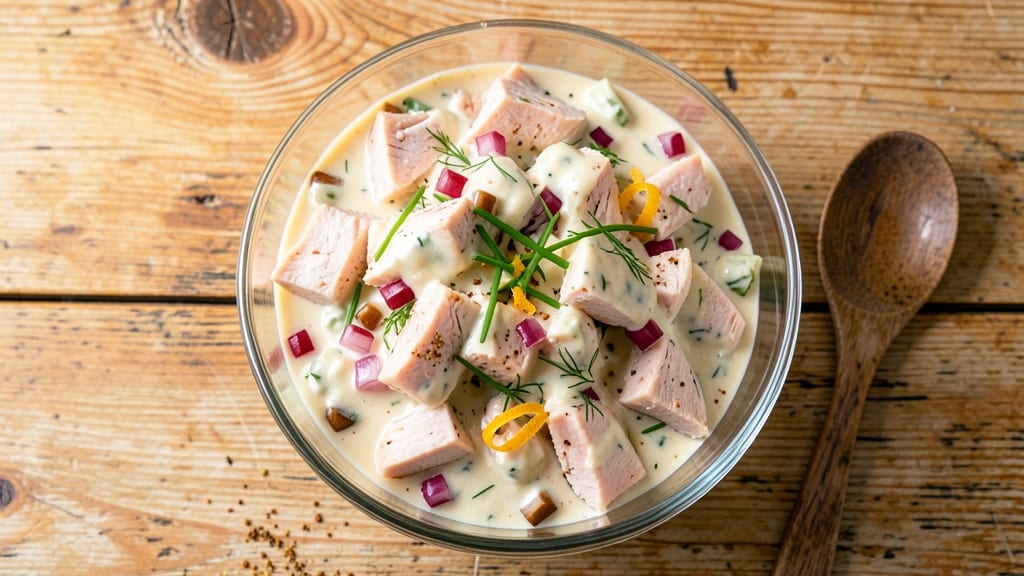
This chicken salad food processor recipe transforms tender chicken into creamy, fluffy perfection without the dreaded mayo cling. The secret lies in precise processing techniques that create an ideal texture—light enough to spread beautifully, yet rich enough to hold its shape.
I developed this method after years of perfecting restaurant-style chicken salad for my team at The Smoky Pig, where presentation matters as much as flavor.
The food processor is your secret weapon here, but it requires the right approach: pulse first to break down ingredients, then blend just until smooth. This ensures you achieve that signature restaurant-quality texture without turning your salad into glue.
We'll use a balanced mix of mayo, Greek yogurt, and lemon juice for moisture and tang, while celery and red onion add freshness and crunch.
What you'll end up with is a chicken salad that's fluffy, moist, and perfectly seasoned, ready to be piled high on crusty bread or served with crackers. The food processor method eliminates the need for chopping by hand, saving you time while delivering consistent results every time.
This recipe builds on my experience working with large volumes of protein—perfect for meal prep or entertaining.
For extra depth, we'll incorporate fresh herbs and optional add-ins like grapes or nuts, but the core technique remains the same. The key is patience during processing—don't over-blend, and taste as you go.
This is chicken salad that stands up to any occasion, whether you're serving it at a picnic or packing it for lunch.
Ingredients for chicken salad food processor
Restaurant-quality chicken salad starts with these simple yet precise ingredients—all designed for food processor perfection.
| Ingredient | Amount | Notes |
|---|---|---|
| Cooked Chicken Breast 🍗 | 1 ½ lb | Poached or roasted, skinless, boneless |
| Mayonnaise 🥫 | ½ cup | High-quality, not low-fat |
| Plain Greek Yogurt 🧀 | ¼ cup | Full-fat for creaminess |
| Fresh Lemon Juice 🍋 | 2 tbsp | Freshly squeezed, not bottled |
| Celery Stalks 🧅 | 2 whole | Fresh, crisp, strings removed |
| Red Onion 🧅 | ¼ cup | Finely diced, not pre-chopped |
| Fresh Dill 🌿 | ¼ cup | Chopped, stems removed |
| Fresh Chives 🌱 | 2 tbsp | Chopped, mild flavor |
| Diamond Crystal Kosher Salt 🧂 | ½ tsp | Adjust to taste |
| Freshly Ground Black Pepper 🌶️ | ¼ tsp | Freshly cracked |
| Extra-Virgin Olive Oil 🫒 | 1 tbsp | For drizzling |
| Optional Grapes 🍇 | ½ cup | Red or green, halved |
| Optional Walnuts 🥜 | ¼ cup | Toasted, chopped |
The chicken is non-negotiable—poached or roasted gives the best texture, and it should be skinless and boneless for clean processing. I always use Trader Joe's or Whole Foods for chicken because their quality is consistent, and they're pre-cut for convenience. If you're buying whole breasts, roast them at 375°F until internal temp hits 165°F, then let them rest before shredding. The celery and red onion are your flavor anchors—fresh is critical. Pre-chopped veggies from the store often have a sad, watery texture, so grab whole stalks and dice them yourself. For the herbs, fresh dill and chives elevate the salad beyond basic mayo-based versions.
No Greek yogurt? Substitute an extra 2 tbsp of mayo, but you'll lose that tangy brightness. Short on dill? Fresh parsley works at half the amount, though it's milder. The optional grapes and walnuts are purely for texture—skip them if you prefer a classic version, but they add a restaurant-worthy crunch. For the mayo, Hellmann's or Duke's are my go-tos because they're stable and flavorful. If you're avoiding mayo entirely, avocado or hummus can replace it, though the texture will differ. The lemon juice is essential—bottled won't cut it. Freshly squeezed adds a bright pop that balances the richness.
This salad keeps beautifully—3-4 days in the fridge if stored in an airtight container. The texture actually improves after a night in the fridge as the flavors meld. For meal prep, I double the batch and portion it into glass containers with olive oil drizzled on top to preserve freshness. If making ahead, hold off on adding the grapes or nuts until serving to prevent sogginess. The optional add-ins? Toast the walnuts separately and fold them in just before serving for maximum crunch.
Why You'll Love This Recipe
- No Chopping Drama: I swear by this recipe because the food processor does all the work—no more crying over celery sticks or uneven shreds. Toss in the chicken, mayo, yogurt, and lemon, and let it pulse until it’s smooth but still has that perfect bite.
- Light Yet Rich: Here’s what sold me—the Greek yogurt keeps it creamy without feeling heavy, while the lemon brightens everything up. That crisp celery crunch? It’s the secret weapon no one talks about enough.
- Lunchbox Legend: Between us, this is my go-to for packed lunches or last-minute sandwiches. It holds up for days in the fridge, and the yogurt keeps it from getting soggy. My kids still ask for it even after school lunches.
- Budget-Friendly Upgrade: I use this instead of store-bought salad kits, and it costs a fraction of the price. The yogurt adds protein without breaking the bank, and I can stretch one batch into wraps, salads, or even tacos for days.
Step-by-step instructions for perfect food processor chicken salad
Here's how to create a creamy, textured chicken salad with a food processor—no clumpy mayo, no dry chunks.
Prep Ingredients for Optimal Texture
Start by dicing the 2 whole celery stalks into small, even pieces—about ¼-inch cubes. This size ensures they blend smoothly without dominating the texture. Finely dice the 0.25 cup red onion and chop the 0.25 cup fresh dill and 2 tbsp fresh chives into tiny bits. The smaller the pieces, the better they'll incorporate during blending.
If using the optional add-ins, halve the 0.5 cup grapes and toast the 0.25 cup walnuts in a dry skillet over medium heat for 3-4 minutes until fragrant. Let them cool completely before adding—they'll add crunch and depth to the finished salad. Keep all prepped ingredients within reach for quick assembly.
Pulse Chicken and Wet Ingredients
Place the 1.5 lb cooked chicken breast in the food processor bowl. Add the 0.5 cup mayonnaise, 0.25 cup plain Greek yogurt, 2 tbsp fresh lemon juice, 0.5 tsp Diamond Crystal kosher salt, and 0.25 tsp freshly ground black pepper. Pulse 4-5 times in 1-second bursts—this creates a coarse texture without over-processing the chicken.
Here's the key: you want visible chicken pieces with just enough mayo to bind them. If it looks dry, add 1 tbsp extra-virgin olive oil and pulse once more. Stop as soon as the mixture holds together when pressed between fingers—over-blending turns it into chicken paste.
Incorporate Vegetables and Herbs
Add the diced celery, red onion, dill, and chives to the processor bowl. Pulse 3-4 times in 1-second bursts until the vegetables are finely chopped but still visible. The goal is to distribute them evenly without turning the salad into a smooth puree. You should see tiny flecks of green and white throughout.
If the mixture feels too thick after adding the vegetables, add 1-2 tsp of ice water and pulse once more. The salad should hold its shape when scooped but still be creamy enough to spread. Taste and adjust seasoning—you might need a pinch more salt or lemon juice to balance flavors.
Fold in Optional Add-Ins and Rest
Transfer the chicken salad to a large mixing bowl. Gently fold in the cooled grapes and toasted walnuts (if using) with a silicone spatula. Work just until combined—you want to preserve their texture rather than mash them into the mixture. The grapes should add a juicy pop, while the walnuts contribute crunch.
Cover the bowl and refrigerate for at least 30 minutes before serving. This resting period allows the flavors to meld and the texture to set. The salad will firm up slightly, making it easier to shape onto bread or roll into lettuce wraps. For best results, serve chilled over the next 2-3 days.
Pro Tips For Making Chicken Salad Food Processor
- Chill the Chicken First: Cold chicken shreds better and keeps the salad from turning greasy—trust me, I’ve seen the mushy aftermath. Run your cooked chicken under ice water for 2 minutes, then let it cool completely before pulsing in the food processor. This also prevents the mayo from separating later.
- Pulse, Don’t Puree: The food processor is your friend, but don’t let it turn the chicken into glue. Pulse in short bursts (3-4 seconds at a time) until the chicken is just broken down—you want texture, not paste. Overworking it makes the salad dense and sad.
- Dry the Celery: Wet celery leaks like a sieve and dilutes your flavors. Pat the stalks thoroughly with a paper towel before chopping, or rinse and spin them in a salad spinner. Less water in the mix means a creamier, not watery, salad.
- Balance the Yogurt Ratio: Greek yogurt cuts richness, but too much makes the salad taste like cottage cheese. Start with a 1:1 ratio of mayo to yogurt, then adjust to taste—add more mayo for richness or a splash of lemon for brightness. I usually go 3 parts mayo to 2 parts yogurt for this recipe.
Make-ahead tips for this dish
Meal Prep Strategy
I always make a double batch of this chicken salad for meal prep—it keeps beautifully in an airtight glass container for 3-4 days in the fridge. The key is portioning it into 1-cup servings right after resting, then storing with a drizzle of olive oil on top to preserve freshness.
For lunch, I pack it with whole-grain crackers or sliced apples to balance the richness. 📅
Freezer-Friendly Adaptation
For longer storage, omit the grapes and nuts (they get soggy) and freeze the salad in single-serving portions for up to 1 month. Thaw overnight in the fridge, then fold in fresh herbs and any optional add-ins before serving.
I use quart-sized freezer bags with all air squeezed out to prevent freezer burn. When reheating, microwave in 30-second intervals until warmed through. 🥶
Portioning for Picnics
For picnic prep, I divide the salad into small mason jars with the dressing at the bottom and ingredients layered on top. When ready to serve, just shake and pour!
For extra stability, pack the jars in a cooler with ice packs—this keeps the salad fresh for 4-6 hours outside. I always bring toasted baguette slices and mustard packets for a classic picnic spread. 🧺
Serving Temperature
This salad tastes best chilled, but not ice-cold. Let it sit at room temperature for 10-15 minutes before serving to bring out the flavors. For a restaurant-style presentation, I mound the salad high on crusty bread or serve it with arugula cups.
The contrast of warm bread and cool salad is always a crowd-pleaser. 🍞
Make-Ahead for Parties
When hosting, I prep the chicken salad 2 days ahead and store it in the fridge. On the day of the party, I fold in fresh herbs and optional add-ins just before serving.
For a showstopper, I arrange the salad on a large platter with herb garnishes and serve it with warm dinner rolls. The make-ahead time lets the flavors develop fully while keeping prep stress-free. 🎉
Reheating Leftovers
Leftovers reheat best in the microwave on low power for 1-2 minutes, stirring halfway. For stovetop reheating, warm in a lightly oiled skillet over low heat for 3-4 minutes—this keeps the texture intact.
Avoid boiling, as it dries out the salad. I always taste and adjust seasoning after reheating since flavors can mellow. 🔥
Nutrition facts
Frequently asked questions
Can I use rotisserie chicken in this food processor recipe?
Rotisserie chicken works perfectly—just remove the skin and bones first. The convenience factor makes this a great shortcut, especially when you're short on time. For best texture, shred the chicken coarsely before processing, as pre-shredded rotisserie pieces can be uneven.
Why does my chicken salad turn out too dry when using a food processor?
Over-processing is the usual culprit—pulse just until combined, not until smooth. If it's dry, add 1 tbsp extra olive oil or 1 tsp ice water and pulse once more. The Greek yogurt also helps retain moisture, so make sure you're using full-fat for creaminess.
What's the best way to store leftovers to keep them fresh?
Transfer to an airtight container with plastic wrap pressed directly on the surface to prevent drying. Store for up to 4 days in the fridge. For longer storage, freeze portions in quart-sized bags for 1 month. Always thaw overnight in the fridge before reheating.
Can I make this salad without mayo for a lighter version?
Yes! Replace the mayo with ½ cup Greek yogurt + 2 tbsp avocado for creaminess. Add 1 tbsp lemon juice extra to compensate for the lack of mayo's richness. The texture will be slightly lighter but still hold together well when chilled.
How do I adjust this recipe for a larger crowd?
Double all ingredients and use a larger food processor bowl (or process in batches). For 8 servings, you'll need 3 lb chicken and 1 cup mayo. Process the chicken in 2 batches to avoid overfilling—never exceed ⅔ of the bowl's capacity. Keep the pulse technique consistent for uniform texture.