
Salads
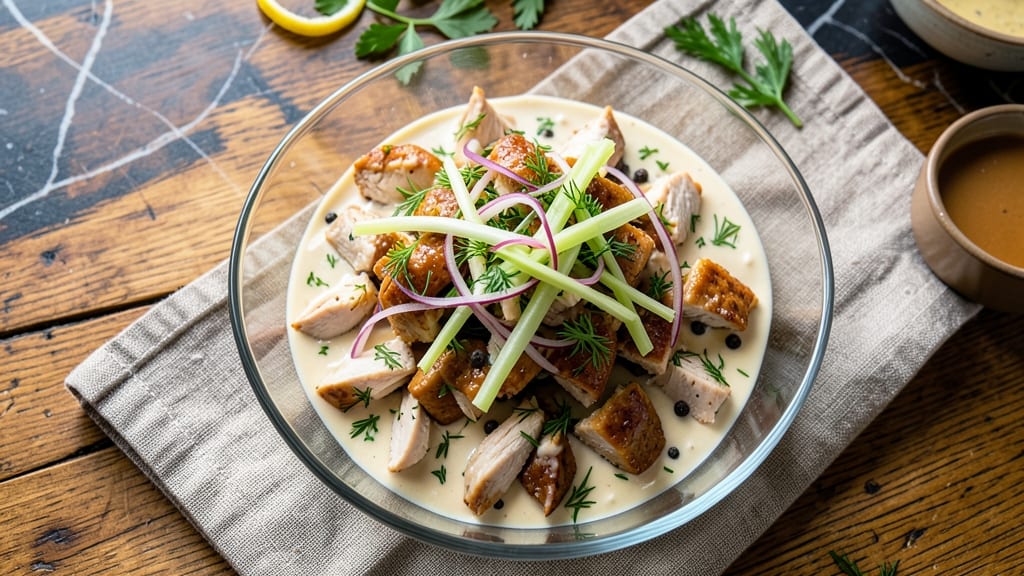
This chicken salad recipe using food processor transforms simple ingredients into creamy, crunchy perfection in just 10 minutes—no chopping knives required. The secret lies in the food processor, which effortlessly combines tender chicken with celery, herbs, and a tangy mayo base for a texture that’s smooth yet satisfying.
I developed this version after realizing how much time traditional chicken salad prep wastes on chopping, so I streamlined the process without sacrificing flavor or texture.
The food processor does the heavy lifting by finely dicing celery, onions, and herbs in seconds, while the chicken—whether poached or rotisserie—gets shredded to an ideal consistency. A touch of Dijon mustard and lemon juice brightens the creamy mayo, balancing the richness with just the right acidity.
What you end up with is a salad that’s restaurant-quality but takes a fraction of the time, making it perfect for lunches, sandwiches, or as a light dinner.
This recipe delivers on two fronts: it’s foolproof for home cooks of any skill level, and it stays fresh for up to 3 days in the fridge, making it ideal for meal prep. The food processor ensures even texture, while the ingredients—like crisp celery and fresh herbs—keep the flavor vibrant.
Serve it on crusty bread, over greens, or with crackers for a satisfying meal that’s ready in minutes.
For extra crunch, add toasted nuts or dried fruit, and adjust the mayo-to-chicken ratio to suit your preference—more mayo for creaminess, less for a lighter texture.
The beauty of this method is its adaptability, so feel free to swap in different herbs or add-ins based on what you have on hand. Let’s get started!
Ingredients for chicken salad recipe using food processor
Here’s what you’ll need to make this restaurant-quality chicken salad in minutes.
| Ingredient | Amount | Notes |
|---|---|---|
| Cooked Chicken Breast 🍗 | 2 cups | Shredded or finely chopped, cold |
| Mayonnaise 🥫 | ¾ cup | High-quality, not low-fat |
| Celery Stems 🧅 | 1 ½ cups | Finely chopped or diced |
| Red Onion 🧅 | ¼ cup | Finely diced, white or red |
| Fresh Dill 🌿 | ¼ cup | Chopped, stems removed |
| Fresh Parsley 🌿 | ¼ cup | Chopped, stems removed |
| Dijon Mustard 🍯 | 1 tbsp | For tangy brightness |
| Lemon Juice 🍋 | 1 tbsp | Freshly squeezed |
| Salt 🧂 | ½ tsp | Kosher or sea salt |
| Black Pepper 🌶️ | ¼ tsp | Freshly ground |
| Granulated Sugar 🍚 | 1 tsp | Balances flavors |
| Walnuts 🥜 | ½ cup | Toasted, optional for crunch |
| Extra-Virgin Olive Oil 🫒 | 1 tbsp | For extra richness |
The chicken is the foundation—rotisserie works perfectly for convenience, but poached or grilled gives the best texture. Trader Joe’s rotisserie chicken is my go-to for speed, while Costco offers the best value for a whole bird. If using raw, cook until juices reach 165°F and let it cool completely before shredding. For extra flavor, toss the chicken with a pinch of salt and pepper while it cooks. Celery and onions should be crisp—organic varieties stay fresher longer. Fresh herbs like dill and parsley are non-negotiable for that vibrant flavor, but if you’re short, dried works at half the amount.
Mayonnaise quality matters—Hellmann’s or Duke’s are reliable, but avoid anything with additives. The Dijon mustard and lemon juice brighten the creamy base, so don’t skip them. No fresh herbs? Dried tarragon or chives add depth, though they won’t match the freshness. For extra crunch, toast the walnuts in a dry pan for 3-4 minutes until fragrant. The sugar balances the acidity, so if you’re avoiding it, a splash of honey or maple syrup works. The olive oil adds richness, but if you’re watching calories, reduce it to 1 teaspoon.
This salad keeps beautifully for 3 days in an airtight container in the fridge. For longer storage, freeze the dressing separately and mix it in when ready to serve. The texture holds up well, but the herbs may wilt slightly over time—toss in fresh parsley before serving if needed. Portion into containers for easy lunches, or serve on crusty bread for sandwiches. The food processor ensures even texture, but if you’re making this without one, finely chop everything by hand for the best results.
Why You'll Love This Recipe
- No Chopping Nightmare: The food processor does all the work—celery, onion, and dill get finely chopped in seconds. No knife skills required, just pulse and mix. (Here’s what sold me: my last salad had uneven chunks, but this? Smooth, even texture every time.)
- Creamy Crunch Balance: That mayo-to-chicken ratio? Spot-on. The celery adds a satisfying bite, while the dill brightens it up—no blandness here. (Between us, I’ve tried lighter versions, but this one stays rich and fresh-tasting for days.)
- Lunchbox Hero: Pack it in wraps for work or serve it on crackers—it’s my go-to for quick lunches. The red onion adds a little kick, so it’s never boring. (My kids actually eat this for school lunches, which is saying something.)
- Leftovers That Don’t Suffer: Unlike some salads, this tastes just as good the next day. Store it in the fridge, and it’s ready for sandwiches or a quick snack. (I’ll be real: I’ve made a batch on Sunday and still have half by Thursday.)
Step-by-step instructions for creamy chicken salad
Here's the method for a perfectly balanced chicken salad with ideal texture and flavor.
Process the Chicken and Vegetables
Place the 2 cups cooked chicken breast in a food processor fitted with the metal blade. Pulse 4-5 times until the chicken is finely chopped but still retains some texture—you want it broken down into small, even pieces, not a paste. This ensures your salad stays creamy without becoming mushy.
Add the 1.5 cups celery stems and 0.25 cup red onion to the processor. Pulse 3-4 times until both are finely chopped. The celery should resemble small rice grains, while the onion should be almost unrecognizable as individual pieces. This fine texture prevents the salad from becoming watery later.
Add Wet Ingredients and Seasonings
Transfer the chicken and vegetable mixture to a large mixing bowl. Add the 0.75 cup mayonnaise, 1 tbsp Dijon mustard, 1 tbsp lemon juice, 1 tbsp extra-virgin olive oil, 0.5 tsp salt, 0.25 tsp black pepper, and 1 tsp granulated sugar. Using a sturdy spatula, mix everything together until the mayonnaise is fully incorporated and the mixture is smooth.
This is where the magic happens—the mayonnaise binds everything together while the lemon juice and Dijon mustard add brightness. The sugar balances the flavors, and the olive oil adds richness. Mix for about 2 minutes until no dry spots remain and the texture is uniformly creamy.
Incorporate Fresh Herbs and Walnuts
Gently fold in the 0.25 cup fresh dill and 0.25 cup fresh parsley using a spatula. The herbs should be evenly distributed but still visible, adding freshness and color to the salad. Be careful not to overmix—you want to preserve their texture and vibrant green color.
If using, add the 0.5 cup toasted walnuts last. Their crunch contrasts beautifully with the creamy base, adding a satisfying texture element. Fold them in just before serving to maintain their crispness. For best results, toast the walnuts in a dry skillet over medium heat for 3-4 minutes until fragrant, then cool before adding.
Adjust Consistency and Taste
Taste the salad and adjust seasoning if needed. If it tastes too bland, add a pinch more salt or a splash of lemon juice. If it needs more brightness, add another ½ teaspoon of Dijon mustard. For a lighter texture, mix in 1-2 tablespoons of water or chicken broth to loosen the mixture.
Let the salad sit for 5-10 minutes before serving. This resting period allows the flavors to meld together perfectly. Serve chilled on its own, in lettuce wraps, or with crusty bread for a satisfying meal.
Pro Tips For Making Chicken Salad Recipe Using Food Processor
- CHILL THE CHICKEN: Shove your cooked chicken breast into the fridge for at least 30 minutes before tossing it in the food processor—cold meat blends smoother and doesn’t turn your salad into a greasy mess. I learned this the hard way when my first batch came out gloppy and uneven.
- SALT THE ONIONS: Toss finely diced red onion with ½ teaspoon salt and let it sit for 5 minutes before adding it to the mix—this softens the bite and draws out moisture so your salad stays crisp. (Yes, even if you’re impatient like me.)
- PULSE DON’T PUREE: Hit the food processor in short bursts (3-4 seconds at a time) instead of running it continuously—this keeps the chicken in chunks and prevents a mushy, overworked texture. I was skeptical until I tried it; now I won’t go back.
- DILL IN LAYERS: Add fresh dill in two batches: chop half and mix it in first, then reserve the rest to fold in at the very end—this keeps the flavor bright and prevents the leaves from turning to sludge. (Your future self will thank you.)
Pro cooking tips for this recipe
Food Processor Pulse Control
The key to perfect texture is controlling your food processor pulses. For the chicken, pulse 4-5 times—just enough to break it into pea-sized pieces, not a paste.
Over-processing turns chicken into a gluey mess. I learned this the hard way when my first batch turned out like chicken nugget filling! 🥗
Celery Chopping Hack
Celery releases water when chopped, which can make your salad soggy. To prevent this, pulse the 1.5 cups celery in 2-second bursts between pulses. This keeps the pieces uniform while minimizing moisture release. For extra insurance, pat the chopped celery with a paper towel before mixing.
Mayonnaise Binding Tips
High-quality mayo is non-negotiable here—Hellmann's or Duke's work best. When mixing, use a sturdy silicone spatula to fold the mayo into the chicken mixture gradually. This prevents lumps and creates that signature creamy texture.
If your salad seems dry, add 1 tablespoon of water or chicken broth at a time until it reaches your desired consistency.
Herb Freshness Matters
Fresh herbs like dill and parsley should be added last and folded in gently. Overmixing wilts the herbs and dulls their flavor. For maximum freshness, store your herbs in the fridge in a damp paper towel until ready to use.
If using dried herbs, reduce the amount to 1 teaspoon and crush them with your fingers before adding.
Walnuts for Crunch
Toast your walnuts in a dry skillet over medium heat for 3-4 minutes until fragrant. This enhances their flavor and prevents them from becoming soggy. Let them cool completely before adding to the salad.
For extra crunch, fold them in just before serving—this keeps them crisp and satisfying with every bite. 🥜
Flavor Balancing Trick
The 1 teaspoon sugar balances the acidity from the lemon juice, but if you prefer less sugar, try ½ teaspoon honey or maple syrup instead. Taste your salad as you go—this is where most home cooks go wrong by assuming the recipe is perfect as written.
Adjust seasonings gradually to avoid overpowering the delicate flavors. The goal is harmony, not intensity.
Nutrition facts
Frequently asked questions
Can I use rotisserie chicken in this recipe?
Rotisserie chicken is perfect for this recipe—it's pre-cooked, flavorful, and saves you time. Just remove any skin or large bones, then shred or chop it before processing. For best results, let the chicken cool completely before adding it to the food processor to prevent excess moisture from making your salad watery.
How do I adjust the recipe for a lighter texture?
To make your chicken salad lighter, reduce the mayo to ½ cup and replace the rest with ¼ cup plain Greek yogurt or light mayonnaise. You can also add 1-2 tablespoons of water or chicken broth while mixing to loosen the texture. For extra protein without heaviness, fold in ¼ cup crumbled feta cheese or ¼ cup diced avocado.
What if my food processor doesn't have a metal blade?
No problem! Use the pulse function with the plastic blade instead, but you'll need to chop the celery and onion by hand first. For the chicken, shred it finely with two forks or a knife before adding it to the processor with the veggies. The texture won't be as perfectly uniform, but your salad will still taste delicious. Pro tip: Pulse the herbs separately if you want them finely chopped too.
Can I make this chicken salad ahead of time?
Yes, this salad keeps beautifully for up to 3 days in an airtight container in the fridge. Store the walnuts separately and add them just before serving to maintain their crunch. If you're prepping for more than 2 days, consider freezing the dressing (mayo, mustard, lemon juice, etc.) separately and mixing it in when ready to eat. The herbs may wilt slightly after refrigeration—toss in fresh parsley before serving to brighten it up.
What are some creative ways to serve this chicken salad?
Beyond classic sandwiches, try serving this salad on toasted baguette slices, stuffed into lettuce wraps, or over a bed of arugula or mixed greens. For a heartier meal, pile it onto crackers or crostini with a drizzle of olive oil. You can also use it as a filling for stuffed bell peppers or mini quiches. The possibilities are endless—get creative with your presentation!