
Salads
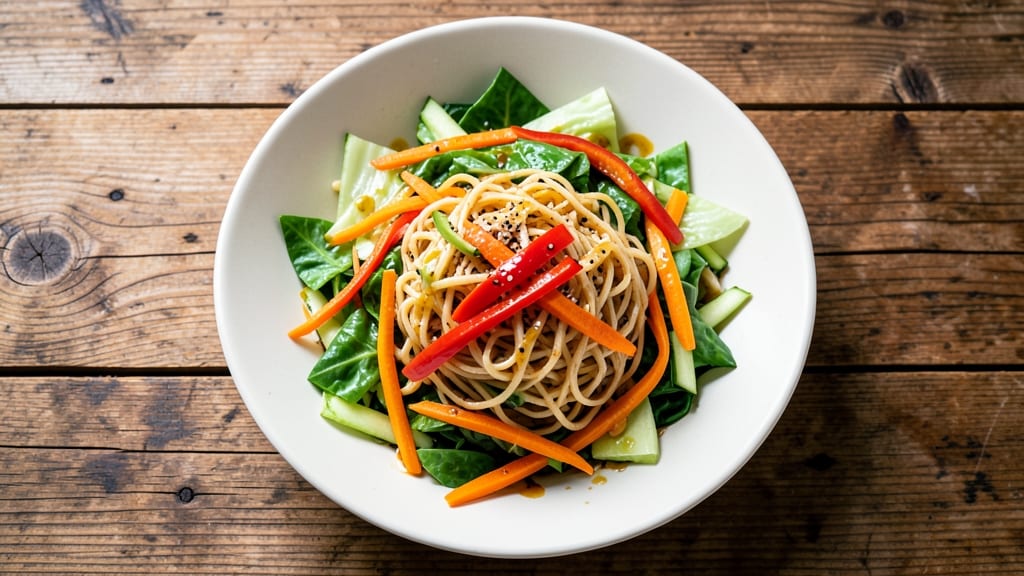
This Chinese ramen salad recipe transforms humble noodles into a vibrant, umami-packed dish that balances hearty textures and bold flavors.
The secret lies in chilling the noodles to prevent sogginess while preserving their satisfying bite, then layering them with crisp vegetables, protein, and a tangy-savory dressing inspired by traditional ramen broth. I developed this recipe after craving something fresh yet deeply flavorful—no takeout required.
What sets this salad apart is the perfect harmony of components: chewy ramen noodles, fresh crunch from shredded cabbage and carrots, and optional protein like grilled chicken or tofu.
The dressing, made with soy sauce, sesame oil, and a touch of rice vinegar, delivers that signature ramen umami without the heaviness. It’s the kind of dish that feels both comforting and sophisticated—ideal for meal prep or a light yet satisfying dinner.
The assembly is where the magic happens. Cold noodles absorb the dressing beautifully while maintaining their texture, and the toppings add layers of flavor and crunch.
Whether you’re serving this as a main course or a side, it’s a game-changer for ramen lovers who want something lighter but still packed with depth. Ready in under 30 minutes, it’s perfect for busy weeknights or weekend lunches.
Customize it with your favorite proteins or veggies—this salad adapts effortlessly to whatever you have on hand. The key is balancing the flavors: salty, sweet, tangy, and umami all come together in one satisfying bite. Let’s build this dish step by step.
Ingredients for chinese ramen salad
Fresh ramen noodles, crisp veggies, and bold flavors make this salad a crowd-pleaser every time.
| Ingredient | Amount | Notes |
|---|---|---|
| Ramen Noodles 🍜 | 8 oz | Uncooked, any flavor preferred |
| Green Cabbage 🥬 | 4 cups | Shredded, outer leaves removed |
| Carrots 🥕 | 2 medium | Shredded, organic if possible |
| Red Bell Pepper 🌶️ | 1 whole | Thinly sliced, any color |
| Cucumber 🥒 | 1 whole | Seedless, thinly sliced |
| Sesame Oil 🫒 | 1 tbsp | Toasted, for flavor depth |
| Soy Sauce 🍶 | 2 tbsp | Low-sodium preferred |
| Rice Vinegar 🍶 | 1 ½ tbsp | Seasoned if available |
| Sesame Seeds 🌾 | 1 tbsp | Toasted, for garnish |
| Green Onions 🧅 | 3 whole | Thinly sliced, white parts trimmed |
| Garlic Cloves 🧄 | 2 cloves | Minced, for dressing |
| Ginger 🌿 | 1 tsp | Freshly grated |
| Honey 🍯 | 1 tbsp | For subtle sweetness |
| Salt 🧂 | ½ tsp | Kosher or sea salt |
| Black Pepper 🌶️ | ¼ tsp | Freshly ground |
The ramen noodles are the backbone—any flavor works, but chicken or pork add extra umami. Trader Joe's has great pre-cooked packs if you're short on time, but fresh is better. Look for organic cabbage at the farmers market for sweeter flavor, or grab the pre-shredded kind in the produce section (it's fine in a pinch). The carrots? Orange or purple varieties add extra color and a slightly sweeter bite. Thinly slice the bell pepper and cucumber for that perfect crunch—no need to peel the cucumber unless you're picky about skin texture. For the sesame oil, Kadoya or La Choy are solid choices, but any toasted sesame oil will do.
No sesame seeds? Toasted peanuts or crushed cashews work in a pinch (use half the amount). Short on ginger? Substitute 1/4 tsp ground ginger, but fresh is worth it for that zing. The dressing can be made ahead—it keeps for 5 days in the fridge. For extra protein, add grilled chicken, tofu, or even leftover rotisserie chicken. The soy sauce should be light or dark—whichever you prefer, just avoid the ultra-high-sodium kind. If you're watching sugar, reduce the honey to 1/2 tbsp or swap for maple syrup.
This salad tastes even better the next day—the noodles soak up the dressing perfectly. Store components separately in the fridge: noodles in one container, veggies in another, dressing in a jar. Toss everything together when ready to eat. For meal prep, portion into containers with dressing on the side so the noodles stay firm. Leftovers keep for 3-4 days, but the crunch fades after day 2. Freezing isn't recommended—the veggies get mushy, but the dressing freezes beautifully for up to 3 months.
Why You'll Love This Recipe
- Pantry Magic: I swear by this one—no special shopping required. The noodles, veggies, and a splash of soy sauce already live in my fridge, so I’m never stuck staring at an empty cupboard.
- Crunchy-Creamy Balance: That first bite? Chef’s kiss. The cabbage stays crisp, the carrots add sweetness, and the sesame-oil dressing ties it all together—like a fresh, crunchy hug for your taste buds.
- Lunchbox Hero: Honestly, this is my go-to for work lunches. It holds up for days in the fridge, and the noodles soften just enough to be satisfying without turning mushy. (Yes, even on a Tuesday night.)
- Budget Win: Between us, this feeds four for under $8. The ramen noodles stretch the meal, the veggies bulk it up, and I’m left with leftovers that taste just as good cold the next day.
Step-by-step instructions for Chinese ramen salad
Here's how to transform simple ingredients into a vibrant, umami-rich ramen salad that's perfect for meal prep.
👨🍳 Step 1: Prepare the Crunchy Vegetable Mix
Start by washing and thoroughly drying all your vegetables. Remove the outer leaves from the 4 cups green cabbage and shred it into thin strips using a sharp knife or mandoline. For the 2 medium carrots, peel them first, then shred lengthwise into matchstick-thin pieces. Thinly slice the red bell pepper into half-moon shapes, and cut the cucumber into half-moons as well, removing any seeds first.
Place all the shredded vegetables in a large mixing bowl. Give them a gentle toss with your hands to distribute them evenly. This step is crucial for even flavor distribution later. I like to work in stages here—prep one vegetable at a time to avoid sogginess from the cabbage releasing moisture too quickly.
🍳 Step 2: Cook and Cool the Ramen Noodles
Bring a large pot of water to a rolling boil and add the 8 oz ramen noodles. Cook according to package instructions until al dente—usually about 2-3 minutes. Drain immediately and rinse under cold water to stop the cooking process and remove excess starch. This cooling step is essential to prevent the noodles from becoming mushy in the salad.
Transfer the cooled noodles to the mixing bowl with the vegetables. Add 2 tbsp soy sauce and 1.5 tbsp rice vinegar right away. Toss everything together gently but thoroughly. The noodles will absorb some of the liquid, but you want to keep them slightly separate for that signature ramen salad texture. If the mixture looks dry, add a splash of cold water—just enough to lightly coat everything.
🥘 Step 3: Create the Flavorful Dressing
In a small bowl, whisk together 1 tbsp sesame oil, 1 tbsp honey, 1 tsp freshly grated ginger, 2 cloves minced garlic, 0.5 tsp salt, and 0.25 tsp black pepper. This dressing is where all the magic happens—it balances the fresh vegetables with deep umami flavors. Let the mixture sit for 2-3 minutes to allow the ginger and garlic to mellow slightly and release their aromatic oils.
Give the dressing a quick taste before adding it to the salad. You might want to adjust the sweetness with a touch more honey or the saltiness with an extra pinch of salt. The dressing should coat the back of a spoon but still be pourable. Pour it over the noodle and vegetable mixture and toss everything together thoroughly. The colors should brighten noticeably as the dressing coats each component.
🥘 Step 4: Assemble and Garnish the Salad
Transfer the dressed salad to a large serving platter. Thinly slice the 3 whole green onions, keeping the white parts trimmed, and sprinkle them evenly over the top. Add the 1 tbsp sesame seeds for a final crunchy garnish. The green onions add a fresh, oniony brightness that cuts through the richness of the dressing, while the sesame seeds provide a nutty contrast.
Let the salad sit for 10-15 minutes before serving. This resting time allows the flavors to meld together perfectly. The noodles will soften slightly, the vegetables will release more of their juices, and the dressing will penetrate every bite. Serve immediately while the vegetables are still crisp and the flavors are at their peak.
Pro Tips For Making Chinese Ramen Salad
- BOIL NOODLES AL DENTE: Ramen noodles go soft fast—pull them at 2 minutes, then shock in ice water. Overcooking turns them mushy, and nobody wants sad, limp noodles in a salad. (Yes, even if the package says 3-4 minutes.)
- SHRED CABBAGE DRY: Toss cabbage in a towel and wring it out before shredding—wet leaves make the salad soggy. I learned this the hard way after my first batch turned into a watery mess. A quick spin in a clean kitchen towel saves the day.
- SAUTE VEGETABLES SEPARATELY: Carrots and bell peppers need different heat levels—sauté carrots first on medium until tender, then crank up the heat for peppers to blister slightly. Mixing them together means one will burn while the other stays raw.
- DRESS SALAD LAST: Toss noodles and veggies with a splash of dressing, then fold in cucumber right before serving. Cucumber releases water, and adding it too early turns your crisp salad into a sad, wet pile. (Trust me, I’ve done it.)
Essential equipment for chinese ramen salad
Must-Have Tools
First up, you’ll need a sharp chef’s knife—this is non-negotiable for cleanly shredding cabbage and slicing veggies. I swear by my 8-inch Wüsthof because it glides through everything without tearing.
A mandoline slicer (like the OXO Good Grips) is optional but so helpful for even carrot and cucumber slices—just be careful with those fingers! 🥕
Mixing Essentials
A large mixing bowl (at least 8-quart capacity) keeps everything contained while tossing. I use a stainless steel Cambro because it’s durable and easy to clean.
For the dressing, grab a small whisk bowl or even a mason jar—whisking in a jar is my go-to for quick, mess-free mixing. A fine-mesh strainer (like the OXO Good Grips) is handy if you’re grating ginger or garlic to remove any unwanted bits.
Cooking Gear
Your 8-10 quart pot needs to handle the ramen noodles without boiling over—All-Clad or Cuisinart brands are my top picks for even heat distribution. A tongs set (I love Mercer Culinary) helps drain the noodles efficiently.
For cooling, a colander with a wide rim prevents spills when rinsing under cold water. Pro tip: Keep a small spray bottle nearby to mist the noodles if they dry out while cooling.
Garnish Tools
Thinly slicing green onions is easiest with a microplane or a sharp paring knife. For sesame seeds, a small spoon works, but a fine-mesh sprinkler (like the Bambino) ensures even distribution.
A small bowl just for garnishes keeps your workspace tidy—trust me, you’ll thank yourself later when you’re not digging through the main bowl for that last sprinkle of sesame.
Optional Upgrades
If you’re prepping ahead, airtight glass containers (like Pyrex) keep the salad fresh for days. For extra crunch, a mandoline with a julienne attachment transforms veggies into perfect matchsticks.
And if you’re feeling fancy, a salad spinner (like the OXO Good Grips) dries greens faster than shaking them in a colander. 💫
Nutrition facts
Frequently asked questions
Can I use any ramen noodles for this salad?
Yes! Any ramen noodles work, but chicken or pork-flavored add extra umami depth to the salad. For a lighter option, try shirataki noodles (they're gluten-free and low-calorie) or even udon noodles for a heartier texture. Just adjust cooking times according to package instructions—these should be al dente to maintain their bite.
Why do the noodles need to be cold?
Chilling the noodles is key to preventing sogginess in the salad. When hot noodles sit with raw vegetables, their starch releases and makes everything mushy. Cold noodles also absorb the dressing better while keeping their satisfying texture. Plus, the temperature contrast makes each bite more refreshing—it’s a classic ramen salad technique!
How can I make this salad spicier?
Add heat with 1/2 tsp chili flakes or 1 tbsp sriracha to the dressing. For extra kick, mix in 1 tsp gochujang (Korean chili paste) or 1/2 tsp cayenne pepper. If you love fresh heat, thinly slice a jalapeño and toss it in with the veggies. Always taste first—you can always add more, but removing heat is trickier!
Can I make this ahead of time?
Store the cooked noodles, veggies, and dressing separately in airtight containers. When ready to eat, toss everything together—this keeps the veggies crisp. The salad actually tastes better the next day as flavors meld! For maximum crunch, add fresh green onions and sesame seeds just before serving.
What if I don’t have sesame oil?
Don’t worry—substitute with 1 tbsp neutral oil (like avocado or vegetable oil) plus 1/2 tsp toasted sesame seeds for flavor. For a different profile, try 1 tsp toasted peanut oil (common in Thai cuisine). The dressing will still taste delicious, though the nutty aroma will be slightly different. Always taste and adjust other seasonings as needed!