
Salads
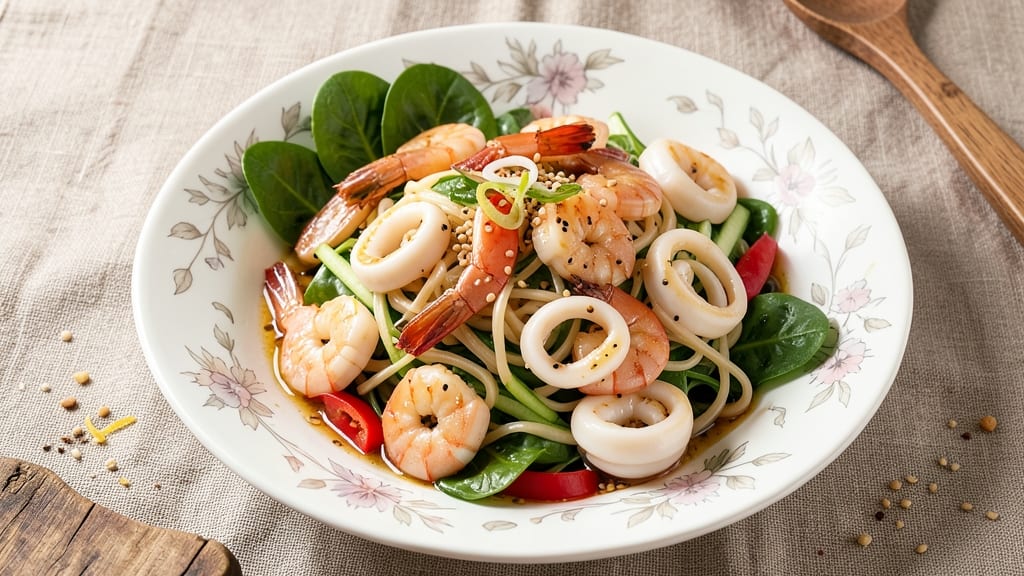
This Chinese seafood salad recipe delivers the perfect balance of light, zesty flavors and satisfying textures you’d find in a dim sum restaurant. 🌟 The secret lies in crispy rice noodles, tender seafood, and a tangy dressing that bridges traditional Cantonese flavors with modern freshness—no heavy sauces here, just bright umami and crunch.
What sets this dish apart is the technique: quick-cooked shrimp and calamari retain their tenderness while absorbing just enough dressing to stay juicy, not soggy.
The salad’s foundation—crunchy rice noodles and fresh greens—provides the perfect contrast to the seafood’s richness, while toasted sesame seeds and chili oil add that signature wok-hei aroma you crave.
By the time you assemble everything, you’ll have a dish that’s vibrant, protein-packed, and ready in under 30 minutes. The dressing is the star—zesty, slightly sweet, and packed with garlic and ginger for depth—while the seafood stays perfectly cooked, never overdone.
This is the kind of salad that feels indulgent yet light enough for any meal.
Serve it as a refreshing starter or a satisfying main with steamed rice. The best part? It keeps well in the fridge for up to 2 days, making it perfect for meal prep. Let’s get cooking!
Ingredients for chinese seafood salad
Crispy noodles, tender seafood, and a zesty dressing make this restaurant-quality salad shine.
| Ingredient | Amount | Notes |
|---|---|---|
| Large Shrimp (Peeled and Deveined) 🦐 | 1 lb | Tail-on for presentation |
| Fresh Calamari (Tubes Only) 🐙 | 1 lb | Cleaned, patted dry |
| Rice Noodles (Thin, Sticky) 🍜 | 8 oz | Uncooked, like vermicelli |
| Baby Spinach 🍃 | 4 cups | Fresh, loosely packed |
| Red Bell Pepper 🌶️ | 1 whole | Thinly sliced, seeds removed |
| Cucumber 🥒 | 1 whole | English type, thinly sliced |
| Green Onion 🧅 | 3 whole | Thinly sliced, white and green |
| Sesame Seeds (Toasted) 🥜 | 2 tbsp | White or black preferred |
| Chili Oil 🌶️ | 1 tbsp | High-quality, like Lao Gan Ma |
| Garlic Cloves 🧄 | 4 cloves | Fresh, minced finely |
| Ginger Root 🌿 | 1 tbsp | Fresh, grated finely |
| Rice Vinegar 🍶 | ½ cup | Seasoned preferred |
| Sesame Oil 🫒 | 1 tbsp | Toasted, not flavored |
| Soy Sauce 🥢 | 2 tbsp | Light or all-purpose |
| Honey 🍯 | 1 tbsp | Pure, for balance |
| Lime Juice 🍋 | 2 tbsp | Freshly squeezed |
| Salt 🧂 | ½ tsp | Diamond Crystal preferred |
| Black Pepper 🌶️ | ¼ tsp | Freshly cracked |
The seafood is everything here—shrimp and calamari need to be ultra-fresh. Grab them from the seafood counter same day if possible, or frozen works in a pinch (thaw in cold water). For the rice noodles, Thai Kitchen or Three Ladies brands are my go-to—they hold their crunch perfectly. The greens? Baby spinach is ideal, but butter lettuce or arugula work too. Just avoid wilted leaves. Toast your sesame seeds in a dry pan for 30 seconds—they’ll add that nutty aroma that makes this dish pop.
No sesame oil? Avocado oil at half the amount gets you close, but you’ll miss that toasty depth. Short on ginger? Ginger powder at one-third the amount works, but fresh is worth the effort. The chili oil is non-negotiable for that wok-hei kick—Lao Gan Ma is the gold standard, but any good brand with visible red chili flakes will do. For the dressing, seasoned rice vinegar adds that perfect tang, but plain vinegar plus a pinch of sugar works too. Pro tip: Zest your lime before juicing—adds brightness without extra moisture.
Seafood cooks in minutes—5-6 minutes max for shrimp, 2-3 minutes for calamari. Keep it cold until serving to maintain crispness. The dressing stays fresh for 5 days in the fridge, but the noodles soften fast—soak them in cold water with a splash of vinegar for 20 minutes max before assembling. Store components separately: seafood, dressing, and greens. Toss everything together right before eating to keep that restaurant-fresh crunch.
Why You'll Love This Recipe
- I swear by this trick: toss the shrimp and calamari in the marinade while the noodles soak—no chopping, no fuss. The spinach and bell pepper just get a quick toss at the end, and suddenly you’ve got a dish that looks restaurant-worthy with zero effort.
- No-Cook Prep Magic: I swear by this trick: toss the shrimp and calamari in the marinade while the noodles soak—no chopping, no fuss. The spinach and bell pepper just get a quick toss at the end, and suddenly you’ve got a dish that looks restaurant-worthy with zero effort.
- Umami Bomb Combo: That crispy calamari and sweet shrimp? Chef’s kiss. The sticky rice noodles soak up the garlic-chili oil like a dream, while the baby spinach adds a peppery bite that cuts through the richness. It’s the kind of flavor that makes you want to eat it straight from the bowl—no plates needed.
- Lunchbox to Dinner Party: Honestly, this is my secret weapon for both. Pack it cold for a workday lunch or double the batch and serve it chilled at a summer gathering. The noodles hold up perfectly, and the seafood stays fresh—no reheating required.
Step-by-step instructions for Chinese seafood salad
Here's how to assemble this vibrant, crunchy salad with perfectly cooked seafood and bright, zesty dressing.
🍳 Step 1: Cook the Seafood to Perfect Doneness
Start by blanching the 1 lb large shrimp (peeled and deveined) in boiling water for 30 seconds, then immediately transfer to ice water to stop cooking. They should turn opaque and curl slightly—this ensures they stay tender. Pat them dry with paper towels.
For the 1 lb fresh calamari (tubes only), heat 1 tablespoon sesame oil in a skillet over medium-high heat until shimmering. Add the calamari in a single layer and cook for 1-2 minutes per side until they turn opaque and develop a slight char. Remove and let cool completely before slicing into ½-inch rings.
👨🍳 Step 2: Prepare the Crunchy Noodle Base
Soak the 8 oz rice noodles (thin, sticky) in warm water for 10-12 minutes until pliable but still slightly firm. Drain and rinse briefly under cold water to stop cooking, then toss with 1 tablespoon sesame oil to prevent sticking. Spread on a tray and let cool completely.
While the noodles cool, thinly slice the 1 whole red bell pepper and 1 whole cucumber (English type) using a mandoline for even strips. Thinly slice the 3 whole green onions and set all vegetables aside in separate piles.
🥘 Step 3: Assemble the Fresh Vegetable Mix
Gently combine the 4 cups baby spinach with the sliced vegetables in a large bowl. Add the cooled seafood and rice noodles, tossing lightly to distribute everything evenly. Here's the thing—don't overmix or you'll crush the noodles and wilt the spinach. Just a few gentle tosses will do.
Sprinkle the salad with 2 tablespoons toasted sesame seeds and set aside while you prepare the dressing. The sesame seeds add a nutty crunch that balances the freshness of the vegetables perfectly.
🍳 Step 4: Make the Zesty Dressing
In a small bowl, whisk together the 0.5 cup rice vinegar, 2 tablespoons soy sauce, 1 tablespoon honey, 2 tablespoons lime juice, 1 tablespoon chili oil, 1 tablespoon minced garlic, 1 tablespoon grated ginger, 0.5 teaspoon salt, and 0.25 teaspoon black pepper.
Taste and adjust—this is where the magic happens. I usually add a splash more lime juice for brightness or a touch of honey if it needs sweetness. The dressing should coat the back of a spoon but still allow you to see through it slightly.
🥘 Step 5: Toss and Serve Immediately
Pour the dressing over the salad and toss gently—just until everything is evenly coated. The noodles should be glossy, the seafood should glisten, and the vegetables should look vibrant. Serve immediately while the noodles are still slightly warm and the dressing is fresh.
For presentation, I like to arrange the salad on a large platter and sprinkle with extra sesame seeds and a drizzle of chili oil. Serve with warm steamed dumplings or fresh baked bread to soak up any extra dressing. This salad is best enjoyed immediately while everything is at its peak texture and temperature!
Pro Tips For Making Chinese Seafood Salad
- STOP OVERCOOKING THE CALAMARI: I learned this the hard way—calamari turns rubbery fast. Cook it in batches for just 30-45 seconds per side in a screaming-hot wok with 1 tablespoon oil. Remove immediately when the edges curl; they’ll finish cooking in the dressing. (Yes, even if they look underdone—trust me.)
- SALT THE SHRIMP FIRST: Toss peeled shrimp with 1/2 teaspoon salt and let them sit 10 minutes before cooking. This keeps them juicy and prevents them from curling into tight spirals. Pro move: Pat them very dry first—wet shrimp steams instead of sears.
- DRESSING LAST MINUTE: Mix the dressing right before tossing everything together. The spinach wilts instantly in citrus or vinegar, and the noodles soften. If you’re prepping ahead, store the salad components separately and dress just before serving—no soggy mess.
- CUT THE BELL PEPPER SMALL: Dice the red bell pepper into 1/4-inch pieces—any larger and they’ll sit like chewy rocks. A quick tip: Remove the seeds and white ribs first, then stack slices and cut into matchsticks. (I used to skip this and regretted every bite.)
Common mistakes when making this dish
Overcooking Seafood
Seafood is delicate—once it turns opaque, it’s done. Shrimp should cook for 30 seconds max in boiling water, then hit ice water immediately to stop cooking. Calamari needs just 1-2 minutes per side in a hot pan.
I’ve ruined more seafood salads by overcooking than any other mistake. Use a timer and watch closely—overcooked seafood turns rubbery, ruining the dish’s lightness. 🦐
Soggy Noodles
Rice noodles lose their crunch fast. Soak them in warm water for 10-12 minutes max, then rinse with cold water to stop cooking. Toss them with 1 tablespoon sesame oil to prevent sticking, and spread them on a tray to cool completely.
If you add dressing too early, the noodles will soften into mush. Keep everything separate until the last minute. 🍜
Skipping the Ice Bath
After blanching shrimp, an ice water bath is non-negotiable. It stops cooking instantly and keeps them tender. I once served a seafood salad where I skipped this step, and the shrimp was tough.
Fill a bowl with ice and water, add the shrimp, and swish them around for 30 seconds. Pat them dry before assembling the salad. 🧊
Overmixing the Salad
Tossing too much crushes the noodles and wilts the greens. Combine ingredients gently—just a few folds are enough. The goal is to distribute everything evenly without breaking down textures. I’ve seen salads where the noodles were a sad, mushy pile because someone went overboard with the tossing. Be gentle! 🥗
Using Old Ingredients
Freshness is key. Seafood should be used the day it’s purchased, and greens like spinach should be crisp. If your cucumber feels soft or your shrimp smells fishy, toss it.
I’ve had to scrap entire salads because of old ingredients—better to start fresh. Check your seafood for a clean, ocean-like scent and firm texture. 🚫
Ignoring the Dressing Ratio
The dressing should coat the salad lightly, not drown it. Pour it over the salad and toss just until everything is evenly glistened. If you add too much, the noodles will turn limp.
Start with ¼ cup dressing per serving and adjust to taste. The goal is balance—bright, zesty, but not soggy. 💧
Nutrition facts
Frequently asked questions
Can I substitute other seafood in this recipe?
Swap shrimp for scallops (sear for 1-2 minutes per side) or white fish like cod (poach for 5-6 minutes until flaky). For squid, use the tubes only and cook for 1-2 minutes per side. Just avoid shellfish like mussels or clams—they release too much liquid and can make the salad soggy.
How do I make this salad gluten-free?
Use tamari (gluten-free soy sauce) instead of regular soy sauce, and check your rice noodles for gluten-free certification. Most Asian rice noodles are naturally gluten-free, but always verify the label. The rest of the ingredients are already gluten-free!
Can I prepare this salad ahead of time?
Yes, but keep components separate. Cook the seafood and noodles, then store them in airtight containers in the fridge for up to 2 days. Prepare the dressing separately and toss everything together just before serving. The noodles will stay crunchy if kept dry, but add dressing last to maintain texture.
What if I don't have chili oil?
No problem! Mix 1 teaspoon red pepper flakes with 1 tablespoon neutral oil and heat until fragrant. Add this to the dressing instead. For a milder version, skip it entirely—the dressing will still be flavorful.
How do I adjust the spice level?
Reduce or omit the chili oil for a milder taste, or add ½ teaspoon sugar to balance any heat. For extra spice, sprinkle with ½ teaspoon Sichuan peppercorns (toasted and crushed) or a dash of gochujang in the dressing. Taste as you go!