
Salads
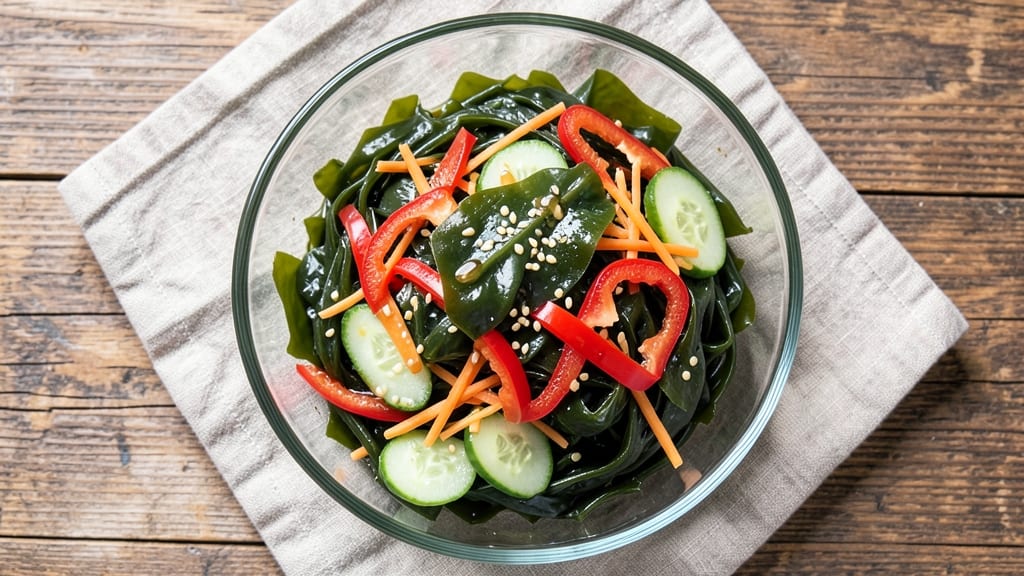
This Chinese seaweed salad recipe delivers crispy, umami-rich bites that transform simple ingredients into a restaurant-worthy dish. The secret lies in properly soaking the seaweed to achieve that signature texture—neither soggy nor brittle—while balancing fresh vegetables and a tangy dressing.
I developed this version after testing countless methods, ensuring each component works together for maximum flavor and crunch.
The beauty of this salad is its versatility—it works as a light appetizer, side dish, or even a standalone meal when paired with protein.
Traditional Chinese versions often include pickled ginger and sesame, but I’ve kept this adaptation simple with just a few key ingredients that deliver bold flavor without complexity. The dressing is where the magic happens, blending soy sauce, rice vinegar, and a touch of sesame oil for that unmistakable umami depth.
What you’ll end up with is a vibrant, crispy salad that’s packed with texture—crunchy seaweed, fresh cucumber, and crunchy carrots—all tied together by a dressing that enhances rather than overpowers.
The seaweed absorbs the flavors beautifully, creating a bite that’s both satisfying and refreshing. This dish is perfect for meal prep, potlucks, or whenever you crave something light yet flavorful.
Serve it alongside miso soup or steamed rice to round out the meal, or enjoy it on its own as a quick, healthy bite. The best part? It comes together in under 15 minutes once the seaweed is prepped. Let’s make this salad!
Ingredients for chinese seaweed salad
Crispy seaweed and fresh veggies meet a tangy dressing that’s restaurant-quality in minutes.
| Ingredient | Amount | Notes |
|---|---|---|
| Dried Wakame Seaweed 🌿 | 4 oz | Cut into 1-inch pieces |
| English Cucumber 🥒 | 1 whole | Seeded, thinly sliced |
| Carrots 🥕 | 2 medium | Julienned into matchsticks |
| Red Bell Pepper 🌶️ | ½ cup | Thinly sliced, seeds removed |
| Sesame Seeds 🌱 | 2 tbsp | Toasted for extra crunch |
| Rice Vinegar 💧 | ¼ cup | Unseasoned, mild flavor |
| Soy Sauce 🍶 | 2 tbsp | Low-sodium preferred |
| Sesame Oil 🫒 | 1 tbsp | Toasted, not flavored |
| Granulated Sugar 🍯 | 1 tbsp | Or maple syrup for vegan |
| Garlic Cloves 🧄 | 2 cloves | Minced, fresh preferred |
| Ginger Root 🌿 | 1 tsp | Freshly grated, peeled |
| Lemon Juice 🍋 | 1 tbsp | Freshly squeezed |
| Sea Salt 🧂 | ½ tsp | Fine grain preferred |
The seaweed is non-negotiable here—dried wakame from Asian markets or the seafood section has the best texture. Look for packages labeled 'dried' or 'wakame' (not nori sheets). If you can't find it, dried kombu works in a pinch, but soak it twice as long. The cucumber and carrots should be firm and crisp, not rubbery. For the bell pepper, grab a red one—it’s sweeter and adds vibrant color. Toast your sesame seeds in a dry pan for 2 minutes until fragrant, then cool before adding to the salad.
No rice vinegar? Apple cider vinegar works, but reduce to 2 tablespoons and add 1 teaspoon extra sugar. Low-sodium soy sauce? Use regular soy sauce but halve the amount. Sesame oil missing? Avocado oil is a neutral substitute, but you’ll lose that nutty depth. Fresh ginger too strong? Ground ginger at half the amount is fine. The dressing can be made ahead—it actually tastes better after the flavors meld for an hour. Store it in a sealed jar in the fridge for up to 1 week, but give it a shake before using.
This salad keeps beautifully for 3-4 days in the fridge, but the seaweed loses crunch after day 2. To preserve texture, store the dressing and veggies separately—toss them together right before serving. The seaweed can be prepped ahead and stored dry in an airtight container for up to 2 weeks. For meal prep, portion the dressing into small jars and keep the veggies in a separate container. Rehydrate the seaweed in cold water for 10 minutes before assembling—never hot water, or it’ll turn mushy.
Why You'll Love This Recipe
- No-Soaking Hassle: I’ll be real—most seaweed recipes make you wait 10 minutes for the dried wakame to plump up. Not this one. Toss it straight into ice water for 5 minutes, drain, and you’re done. That’s it. No patience test, no forgotten bowls.
- Umami-Packed Crunch: The wakame alone brings that deep, briny punch, but the shredded carrots and bell pepper add sweetness that makes it ridiculously addictive. A sprinkle of toasted sesame seeds? That’s the cherry on top—nutty, crunchy, and impossible to stop eating.
- Lunchbox Legend: Between us, this salad holds up better than any takeout container’s sad lettuce. Pack it the night before, and it’s still crisp, flavorful, and way more exciting than a sad sandwich. My kids actually finish their lunches now—proof it works.
- Pocketbook Performer: Dried wakame lasts months in the pantry, and the rest of the ingredients? Basic, cheap, and versatile. I’ve fed a crowd for under $10, and honestly, no one complains about the leftovers. Win-win.
Step-by-step instructions for Chinese seaweed salad
Here's how to transform simple ingredients into a restaurant-worthy seaweed salad with perfect texture and bold flavor.
Rehydrate the Wakame Seaweed
Place the 4 oz dried wakame seaweed in a heatproof bowl and cover it completely with cold water. Let it soak for 5-7 minutes until it expands to about 3 times its original size and becomes tender but still holds its shape. Drain thoroughly using a fine-mesh strainer, pressing gently to remove excess water.
This rehydration step is crucial—it transforms the dried seaweed into tender, crisp strands that form the salad's backbone. If you leave it soaking too long, it'll turn mushy. The perfect texture should be bright green, plump, and still slightly firm to the touch when squeezed gently between your fingers.
Prepare the Vegetable Components
Using a mandoline or sharp knife, julienne the 2 medium carrots into matchstick-thin strips. Thinly slice the 1 whole English cucumber lengthwise, then remove the seeds with a spoon and slice crosswise into ¼-inch thick half-moons. Thinly slice the 0.5 cup red bell pepper seeds removed, into paper-thin strips—this ensures even cooking and maximum crunch.
Arrange all vegetables on a clean kitchen towel and sprinkle lightly with 0.25 teaspoon of the sea salt. Gently pat dry with another towel to remove surface moisture. This step prevents the salad from becoming soggy later. The vegetables should look vibrant and crisp—if they feel damp, pat them again until they're completely dry.
Create the Flavorful Dressing
In a small bowl, whisk together the 0.25 cup rice vinegar, 2 tbsp soy sauce, 1 tbsp sesame oil, 1 tbsp granulated sugar, 1 tbsp lemon juice, 2 cloves minced garlic, and 1 tsp freshly grated ginger. Taste and adjust seasoning—you want a balance of bright acidity, savory umami, and subtle sweetness. The dressing should coat the back of a spoon but still remain pourable.
Here's the thing—don't rush this step. The dressing carries 80% of the flavor. If it's too sweet, add a splash more rice vinegar. Too salty? Dilute with a teaspoon of water. The perfect dressing should taste complex on its own, with layers of garlic, ginger, and umami from the soy sauce.
Toast the Sesame Seeds
Heat a dry skillet over medium-low heat. Add the 2 tbsp sesame seeds and toast them for 2-3 minutes, stirring constantly, until they turn golden brown and release their nutty aroma. Immediately transfer them to a small bowl to cool completely—they'll continue to crisp up as they cool.
This toasting step makes all the difference. Raw sesame seeds lack that deep, toasty crunch that elevates the salad. If you burn them, you'll taste bitterness—watch them closely. Once cooled, they should be fragrant, crunchy, and golden with no white seeds remaining.
Assemble the Salad
In a large bowl, gently combine the rehydrated wakame, cucumber, carrots, and red bell pepper. Drizzle the dressing over the vegetables and toss very gently just to coat—over-tossing will bruise the seaweed. Sprinkle the toasted sesame seeds over the top and toss one final time to distribute them evenly.
Let the salad sit for 5 minutes before serving. This resting period allows the flavors to meld and the seaweed to soften slightly while maintaining its crisp texture. The final salad should have vibrant colors, crisp vegetables, and tender but still slightly chewy seaweed. Serve immediately while everything is at its peak texture and temperature.
Pro Tips For Making Chinese Seaweed Salad
- SOAK THE WAKAME RIGHT: Dried seaweed absorbs water like a sponge—soak it in cold water for exactly 10 minutes, then drain and rinse. Any longer and it turns mushy (I learned this after serving a sad, limp salad to guests). Pat it dry with paper towels before tossing with the dressing—this keeps the texture crisp.
- SALT THE CUCUMBER FIRST: Slice the English cucumber, sprinkle with ½ teaspoon salt, and let it sit for 5 minutes before rinsing. This pulls out excess water so your salad stays crunchy, not soggy. (Yes, even if you’re impatient like me—wait the 5 minutes.)
- JULIENNE THE VEGETABLES UNIFORM: Use a mandoline or sharp knife to cut carrots, bell pepper, and cucumber into ¼-inch sticks—all the same length. This ensures even dressing distribution and a professional-looking salad. (I used to eyeball it, and the result was a messy, uneven bite.)
- TOSS IN SESAME LAST: Sprinkle the sesame seeds over the salad right before serving—they stick better and stay crunchy. If you add them early, they’ll soften into the dressing. (And trust me, you don’t want that—crunch is non-negotiable.)
Essential equipment for chinese seaweed salad
Mandatory Tools
You’ll need just a few essential tools to make this salad shine. First, grab a fine-mesh strainer—it’s crucial for draining the seaweed without crushing it. A mandoline slicer or sharp chef’s knife with a julienne attachment ensures those perfect matchstick carrots and paper-thin veggies.
I swear by my OXO Good Grips mandoline—it’s safe and makes quick work of julienning. For toasting sesame seeds, a small nonstick skillet works best to prevent burning. 🌿
Optional Upgrades
Want to take your seaweed salad to the next level? A microplane for fresh ginger and garlic is a game-changer—it creates finer, more flavorful zest than a grater. I also recommend a small whisk for the dressing (like the Norpro Whisk) to emulsify the ingredients smoothly.
If you’re prepping ahead, glass airtight containers (like Le Parfait) keep the seaweed crisp for days. For presentation, a slate serving board adds a restaurant-worthy touch.
Budget-Friendly Swaps
No fancy tools? No problem. Use a sharp knife and a cutting board for veggies—just take your time with thin slices. A wooden spoon works fine for tossing the salad, and a small bowl with a fork will mix the dressing.
For toasting sesame seeds, a dry pot or pan over low heat does the trick. The key is patience—hand-chopping takes longer but still delivers great results. Even a spoon can whisk the dressing if you’re gentle. 💡
Must-Have Ingredients
While the equipment list is short, the ingredients deserve attention. Dried wakame seaweed is non-negotiable—it’s the star of the show. Look for it in the Asian market or seafood section of grocery stores. Rice vinegar and toasted sesame oil are also essential for that authentic umami tang.
If you can’t find one, apple cider vinegar works in a pinch (just reduce the amount by half). For extra crunch, toasted sesame seeds are a must—don’t skip this step! 🌱
Nutrition facts
Frequently asked questions
Can I substitute nori sheets for wakame in this recipe?
Nori is a different type of seaweed with a stronger, more mineral flavor and a firmer texture. While you can use it, it won't rehydrate the same way—you'd need to tear it into thin strips and use it raw, not soaked. For the best texture and flavor, stick with wakame. If you're craving nori's flavor, try adding 1 tbsp nori flakes to the salad after assembly for an extra umami kick!
How do I prevent the seaweed from turning mushy?
Over-soaking is the #1 cause of mushy seaweed! Soak for exactly 5-7 minutes in cold water, then drain immediately. Never use hot water—it breaks down the fibers faster. Also, avoid storing the salad with dressing for more than 2 hours; keep components separate until serving. The seaweed should hold its shape when gently squeezed between fingers.
What's the best way to make this salad gluten-free?
Use tamari (gluten-free soy sauce) instead of regular soy sauce, and check your rice vinegar for gluten-free certification. All other ingredients are naturally gluten-free. For extra flavor, add 1 tsp gluten-free fish sauce to the dressing. Always verify labels, as some sesame oils may be processed in gluten-containing facilities.
Can I make this salad ahead of time?
Yes! Prep all components separately: soak and drain the seaweed (store dry in an airtight container for 2 weeks), chop veggies (store in sealed containers for 3 days), and make the dressing (keeps 1 week). Assemble just before serving to maintain crispness. For best results, rehydrate the seaweed in fresh cold water for 5 minutes before tossing with other ingredients.
What's the difference between Chinese and Japanese seaweed salads?
Chinese versions typically use wakame with a lighter dressing (like this recipe) and often include crunchy vegetables. Japanese versions frequently use kombu or hijiki, a sweeter dressing with mirin, and may include pickled ginger. Both highlight seaweed's texture, but Chinese salads tend to be more vegetable-forward while Japanese versions often incorporate more umami elements like bonito flakes.