
Salads
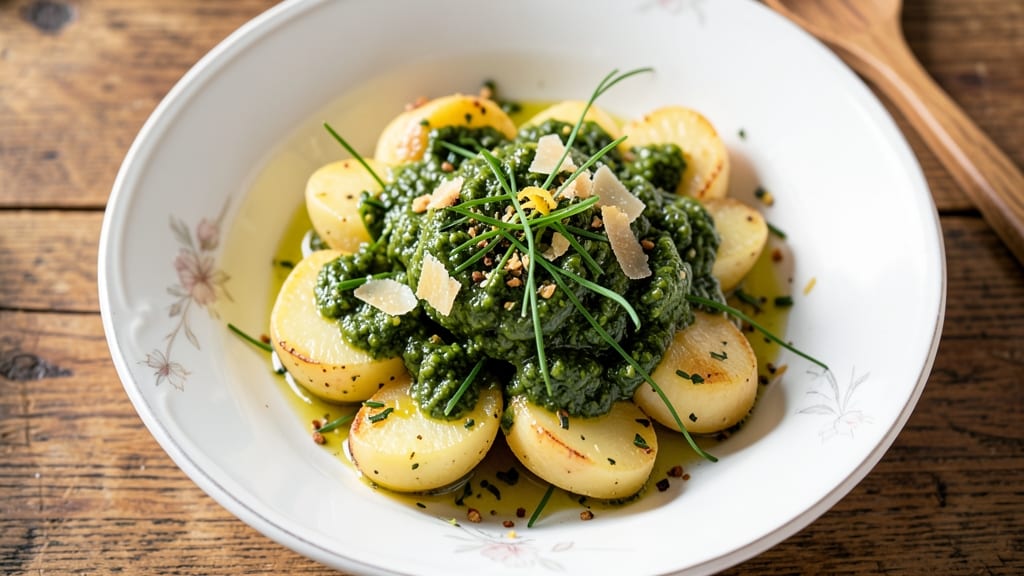
This chive pesto potato salad recipe transforms a picnic staple into something unexpectedly sophisticated—where bright, herby pesto meets warm, buttery potatoes for a dish that’s equal parts comforting and refined.
The secret lies in blending fresh chives with basil and garlic for a pesto that’s lighter than traditional versions but packed with vibrant flavor, then folding it into tender, warm potatoes for a texture that’s creamy without being heavy.
What sets this recipe apart is the balance of traditional techniques—like boiling potatoes until fork-tender and cooling them properly—and modern twists, such as using a fresh, herby pesto instead of mayo.
The result is a salad that’s rich enough to stand alone but bright enough to cut through richer dishes, making it perfect for summer gatherings or a light weeknight dinner. The chives add a delicate onion-like sharpness that elevates the dish beyond the classic.
By the time you’re done, you’ll have a potato salad that’s crisp at the edges, creamy in the center, and bursting with fresh herb notes—no soggy lettuce or bland potatoes here. The pesto infuses every bite with a zesty, aromatic kick, while the potatoes stay warm and inviting.
This isn’t just a side dish; it’s a flavor-packed centerpiece that’ll have everyone asking for seconds.
The best part? It’s foolproof and versatile—make it ahead for potlucks, pack it for picnics, or serve it alongside grilled meats for a meal that’s as satisfying as it is elegant. Let’s get started!
Ingredients for chive pesto potato salad
Fresh chives and basil meet warm potatoes for a salad that’s both comforting and refined.
| Ingredient | Amount | Notes |
|---|---|---|
| Yukon Gold Potatoes 🥔 | 2 ½ lb | Medium size, halved lengthwise |
| Fresh Chives 🌿 | ¾ cup | Finely chopped, stems included |
| Fresh Basil Leaves 🌿 | 1 ½ cups | Packed, stems removed |
| Garlic Cloves 🧄 | 4 cloves | Peeled, rough chopped |
| Extra-Virgin Olive Oil 🫒 | 1 cup | High quality, fruity |
| Parmesan Cheese 🧀 | ½ cup | Freshly grated from block |
| Lemon Juice 🍋 | 2 tbsp | Freshly squeezed |
| Unsalted Butter 🧈 | 4 tbsp | Cold, cubed for texture |
| Salt 🧂 | 1 ½ tsp | Diamond Crystal preferred |
| Black Pepper 🌶️ | ½ tsp | Freshly ground |
| Red Wine Vinegar 🍷 | 1 tbsp | For brightness |
| Raw Cashews 🥜 | ¼ cup | Soaked 15 mins for creaminess |
The Yukon Gold potatoes are non-negotiable here—their buttery texture holds up beautifully to the pesto. Buy them fresh (the skin should be smooth and unblemished) and cut them while still cold to prevent browning. I always grab mine from Whole Foods or my local organic market—avoid those waxy red potatoes, they’ll turn mushy. For the chives, farmers markets have the freshest, but the grocery store’s pre-bundled bunch works too if you chop them right away. The basil? Look for vibrant green leaves—none of that wilted sad stuff. If you’re short on time, Trader Joe’s sells pre-washed basil that’s perfect for this recipe.
No fresh chives? Green onions at half the amount work in a pinch, but you’ll lose that delicate onion-like sharpness. Running out of basil? Spinach or parsley can stretch it, but reduce to 1 cup max. The Parmesan must be freshly grated—pre-shredded gets clumpy and lacks flavor. For the cashews, soaking is key—skip this and you’ll get a gritty texture. No red wine vinegar? Apple cider vinegar is a great swap, just use the same amount. The olive oil should be extra-virgin and fruity—none of that cheap cooking oil. If you’re making this ahead, hold off on adding the lemon juice until just before serving to keep the pesto bright.
Potatoes keep best in a cool, dark place for 3-4 days—don’t refrigerate them yet. Once boiled and cooled, store them in the fridge for up to 3 days before mixing with the pesto. The pesto itself stays fresh for 5 days in the fridge if you pour a thin layer of olive oil on top. For potlucks, make the pesto and potatoes separately—combine right before serving to keep everything crisp. This salad reheats beautifully—just warm the potatoes gently in the microwave with a splash of water and fold in the pesto. Leftovers? Portion into containers for easy lunches—it keeps for 4 days in the fridge.
Why You'll Love This Recipe
- No-Fuss Assembly: I swear by this recipe because it’s the kind of dish where you can literally chop potatoes while watching a movie. Toss them in boiling water, then mix the pesto—garlic, chives, basil, and olive oil—right into the warm potatoes. No mayo, no fuss, just that bright, herby magic where the chives add this fresh bite and the Yukon Golds stay buttery.
- Herb-Packed Punch: That pesto isn’t just garnish—it’s the star. The garlic hits first, then the basil softens into a lush green blanket, and the chives? They cut through everything with this sharp, grassy finish. Honestly, I’ve made potato salad a dozen ways, but this one sticks because it tastes like a spring garden in every bite.
- Picnic to Potluck: Between us, this salad is my go-to for anything. Pack it in a container for a beach day (the olive oil keeps it from drying out), bring it to a BBQ where it’ll outshine store-bought sides, or serve it cold at a dinner party—no one will guess it’s not a gourmet dish. It’s that reliable.
- Leftovers? Better: Make a double batch because this stuff only gets better the next day. The potatoes absorb the pesto flavors overnight, turning creamy and infused. I’ll be real: I’ve reheated it for lunch three times this week, and my kids still ask for seconds. Plus, it’s cheap—Yukon Golds are affordable, and a bunch of chives lasts forever if you freeze them. Win.
Step-by-step instructions for chive pesto potato salad
A vibrant twist on tradition where creamy Yukon Golds meet bright chive pesto.
Cook the Potatoes to Perfection
Place the halved 2.5 lb Yukon Gold Potatoes in a large pot and cover with cold water by about 1 inch. Add 1 tsp of the salt and bring to a rolling boil over medium-high heat. Once boiling, reduce to medium heat and cook for 12-15 minutes until a knife slides in easily through the thickest half.
Drain immediately and transfer to a large mixing bowl. Let them steam-dry for 2 minutes—this prevents a soggy salad. While still warm, gently fluff with a fork, leaving some texture. I press down lightly on the potatoes with the back of a spoon to create a rough surface for the pesto to cling to later.
Prepare the Chive Pesto Base
In a food processor, combine the 0.75 cup fresh chives, 1.5 cups fresh basil leaves, 4 cloves garlic, and 0.25 cup soaked raw cashews. Pulse until finely chopped but not pureed—you want visible texture. With the processor running, slowly drizzle in ½ cup of the extra-virgin olive oil until the mixture forms a thick paste.
Transfer to a medium bowl and stir in the 0.5 cup freshly grated Parmesan cheese, 2 tbsp lemon juice, 1 tbsp red wine vinegar, 0.5 tsp black pepper, and the remaining 0.5 tsp salt. Taste and adjust seasoning—this is your flavor foundation. The pesto should be vibrant green with a tangy, herby brightness that will transform ordinary potato salad.
Create the Creamy Dressing
In a separate small bowl, melt the 4 tbsp unsalted butter in 10-second bursts in the microwave, stirring between each. Let it cool slightly until just warm to the touch. Add the remaining ½ cup extra-virgin olive oil and whisk until smooth. This butter-oil emulsion creates the signature creamy texture without making the salad greasy.
Temper the warm dressing by gradually adding it to the pesto mixture while whisking vigorously. This prevents the butter from seizing up. The dressing should coat the back of a spoon and have a velvety consistency. If it's too thick, add 1-2 teaspoons of water to loosen it slightly—just enough to create a pourable but still clinging sauce.
Combine and Chill for Maximum Flavor
With the potatoes still warm, pour the pesto mixture over them and gently fold with a wooden spoon. Add the creamy dressing and toss until every potato is thoroughly coated. The salad should look vibrant green with pockets of creamy white dressing peeking through. For best flavor development, cover and refrigerate for at least 2 hours—this allows the flavors to meld and the potatoes to absorb the herby goodness.
Before serving, give it one final toss. The chives and basil will release their oils, creating an aromatic experience with each bite. The potatoes should be tender yet hold their shape, with a creamy, herby coating that's far from the mayo-heavy classics. Serve with crusty bread or grilled chicken for a complete meal.
Pro Tips For Making Chive Pesto Potato Salad
- COOL THE POTATOES RIGHT: Drain your boiled Yukon Golds and immediately plunge them into ice water—no waiting, no excuses. I learned this the hard way when my potatoes turned gummy because I let them sit in warm water for "just a minute." Five minutes in ice is all it takes to keep them firm and creamy when you toss them with the pesto.
- CHOP CHIVES IN BATCHES: Fresh chives lose their punch fast, so don’t mince the whole bunch at once. Split them into two piles—use half for the pesto and save the rest for garnish. I used to chop all of them up front, and by the time the salad was ready, they tasted like sad grass.
- PULSE THE PESTO SHORT: Skip the food processor for the pesto—just smash the garlic, basil, and chives with a mortar and pestle (or a sturdy knife) and drizzle in the olive oil. It’s messier, sure, but the texture stays bright and the flavors don’t turn mushy. I tried blending once, and the basil went to sludge city.
- SALT THE POTATOES TWICE: Add salt to the boiling water and again when you mix in the pesto. The first round seasons the potatoes, the second keeps them from tasting bland when the herby pesto takes over. I used to skip the second salt, and the dish always felt flat—like it needed something more.
Common mistakes when making perfect results
Overcooking Potatoes
Boiling potatoes until they’re mushy is a classic mistake that kills texture. I’ve ruined countless batches by keeping them in the pot too long, especially after they reach 210°F internal temperature. Yukon Golds are forgiving, but they’ll turn gluey if cooked beyond 12-15 minutes after boiling.
The moment a knife slides in easily through the thickest half, they’re done—don’t wait for them to collapse. 🥔
Skipping the Steam-Dry Step
Draining potatoes and letting them steam-dry for 2 minutes prevents a soggy salad, but I’ve seen people skip this step entirely. That extra minute removes surface moisture that would otherwise dilute your pesto and make the final salad watery.
If you’re in a rush, use a clean kitchen towel to blot them dry, but don’t rinse them under water—this removes starch that helps bind the dressing.
Using Pre-Shredded Cheese
Pre-shredded Parmesan is a flavor and texture killer. The anti-caking agents make it clump and lose its sharp, salty punch. I’ve tested this recipe with both fresh and pre-shredded cheese, and the difference is night and day.
Always grate your own using a microplane or box grater—it takes 2 minutes and makes all the difference. The freshly grated cheese also blends more smoothly into the pesto. 🧀
Adding Lemon Juice Too Early
Lemon juice brightens the pesto, but adding it too soon causes the salad to oxidize and lose its vibrant green color. I’ve made this mistake at potlucks when prepping ahead—by the time I served it, the pesto had turned dull brown.
Hold off on the lemon juice until just before serving, or store the pesto separately and mix it in right before combining with the potatoes. This keeps the herbs fresh and the color popping.
Not Soaking the Cashews
Skipping the 15-minute soak for raw cashews turns your pesto gritty and unpleasant. I’ve tasted unsoaked versions, and they’re like eating sand with your salad. The soaking softens them enough to blend smoothly while adding natural creaminess.
Forgot to soak? Toss them in hot water for 5 minutes—it’s a lifesaver when you’re short on time. Just drain them well before processing.
Overmixing the Final Salad
Tossing the potatoes too vigorously after adding the pesto breaks them down into a mash.
I’ve seen people use stand mixers or vigorously stir with forks, which turns the salad into a green purée. Instead, use a wooden spoon to gently fold the dressing into the warm potatoes—just until everything is lightly coated.
The texture should be rustic, with visible chunks of potato and pockets of herby pesto. This keeps the dish elegant and satisfying. 💫
Nutrition facts
Frequently asked questions
Can I make this potato salad ahead of time?
Yes, but with one key tip: prepare the pesto and potatoes separately. Store the cooled potatoes in the fridge for up to 3 days and the pesto (with a thin layer of olive oil on top) for 5 days. Combine them just before serving to maintain the best texture and vibrant color. This also prevents the potatoes from absorbing too much moisture.
What if I don't have fresh chives or basil?
No problem! Use green onions (at half the amount) for chives, and substitute spinach or parsley for basil (reduce to 1 cup max). For extra depth, add 1 tsp dried oregano or ½ tsp red pepper flakes to compensate for the missing freshness. The flavor will still be bright, just slightly different in character.
How do I keep the potatoes from getting watery?
Two tricks prevent soggy potatoes: steam-dry them for 2 minutes after draining, and combine everything while still warm. The residual heat helps set the pesto dressing. For extra insurance, chill the salad for 2 hours before serving—this lets the starches absorb into the potatoes rather than release as moisture.
Can I make this salad without dairy?
Swap the butter for avocado oil or melted coconut oil, and use nutritional yeast instead of Parmesan. For creaminess, blend ½ cup soaked cashews with the pesto base. The texture stays rich while keeping it dairy-free. Just ensure your cashews are well-soaked to avoid a gritty result.
What's the best way to reheat leftovers?
Gently reheat in 10-second bursts in the microwave, stirring between each. Add 1 tsp water to prevent drying out, then fold in fresh pesto to revive the herby notes. For a crispier texture, warm in a skillet over low heat for 3-4 minutes—just until heated through. Never microwave without stirring!