
Salads
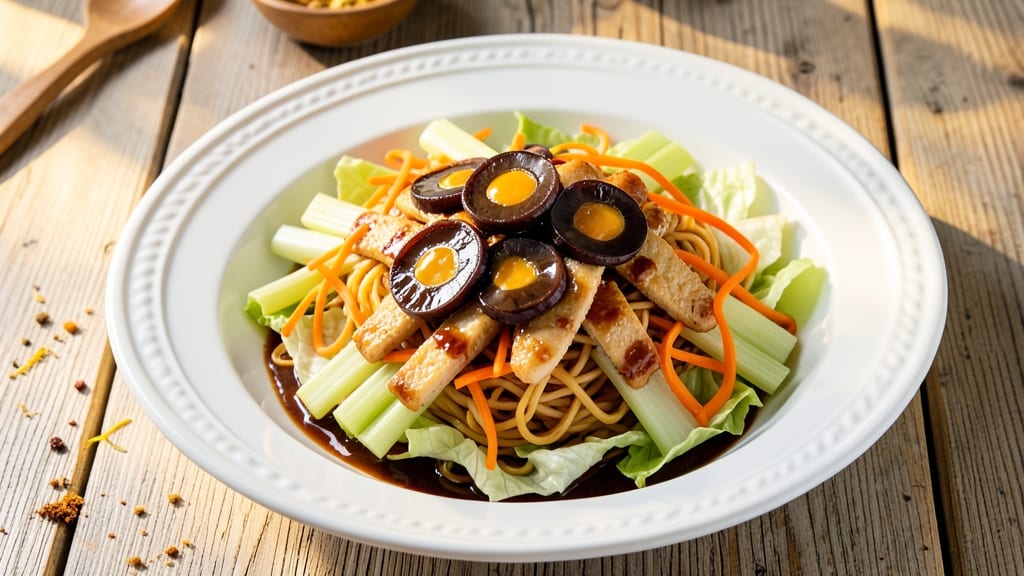
This chow mein salad recipe transforms takeout favorites into a restaurant-quality dish with crisp celery crowns and perfectly wok-tossed protein. The secret lies in the crunch—crispy celery, toasted noodles, and protein that stays tender yet flavorful.
I developed this version after craving that satisfying crunch without soggy lettuce or limp noodles, and it never fails to impress.
The magic happens in the protein preparation—whether you choose chicken, shrimp, or tofu, the high-heat wok toss creates that signature chow mein texture while keeping everything juicy.
Fresh vegetables like shredded carrots and bean sprouts add brightness, while the dressing ties it all together with a perfect balance of sweet, tangy, and savory. This isn't just a salad; it's a complete meal with layers of texture and flavor.
What you'll end up with is a dish that's crispy, satisfying, and packed with restaurant-quality flavors—no takeout required. The celery crowns add that signature crunch, the wok-tossed protein delivers bold taste, and the dressing ensures every bite is cohesive.
It's the kind of salad that makes you want to eat it straight from the bowl.
Perfect for meal prep or an impressive lunch, this chow mein salad scales beautifully for parties or keeps well for leftovers. The technique is simple but yields professional results—crisp, flavorful, and impossible to resist. Let's get started!
Ingredients for chow mein salad
Crisp celery crowns, wok-tossed protein, and a tangy-sweet dressing—this salad delivers takeout-level crunch without the soggy bits.
| Ingredient | Amount | Notes |
|---|---|---|
| Celery Sticks 🧅 | 4 whole | Cut into 2-inch pieces for crispy crowns |
| Large Eggs 🥚 | 2 whole | For crispy coating on protein |
| All-Purpose Flour 🌾 | ½ cup | For dredging protein |
| Cornstarch 🌾 | ¼ cup | For extra crispiness |
| Boneless Chicken Breast 🍗 | 1 ½ lb | Cut into thin strips |
| Large Carrots 🥕 | 2 whole | Julienned for fresh crunch |
| Bean Sprouts 🌱 | 2 cups | Fresh for bright texture |
| Rice Noodles 🍜 | 8 oz | Uncooked, for toasted crunch |
| Sesame Oil 🫒 | 1 tbsp | For wok-tossed flavor |
| Soy Sauce 🥢 | ⅓ cup | Low-sodium preferred |
| Rice Vinegar 🍶 | ¼ cup | For tangy dressing |
| Honey 🍯 | 2 tbsp | For sweet balance |
| Toasted Sesame Seeds 🌾 | 1 tbsp | For garnish |
| Neutral Oil 🫒 | ½ cup | Avocado or vegetable oil |
| Garlic Cloves 🧄 | 4 cloves | Minced for dressing |
Celery is the MVP here—look for crisp, vibrant stalks with no brown spots. Trader Joe's or local farmers markets have the best quality, but regular grocery store celery works too if it's firm. For the protein, chicken breast strips are foolproof, but shrimp or tofu work just as well. The key is thin, even cuts—use a sharp knife or ask your butcher to slice it. Bean sprouts? Fresh is non-negotiable—those wilted ones in the back of the fridge won't cut it. Toast your sesame seeds in a dry pan for 2 minutes until fragrant—that aroma makes all the difference.
No sesame oil? Toasted peanut oil at half the amount works in a pinch. Swapping chicken for shrimp? Pat it bone-dry first—extra moisture ruins the crisp. The rice noodles need toasting—don't skip this step! Spread them on a baking sheet and toast at 350°F for 8-10 minutes until golden. For the dressing, honey and rice vinegar are the dynamic duo—adjust the ratio to taste. Too sweet? Add a splash more vinegar. Too tangy? Drizzle in more honey. The garlic can be roasted for a mellow flavor or raw for a punchier kick.
This salad shines best when served immediately, but the components keep well. Store the dressing separately for up to 5 days—it only gets better with time. The protein and veggies stay crisp for 2 days in the fridge if wrapped tightly. For meal prep, assemble everything the night before and toss just before serving. The noodles? Toast fresh the day you serve—they lose crunch fast. Garnish with extra sesame seeds right before eating so they stay crispy.
Why You'll Love This Recipe
- No-Fuss Weeknight Win: I swear, this salad comes together while you’re waiting for the chicken to cook. Dice the celery, crack the eggs, toss in the flour-cornstarch mix—boom, done. No fancy techniques, just crispy edges and tender bites in one bowl.
- Crunchy-Creamy Magic: That cornstarch coating on the chicken? Chef’s kiss. It turns into a light, airy crust that shatters with every bite, while the hard-boiled eggs add that rich, creamy contrast. Honestly, the celery sticks soak up all the flavor like a sponge.
- Lunchbox Legend: Pack it cold for work or school—it stays fresh for days. My kids actually eat their veggies when it’s disguised as this. (Yes, even on a Tuesday night.) Swap chicken for tofu, add nuts for crunch, or dress it up with sesame seeds for fancier occasions.
- Budget Meal Stretch: A few eggs, a breast of chicken, and a handful of celery stretch into four servings with zero waste. Leftovers? Even better cold the next day. I’ll be real: this is my go-to when I’m broke but refuse to eat sad salads.
Step-by-step instructions for chow mein salad with wok-tossed protein
Here's how to build this salad with restaurant-quality texture and flavor—crispy, fresh, and perfectly balanced.
Prepare the Celery Crowns and Chicken
Start by cutting the 4 whole celery sticks into 2-inch pieces—this size gives you that signature chow mein crunch. Set them aside in a bowl. Next, slice the 1.5 lb boneless chicken breast into thin, even strips about ¼-inch thick—this ensures quick cooking and tender bites. I like to cut against the grain for maximum tenderness.
In a shallow dish, whisk together the 0.5 cup all-purpose flour and 0.25 cup cornstarch—this blend gives you that extra-crispy coating. Beat the 2 whole large eggs in another dish until just combined. Dip each chicken strip first in the egg wash, letting excess drip off, then coat thoroughly in the flour mixture. Tap off any excess so the coating stays crispy, not gummy.
Create the Crispy Noodle Base
Heat 0.5 cup neutral oil in a large wok or skillet over medium-high heat until shimmering. Add the 8 oz rice noodles and stir-fry for 3-4 minutes until they turn a deep golden brown and smell toasty. Remove them and set aside on a paper towel-lined plate to drain excess oil.
In the same pan, add another 1 tablespoon neutral oil and increase heat to high. Add the floured chicken strips in a single layer, cooking undisturbed for 2-3 minutes until golden brown on one side. Flip carefully and cook another 2 minutes until fully cooked through. Transfer to a plate and let rest for 5 minutes—this keeps them juicy when assembled.
Build the Fresh Vegetable Layer
While the chicken rests, julienne the 2 whole large carrots into thin matchsticks—this gives that classic chow mein crunch without overpowering the dish. Trim the ends from the 2 cups bean sprouts and rinse them thoroughly to remove any dirt. Combine both in a large mixing bowl.
Add the toasted rice noodles and crispy chicken strips to the bowl. Drizzle with 1 tablespoon sesame oil and toss gently to combine—just enough to coat everything lightly. The goal here is to preserve that crispy texture while distributing the oil evenly. Taste and adjust seasoning with a pinch of salt if needed.
Assemble with the Signature Dressing
In a small bowl, whisk together the 0.33 cup soy sauce, 0.25 cup rice vinegar, 2 tablespoons honey, and 4 cloves minced garlic until fully combined. The dressing should be smooth with a glossy sheen—this indicates proper emulsification. Thin with 1-2 tablespoons water if needed to reach your preferred consistency.
Pour the dressing over the salad and toss everything together gently but thoroughly. The key here is to distribute the dressing evenly without breaking down the crispy textures. Sprinkle with 1 tablespoon toasted sesame seeds just before serving to add that final nutty crunch and visual appeal.
Serve Immediately for Maximum Crunch
Divide the chow mein salad among 4 serving plates and serve immediately while everything is still crisp. The contrast between the warm, toasted noodles and chicken, the fresh crunch of carrots and sprouts, and the tangy-sweet dressing creates that perfect balance of textures and flavors.
For extra drama, garnish each serving with an additional sprinkle of sesame seeds and a few thin celery strips on top. This salad holds up well for about 30 minutes before the noodles start to soften, so don't wait too long to serve—every bite should deliver that satisfying crunch!
Pro Tips For Making Chow Mein Salad
- STIR-FRY CHICKEN FAST: Cut the chicken into ½-inch strips before cooking—thinner pieces sear faster and stay juicier. I used to overcook them trying to get them "done," and they’d turn dry. High heat for 3-4 minutes max, then pull them out while still slightly pink.
- SLICE CELERY THIN: Cut celery into ¼-inch matchsticks—thin enough to soften slightly in the stir-fry but still hold shape. Thick sticks stay crunchy and look messy. (Yes, even if you hate chopping, this makes a real difference.)
- COMBINE FLOUR AND CORNSTARCH: Mix 1 part cornstarch to 2 parts flour for the coating—this gives you the crispiness of flour with the lightness of cornstarch. I learned this the hard way: pure flour makes a gummy mess.
- BOIL EGGS 9 MINUTES: Use 9 minutes for perfectly firm, sliceable eggs—no gray rings, no runny yolks. Shock them in ice water immediately, then peel under cool running water. (Your future self will thank you.)
Essential equipment for great chow mein salad
Wok Essentials
A carbon steel wok is my go-to for this recipe—it heats up fast and creates those signature high-heat sear marks. If you don’t own one, a 12-inch cast iron skillet works just as well, though it won’t stir-fry as efficiently.
I swear by the Made In wok from Amazon for its even heat distribution and durable construction. 🔥
Crispy Coating Tools
You’ll need two shallow dishes for the egg wash and flour-cornstarch mix—I use glass baking dishes because they’re easy to clean and let you see the coating process.
A fork or chopsticks helps toss the chicken evenly in the pan, while a fine-mesh strainer lets excess oil drain from the noodles without losing texture.
Knife and Cutting Prep
A sharp chef’s knife is non-negotiable for julienning carrots and slicing chicken—dull blades crush the celery and carrots, killing their crunch. I keep a mandoline handy for even carrot matchsticks, but a steady hand and a sharp knife work too.
A cutting board with non-slip feet prevents skidding while you prep the celery crowns.
Dressing and Garnish Kit
Whisk the dressing in a small glass bowl—it’s easier to see the emulsification than in metal. For garnishes, a small sieve helps sprinkle sesame seeds evenly, while a pair of tweezers lets you place celery strips precisely on top of each serving.
I also keep toasted sesame seeds pre-measured in a squeeze bottle for quick application.
Heat Control Tools
A thermometer ensures your oil reaches 350°F for perfect noodle toasting—too hot, and they burn; too cool, and they stay limp. I use a Taylor Precision thermometer for accuracy.
For the chicken, medium-high heat (around 375°F) is ideal—adjust your burner if needed to avoid flare-ups. A heat-resistant spatula helps flip the chicken without losing the crispy coating.
Nutrition facts
Frequently asked questions
Can I make this chow mein salad vegetarian?
Swap the chicken for extra-firm tofu or mushrooms—both work beautifully. Press and drain the tofu first, then cut into strips and coat with the same flour-cornstarch mix. For mushrooms, use shiitake or oyster varieties sliced thinly. The crispy texture stays intact, and the flavor remains rich and satisfying.
Why do my noodles turn soggy?
Soggy noodles usually happen from over-tossing or adding dressing too early. The secret is toasting the noodles until golden and crisp, then letting them cool slightly before adding any liquid. Also, assemble the salad just before serving—noodles absorb moisture fast. If they start to soften, sprinkle with extra sesame seeds or crispy fried shallots for texture.
How can I make this gluten-free?
Replace the all-purpose flour with gluten-free 1:1 baking flour and use tamari instead of soy sauce. For extra crispiness, add ½ teaspoon cornstarch to the flour mixture. The cornstarch in the original recipe already helps with gluten-free adaptations. Double-check your rice noodles are certified gluten-free too—some brands process in shared facilities.
Can I prep this ahead of time?
Yes! Store components separately for up to 2 days: protein in one container, veggies in another, and dressing in a sealed bottle. Toast the noodles fresh before serving—they lose crispiness when stored. When ready to eat, toss everything together with the dressing and garnish immediately. For parties, assemble in individual bowls just before serving to maintain that perfect crunch.
What's the best way to reheat leftovers?
Chow mein salad isn't ideal for reheating, but if you must, use the oven. Spread components on a baking sheet at 300°F for 5-7 minutes until warmed through. For extra crunch, add fresh toasted noodles or crispy fried shallots on top. The best approach? Make just enough for freshness—this salad shines when served immediately with maximum crunch.