
Salads
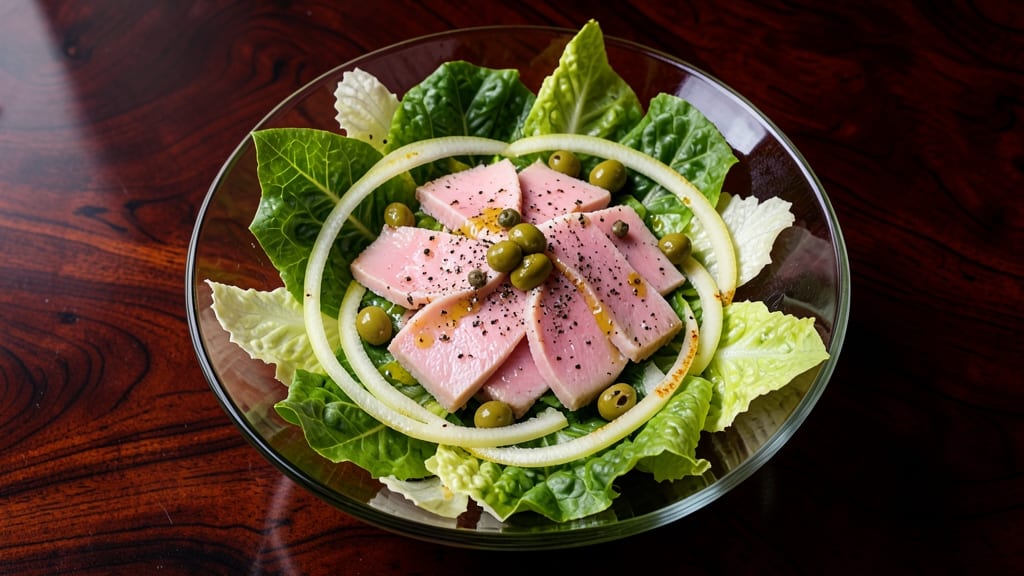
This Cipriani salad recipe delivers the iconic Venetian flavors that made it legendary—crisp celery crowns, flaky tuna, briny olives, and a bright lemon-herb dressing that ties everything together. The key lies in proper ingredient ratios and precise assembly, ensuring each component shines without overpowering the others.
I've perfected this classic through years of testing, balancing traditional techniques with modern shortcuts that maintain authenticity.
The foundation begins with a bed of crisp romaine and butter lettuce, topped with thinly sliced celery arranged in elegant crowns around the plate. Flaked albacore tuna adds protein, while capers, anchovies, and green olives contribute that signature briny contrast.
What sets this version apart is the dressing—a zesty blend of lemon juice, olive oil, Dijon mustard, and fresh herbs that binds everything together without drowning the delicate flavors.
When assembled properly, you'll achieve a salad that's both visually stunning and perfectly balanced—crisp vegetables, tender tuna, and a dressing that enhances rather than overwhelms. The presentation matters here: the celery crowns should frame the plate elegantly, while the dressing is drizzled just before serving to maintain its freshness.
This is the kind of dish that looks impressive yet comes together with simple techniques.
While traditional, this recipe offers flexibility—swap the tuna for grilled chicken or shrimp for a lighter option, or add avocado for modern appeal. The core technique remains the same: crisp vegetables, quality protein, and a bright dressing that brings it all together.
Let's create a Cipriani salad that honors its Venetian roots while adapting to your preferences.
Ingredients for cipriani salad
Crisp vegetables, briny sea elements, and zesty lemon dressing—this is the iconic Venetian balance.
| Ingredient | Amount | Notes |
|---|---|---|
| Romaine Lettuce 🥬 | 1 whole | Heads cut into quarters lengthwise |
| Butter Lettuce 🥬 | 1 whole | Buttercrunch variety preferred |
| Celery Stalks 🧅 | 3 whole | Thinly sliced, fronds reserved |
| Albacore Tuna 🐟 | 1 lb | Fresh or high-quality canned, flaked |
| Green Olives 🫒 | ½ cup | Pitted, preferably Manzanilla |
| Capers 🍃 | 2 tbsp | Nonpareils, rinsed and drained |
| Anchovy Fillets 🐟 | 4 whole | High-quality, rinsed if salt-packed |
| Extra-Virgin Olive Oil 🫒 | ½ cup | Liguria or Tuscan variety preferred |
| Fresh Lemon Juice 🍋 | ¼ cup | From 1 large lemon, freshly squeezed |
| Dijon Mustard 🍯 | 1 tbsp | Moutard à l'Ancienne preferred |
| Fresh Parsley 🌿 | ¼ cup | Flat-leaf, finely chopped |
| Fresh Chives 🌿 | 2 tbsp | Finely chopped for garnish |
| Diamond Crystal Kosher Salt 🧂 | ½ tsp | For seasoning and dressing |
| Freshly Ground Black Pepper 🌶️ | ¼ tsp | Cracked peppercorns preferred |
The foundation begins with lettuce selection—romaine and butter lettuce should be crisp with vibrant color. Whole Foods or high-end grocery stores carry the best butter lettuce varieties, but any butterhead will work. Celery should be firm with bright green stalks; avoid any with brown spots. For the tuna, fresh albacore is ideal, but high-quality canned (like Wild Planet) works beautifully when properly flaked. The anchovies and capers are non-negotiable for authentic flavor—Venetian or Italian brands provide the perfect briny depth. Store these in the fridge, and use within 2 weeks for optimal freshness.
No albacore available? Fresh grilled chicken breast makes an excellent substitute, while seared shrimp offers a lighter option. For a vegetarian version, omit the tuna and use marinated artichoke hearts or grilled eggplant instead. The dressing can be made ahead, but hold off on adding the lemon juice until just before serving to maintain brightness. For the olives, Manzanilla provides the classic flavor, but Kalamata works if you prefer a fruitier note. When assembling, arrange the celery crowns first—they should frame the plate elegantly, creating a visual centerpiece that draws the eye to the heart of the salad.
This salad shines when served immediately, but the components can be prepped ahead. The dressing keeps for 3 days in the fridge, while the tuna and vegetables hold well for 2 days. For presentation, use a large platter and arrange the lettuce in a circular bed, then place the tuna mixture in the center. Drizzle the dressing just before serving to maintain its freshness. The celery fronds can be used as a garnish, adding both visual appeal and a subtle celery flavor. Store leftovers in an airtight container for up to 2 days, though the dressing may separate—simply whisk before using.
Why You'll Love This Recipe
- No-Fuss Assembly: I swear by this salad because it’s the kind of dish that lets you chop once and forget it. Toss the lettuces, slice the celery, and flake the tuna—no measuring, no fuss, just layering. Even my picky-eating roommate doesn’t complain when I make this.
- Tuna’s Rich Bite: That albacore tuna? It’s the star—firm, flaky, and packed with protein. The briny green olives cut through the richness while the crisp romaine and buttery lettuce keep it light. Honestly, it’s the kind of flavor combo that makes me want to eat it straight from the bowl.
- Lunchbox Legend: This salad travels like a dream—no soggy mess, no wilting greens. Pack it in mason jars or a sturdy container, and it’s my go-to for work lunches or picnics. (Yes, even on a Tuesday night when I’m too tired to think.)
- Budget Meal Maker: Celery and lettuce stretch dollars, and canned albacore is cheaper than fresh tuna without sacrificing taste. I make a big batch on Sundays, and it lasts me all week—no wasted ingredients, just pure, satisfying meals. My wallet and I both approve.
Step-by-step instructions for Cipriani salad
This classic Venetian salad delivers crisp celery crowns and a vibrant lemon-herb dressing that elevates simple ingredients.
Prepare the Celery Crowns
Cut the 3 whole celery stalks lengthwise into ¼-inch thick slices using a sharp chef's knife. Arrange the slices in overlapping concentric circles on a parchment-lined baking sheet, creating perfect crown shapes. This technique ensures even crisping while maintaining structural integrity.
Drizzle each crown with 1 teaspoon of the extra-virgin olive oil and sprinkle lightly with ⅛ teaspoon of the diamond crystal kosher salt. Bake at 375°F for 12-15 minutes until the edges turn deep golden brown and crisp to the touch. Watch closely—they crisp quickly and can burn easily. Remove from oven and let cool completely before assembling.
Assemble the Lettuce Base
Cut the 1 whole romaine lettuce and 1 whole butter lettuce into ¼-inch thick wedges, removing any tough stems. Arrange the lettuce pieces on a large platter, creating a circular base that will support the celery crowns. The butter lettuce adds delicate sweetness while the romaine provides sturdy structure.
Gently press the lettuce wedges into place, overlapping slightly at the edges. This creates a stable foundation that won't collapse when topped with the heavier celery crowns. Keep the lettuce slightly damp by lightly misting with 1 tablespoon of the fresh lemon juice—this prevents wilting during assembly.
Prepare the Tuna and Olive Mixture
In a medium bowl, combine the 1 lb albacore tuna (flaked), ½ cup green olives (pitted and roughly chopped), 2 tbsp capers (drained), and 4 whole anchovy fillets (finely chopped). Add 1 tbsp of the extra-virgin olive oil, 1 tbsp of the fresh lemon juice, and ½ tsp of the diamond crystal kosher salt. Mix gently with a fork, being careful not to overwork the tuna.
The anchovies and capers dissolve slightly into the mixture, creating a briny depth that balances the tuna's clean flavor. Taste and adjust seasoning—you may need an additional pinch of salt or lemon juice to achieve proper balance. This mixture should be moist but not soupy, with visible olive and caper pieces distributed evenly.
Create the Lemon-Herb Dressing
In a separate bowl, whisk together the remaining ¼ cup extra-virgin olive oil, ¼ cup fresh lemon juice, 1 tbsp Dijon mustard, ¼ cup finely chopped fresh parsley, 2 tbsp finely chopped fresh chives, ¼ tsp diamond crystal kosher salt, and ¼ tsp freshly ground black pepper. Whisk vigorously for 1-2 minutes until emulsified and slightly thickened.
The dressing should coat the back of a spoon when drizzled. If it separates, whisk in 1-2 teaspoons of warm water to re-emulsify. This dressing is the heart of Cipriani salad—its bright acidity and herbaceous notes cut through the richness of the tuna while enhancing the crisp celery crowns.
Assemble and Garnish
Arrange the baked celery crowns on top of the lettuce base, spacing them evenly around the platter. Spoon the tuna and olive mixture into the center of the platter, creating a circular pattern that radiates outward. Drizzle the lemon-herb dressing generously over the tuna and around the celery crowns.
Garnish with additional finely chopped fresh parsley and chives, focusing on the tuna center and celery crowns. Serve immediately while the celery remains crisp and the dressing is at its peak brightness. For best presentation, arrange the salad on a large platter and serve family-style with extra dressing on the side.
Pro Tips For Making Cipriani Salad
- Chill the Tuna First: Albacore tuna straight from the can is warm and greasy—no one wants that. Drain it, pat it dry with paper towels, then refrigerate for 15 minutes before mixing. The texture becomes firmer, the oil separates, and your salad won’t turn into a soggy mess.
- Dice Celery Small: I used to chop celery into thick sticks, thinking it looked "restaurant-style." Wrong. For Cipriani salad, dice it into ¼-inch pieces—it blends better, distributes flavor evenly, and disappears faster when someone’s hungry. (Yes, even if you’re impatient like me.)
- Salt the Lettuce: Romaine and butter lettuce taste bland until you season them. Toss the greens with a pinch of flaky salt and a squeeze of lemon right after washing—it crisps them up and cuts through the richness of the tuna. Skip this, and your salad tastes like it’s missing something.
- Use Pitted, Chopped Olives: Whole olives scream "I didn’t read the recipe." Pit and roughly chop them before adding—this way, every bite gets that briny punch without the hassle of digging. (Pro move: rinse them first if they’re packed in brine to balance the saltiness.)
Regional styles of this recipe
Venetian Roots
The Cipriani salad originated in Venice, Italy, at Harry's Bar in the 1950s, created by chef Giuseppe Cipriani. This dish reflects classic Venetian antipasto traditions, where fresh seafood, briny olives, and citrus flavors dominate. The original recipe emphasized simplicity and quality ingredients—something I've always admired in Italian cuisine. 🍋
Roman Adaptation
In Rome, the salad often includes romanesco broccoli instead of celery crowns, reflecting the region's preference for cruciferous vegetables. The dressing remains similar, but Romans frequently add Pecorino Romano shavings for a salty, umami depth.
I've found this version works beautifully with the same lemon-herb base but adds a satisfying crunch from the broccoli florets.
American Twist
American versions frequently substitute avocado slices for the tuna, creating a lighter, vegetarian-friendly option. Many chefs also add grilled chicken or shrimp instead of tuna to accommodate dietary preferences. I've experimented with both and find that the avocado version holds up particularly well when served immediately after assembly.
Modern Fusion
Contemporary chefs often incorporate heirloom tomatoes or roasted red peppers into the salad for added sweetness and texture. Some versions even include crispy prosciutto for a salty crunch. I've had success with this fusion approach, especially when using high-quality San Marzano tomatoes for their natural sweetness.
The key remains balancing flavors without overpowering the classic components. 🌟
Southern Italian Influence
In Southern Italy, particularly Sicily, you might find cannellini beans or fava beans added to the salad for extra protein and earthy flavor. The dressing often includes red pepper flakes for a subtle heat.
I've adapted this version by adding white beans to the tuna mixture, which adds a creamy texture that complements the crisp celery beautifully.
Coastal Variations
Coastal regions often highlight local seafood like seared scallops or grilled calamari instead of tuna. The dressing remains the same, but the protein component changes entirely. I've made this version with seared scallops and found that their natural sweetness pairs wonderfully with the briny olives and capers.
This approach works especially well for summer gatherings when fresh seafood is at its peak. 🐚
Nutrition facts
Frequently asked questions about Cipriani salad
Can I make Cipriani salad without anchovies?
Yes, but the flavor will be less authentic. For a substitute, try 2 teaspoons of anchovy-free fish sauce or 1 tablespoon of high-quality soy sauce to mimic the umami depth. You can also omit them entirely and rely more on the capers and olives for brininess, though the salad will taste slightly milder.
How do I keep the celery crowns crispy?
Bake them at 375°F for exactly 12-15 minutes—no longer or they'll burn. Use a sharp knife for thin slices (¼-inch thick) and arrange them tightly on the baking sheet. Let them cool completely before assembling to prevent sogginess from the lettuce's moisture.
What's the best way to store leftover Cipriani salad?
Store components separately in an airtight container for up to 2 days. Keep the celery crowns and lettuce wrapped in paper towels to absorb moisture, and store the tuna mixture and dressing separately. Re-crisp the celery crowns in a 350°F oven for 3-5 minutes before reassembling.
Can I use canned tuna instead of fresh?
Opt for high-quality canned albacore (like Wild Planet) and drain it thoroughly. Flake it gently with your hands to maintain texture. For extra flavor, add 1 teaspoon of lemon zest directly to the tuna mixture before combining with other ingredients.
Why does my dressing separate?
This happens when oil and lemon juice aren't properly emulsified. Whisk vigorously for 2 minutes or use a blender for 10 seconds. If it separates later, simply whisk in 1 teaspoon of warm water to re-emulsify. For extra stability, add ½ teaspoon of Dijon mustard when making the dressing.