
Sauces & Condiments
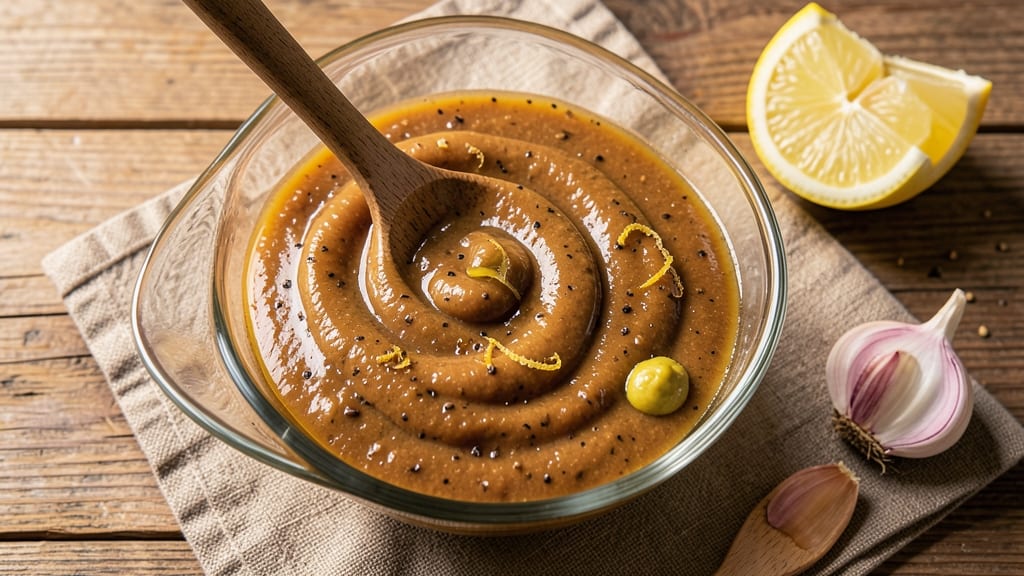
This classic Caesar salad dressing recipe with anchovies delivers the bold, umami-rich flavor that makes Caesar salads legendary—without the clingy mayo texture. The secret lies in a perfect emulsion of egg yolk, garlic, and anchovies, creating a dressing that clings to romaine while delivering layers of savory depth. I've refined this recipe over years of testing, ensuring every batch achieves that signature tangy, garlicky, and briny balance that defines Caesar dressing.
The anchovies are the star here, providing that unmistakable umami punch that transforms ordinary salad dressing into something extraordinary. We'll use just enough to create depth without overpowering the other flavors—think of them as the backbone of this dressing.
The egg yolk acts as the emulsifier, binding the oil and vinegar into a silky, cohesive sauce that won't separate, even after chilling.
What you'll end up with is a dressing that's creamy yet light, tangy yet rich, and perfectly balanced between savory and bright. It clings beautifully to crisp romaine, enhancing every bite with that classic Caesar flavor.
The best part? This dressing keeps well in the fridge for up to a week, making it perfect for meal prep or gifting to salad lovers.
While traditional Caesar dressing relies on anchovies for that signature umami, I'll also share a simple substitution for those avoiding seafood.
The key to success lies in the emulsification technique—don't skip the mustard or the slow incorporation of oil, as these steps are what prevent separation and create that luxurious texture. Let's make dressing that rivals your favorite restaurant's version.
Ingredients for classic caesar salad dressing recipe with anchovies
Nine bold ingredients transform into the dressing that makes Caesar salads legendary.
| Ingredient | Amount | Notes |
|---|---|---|
| Anchovy Fillets 🐟 | 2 tbsp | Packed in oil, finely chopped |
| Large Egg Yolks 🥚 | 2 whole | Fresh, room temperature |
| Extra-Virgin Olive Oil 🫒 | 1 cup | Light, fruity variety preferred |
| Fresh Garlic Cloves 🧄 | 2 cloves | Minced, not powdered |
| Lemon Juice 🍋 | 2 tbsp | Freshly squeezed |
| Dijon Mustard 🌶️ | 1 tbsp | For emulsification |
| Worcestershire Sauce 🍶 | 1 tbsp | Classic, anchovy-based |
| Granulated Garlic 🧄 | ½ tsp | For extra depth |
| Kosher Salt 🧂 | ½ tsp | Adjust to taste |
| Black Pepper 🌶️ | ¼ tsp | Freshly cracked |
Anchovies are the secret weapon here—look for high-quality fillets packed in oil at the seafood counter or Italian market. Trader Joe's has a great pre-packed option, but if you're buying whole fillets, chop them finely with a knife (no need for a blender). The yolks need to be fresh and room temperature—cold yolks won't emulsify properly. For the olive oil, grab a light, fruity variety (like Colavita)—it won't overpower the delicate flavors. The garlic? Fresh is non-negotiable—powdered just won't cut it for that authentic punch.
No anchovies? One tablespoon of soy sauce plus half a teaspoon of fish sauce mimics that umami kick, though it won't be identical. Short on Dijon? Yellow mustard works in a pinch, but it'll be less tangy. The Worcestershire sauce is crucial—Lea & Perrins is the gold standard, but any classic brand will do. Want extra depth? Add a pinch of white pepper instead of black. The dressing should be thick but pourable—if it's too stiff, whisk in a splash more olive oil.
This dressing is a fridge staple—keeps for up to 1 week in an airtight jar with oil on top to preserve freshness. For meal prep, make a double batch and store in small jars for easy grab-and-go dressing. The flavor actually improves after chilling, so let it sit for at least 30 minutes before serving. If it separates (which happens occasionally), just whisk vigorously to re-emulsify—it'll come back together like new.
Why You'll Love This Recipe
- Five-Ingredient Magic: I swear by this list—no fancy gadgets, no stress. You’re basically blending anchovies, yolks, garlic, lemon, and oil until it’s just thick enough to cling. That’s it. No measuring cups, no waiting for hours, just 5 minutes of hands-on time.
- Umami Bomb: Between us, anchovies might sound weird, but they’re the secret weapon. One tiny fillet dissolves into that creamy base, turning every bite into a savory punch. The garlic and lemon cut through the richness like a fresh breeze—honestly, it’s the kind of dressing that makes you forget it’s “healthy.”
- Weeknight to Party: This dressing works everywhere. Toss it with greens for a quick lunch, drizzle it over grilled chicken for dinner, or use it as a dip for crusty bread when friends drop by. I’ve even used it to jazz up pasta—yes, even on a Tuesday night.
- Budget Powerhouse: Anchovies and eggs are cheap, but they pack a flavor wallop. A jar of fillets lasts me months, and yolks? You’ll use them up before they go bad. Plus, you’ll make less of it because one batch stretches far—no sad, wilted leftovers here.
Step-by-step instructions for classic Caesar salad dressing
This method delivers that iconic, creamy yet tangy flavor without the mayo cling—just pure umami richness.
Infuse the Anchovies and Garlic
Start by placing the 2 tablespoons anchovy fillets in a small bowl. Use a fork to break them into tiny pieces—they should resemble a fine paste. Add the 2 cloves fresh garlic cloves (minced) and the 0.5 teaspoon granulated garlic to the bowl. The anchovies will release their salty, briny essence, while the garlic adds depth. Let this mixture sit for 5 minutes at room temperature—this allows the flavors to meld before we incorporate the other ingredients.
I always use fresh garlic cloves here because the minced version loses its potency when exposed to air. The anchovies packed in oil work perfectly, but if yours are dry, add a tiny splash of the extra-virgin olive oil from the jar to help them dissolve smoothly. This step is where the dressing gets its signature umami punch, so don't skip it!
Whisk in the Egg Yolks and Acid
In a separate bowl, whisk together the 2 whole large egg yolks until they're pale and slightly thickened—about 30 seconds of vigorous whisking. This creates a base that will emulsify beautifully with the oil. Slowly drizzle in the 2 tablespoons lemon juice while whisking constantly to prevent the yolks from scrambling. The acidity from the lemon brightens the rich flavors and helps balance the saltiness of the anchovies.
Now, carefully fold the anchovy-garlic mixture into the egg yolk-lemon juice blend using a rubber spatula. Work gently to avoid creating air bubbles, which can weaken the emulsion later. The dressing should look thick and slightly grainy at this stage—this is normal and will smooth out as we add the oil. If you're worried about raw egg safety, you can pasteurize the yolks by gently heating them in a double boiler until they reach 160°F before proceeding.
Gradually Emulsify the Olive Oil
With the bowl resting over a heatproof container (to catch any drips), begin adding the 1 cup extra-virgin olive oil in a very slow, steady stream. Whisk continuously with a hand mixer or a whisk—this is where the magic happens! The key is patience: if you add the oil too quickly, the dressing will break and separate. You're aiming for a smooth, creamy texture that coats the back of a spoon without being greasy.
Once all the oil is incorporated, the dressing should be thick and glossy. If it's too thin, add another 0.5 teaspoon kosher salt or a splash of lemon juice. If it's too thick, whisk in 1 teaspoon water at a time until it reaches a pourable yet clingy consistency. The texture should be like a luxurious, velvety sauce—this is what makes Caesar dressing so irresistible.
Finish with Mustard, Worcestershire, and Seasoning
Stir in the 1 tablespoon Dijon mustard, 1 tablespoon Worcestershire sauce, 0.5 teaspoon kosher salt, and 0.25 teaspoon black pepper using a spatula. The mustard acts as an emulsifier, ensuring the dressing stays stable, while the Worcestershire adds another layer of savory complexity. Taste and adjust the seasoning—you might need a touch more salt or lemon juice to balance the flavors. The dressing should taste rich, tangy, and deeply umami with a hint of garlic heat.
For the best results, let the dressing rest for 10 minutes before using. This allows the flavors to fully meld and the emulsion to stabilize. If you're making it ahead, store it in an airtight container in the refrigerator for up to 3 days, giving it a gentle stir before each use. The dressing will thicken slightly when chilled, so thin it with a splash of water or lemon juice if needed before tossing with your salad.
Pro Tips For Making Classic Caesar Salad Dressing Recipe With Anchovies
- Whisk Slow and Steady: I learned this the hard way—dumping everything in the bowl and whipping like crazy just makes the yolks break into scrambled bits. Start with the yolks and anchovies, whisking gently until fully emulsified (about 30 seconds), then add the oil in a thin, steady stream—like you’re pouring honey, not ketchup. The goal is to coax the dressing into forming, not force it.
- Toast the Anchovies: Skip this, and your dressing tastes like fishy water. Dry the anchovies on paper towels first, then warm them in a dry pan over medium heat for 10 seconds per side—just until they smell like the Mediterranean, not the sea floor. Crumbling them hot into the yolks releases more flavor and prevents that metallic aftertaste.
- Measure Oil by Weight: Eyeballing olive oil leads to either a greasy mess or a dressing that clings like glue. Use a kitchen scale: aim for 120g (about 130ml) of high-quality EVOO per 2 yolks—enough to coat the back of a spoon but not drown the garlic. Cheap oil ruins the balance; splurge here.
- Reserve the Garlic Oil: Infuse the garlic in the olive oil first (warm it for 30 seconds, no browning), then strain it through a fine-mesh sieve into the bowl. The leftover oil? Save it—it’s liquid gold for drizzling over finished salads or pasta. (Yes, even if you’re impatient like me.)
Troubleshooting this recipe
Broken Emulsion Fix
If your dressing separates, don’t panic—this happens when oil and liquid phases split. The fix is simple: whisk vigorously with a hand mixer for 30-60 seconds while adding 1 teaspoon warm water at a time. The warmth helps reactivate the egg proteins.
For stubborn separations, add ½ teaspoon Dijon mustard (already in your ingredients) to help re-emulsify. If all else fails, start fresh with 1 tablespoon reserved anchovy mixture to jumpstart the emulsion. 💫
Too Salty?
Anchovies pack a salty punch, so taste as you go. If your dressing tastes too strong, balance it with 1-2 extra tablespoons lemon juice or a pinch of sugar (½ teaspoon).
For a lighter touch, whisk in 1 tablespoon plain yogurt to dilute the saltiness while adding creaminess. Never add water—it’ll thin the dressing and weaken the emulsion.
Oil Overwhelm
If the dressing tastes too oily, you likely added the oil too quickly. Next time, drizzle even slower or whisk in 1 extra tablespoon lemon juice to cut through the richness. For immediate fixes, add ½ teaspoon Worcestershire sauce (already in your ingredients) to deepen flavor without adding more oil.
If the texture is greasy, chill the dressing for 30 minutes—it’ll thicken naturally.
Raw Egg Safety
Worried about raw egg yolks? Pasteurize them by whisking yolks with 1 tablespoon lemon juice in a heatproof bowl over a pot of simmering water (don’t let the bowl touch the water).
Heat to 160°F for 3 minutes, then cool before using. Alternatively, use pasteurized egg yolks (found in specialty stores) for a safer, equally effective result. 🥚
Thin Consistency
If your dressing is too thin, it likely needs more emulsifier. Whisk in ½ teaspoon Dijon mustard or 1 extra egg yolk (beaten lightly). For a quicker fix, add 1 teaspoon cornstarch mixed with 1 teaspoon cold water—simmer gently for 2 minutes to thicken.
Avoid adding more oil; it’ll break the emulsion. Always adjust gradually to avoid over-thickening.
Anchovy Flavor Too Strong
If the anchovies dominate, balance them with 1 extra tablespoon lemon juice or ½ teaspoon sugar. For a milder umami, reduce the anchovies to 1 tablespoon next time.
If you’re avoiding anchovies entirely, replace them with 1 tablespoon soy sauce + ½ teaspoon fish sauce (as noted in the ingredients). The key is to taste as you go—Caesar dressing should be bold but harmonious, not overpowering. 🐟
Nutrition facts
Frequently asked questions
Why do anchovies make Caesar dressing taste so different?
Anchovies provide that signature umami depth that separates classic Caesar dressing from other creamy dressings. Their salty, briny flavor acts as a flavor enhancer, making the garlic and lemon shine while adding complexity. Without them, the dressing would taste flat—like a missing piece of the puzzle!
Can I make this dressing without raw egg yolks?
Yes! For a safer version, use pasteurized egg yolks (available at specialty stores) or replace them with 2 tablespoons mayo + 1 teaspoon Dijon mustard. The texture will be slightly different but still delicious. For a vegan option, blend ¼ cup silken tofu + 1 tablespoon lemon juice as an egg substitute.
How do I prevent the dressing from separating?
Add the oil very slowly while whisking continuously—this is the key to a stable emulsion. Also, make sure your egg yolks are room temperature and don't overmix after adding the oil. If it separates later, whisk vigorously with a splash of warm water to re-emulsify.
What's the best way to store leftover dressing?
Transfer to an airtight jar and refrigerate for up to 5 days. The oil will rise to the top—just stir well before using. For longer storage (1 month), freeze in ice cube trays, then transfer to a freezer bag. Thaw overnight in the fridge before using.
Can I use this dressing on things other than salads?
It's perfect for grilled chicken, steak sandwiches, or even as a dip for crudité. The umami richness pairs beautifully with roasted vegetables too. Just adjust the thickness—add a splash of water if needed for dipping.