
Salads
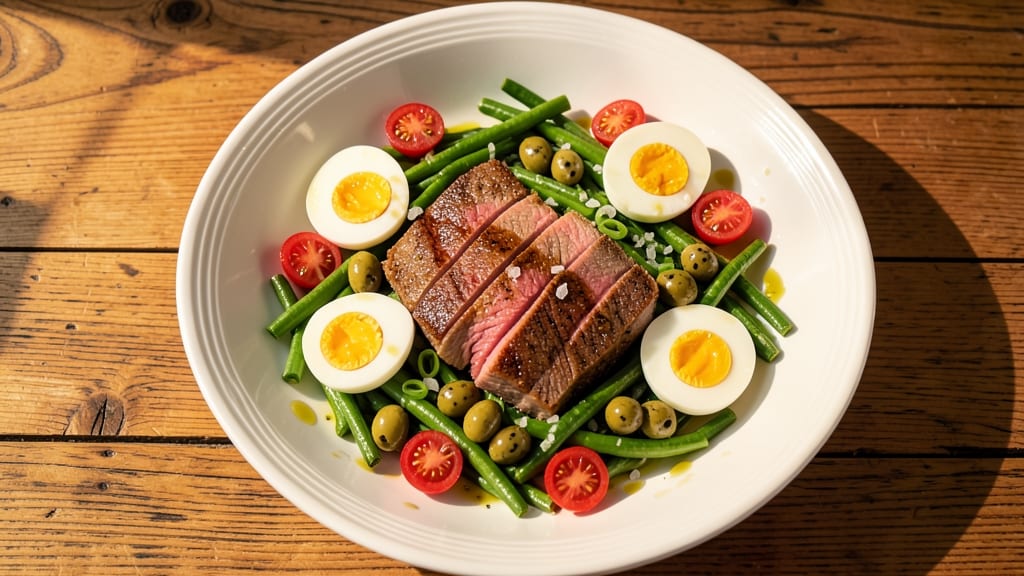
This classic French salad Nicoise recipe delivers the authentic flavors of Provence in every bite—bright tomatoes, briny olives, tender tuna, and anchovy-infused dressing that transport you to the French Riviera.
The key lies in balancing textures: crisp haricots verts, creamy hard-boiled eggs, and flaky tuna all come together with a simple yet sophisticated vinaigrette that enhances rather than overpowers.
What sets this version apart is the attention to traditional techniques—blanching green beans just until tender-crisp, hard-boiling eggs with their yolks perfectly runny, and assembling everything at the last moment to preserve freshness.
The anchovies in the dressing provide that signature umami depth without being overpowering, while Niçoise olives and cherry tomatoes add bursts of Mediterranean brightness.
The result is a salad that's as visually stunning as it is delicious—layers of vibrant colors on the plate, with each component maintaining its individual character while harmonizing perfectly.
This is the kind of dish that feels special enough for a dinner party but simple enough for a weeknight lunch, proving that classic recipes can be both impressive and approachable.
For those wanting to modernize the classic, I'll share variations like adding quinoa for extra protein or swapping goat cheese for the traditional hard-boiled eggs. The beauty of Salad Niçoise is its flexibility—it adapts beautifully while maintaining its French soul.
Ingredients for classic french salad nicoise
These vibrant ingredients bring the French Riviera to your plate with every bite.
| Ingredient | Amount | Notes |
|---|---|---|
| Fresh Haricots Verts 🌽 | 1 lb | Trimmed and blanched al dente |
| Cherry Tomatoes 🍅 | 1 ½ cups | Halved, vine-ripened preferred |
| Niçoise Olives 🫒 | 1 cup | Pitted, briny variety |
| Fresh Tuna Steak 🐟 | 1 lb | Sushi-grade, thinly sliced |
| Large Eggs 🥚 | 4 whole | Hard-boiled, yolks runny |
| Green Onions 🧅 | 4 whole | Thinly sliced, white and green parts |
| Anchovy Fillets 🐟 | 4 whole | High-quality, oil-packed |
| Extra-Virgin Olive Oil 🫒 | ½ cup | Fruity, peppery variety |
| Red Wine Vinegar 🍷 | ¼ cup | Dry, aged variety |
| Dijon Mustard 🌶️ | 1 tbsp | Mild, not spicy |
| Garlic Cloves 🧄 | 2 cloves | Fresh, minced |
| Sea Salt 🧂 | 1 ½ tsp | Diamond Crystal preferred |
| Fresh Basil Leaves 🌿 | ¼ cup | Chopped, for garnish |
The haricots verts are non-negotiable for authenticity—look for bright green, crisp stalks at specialty markets or the produce section. Whole Foods or Trader Joe's usually carry them pre-trimmed, saving you time. For the tuna, sushi-grade is essential—it stays flaky and holds its shape beautifully. If you can't find Niçoise olives, Kalamata olives work in a pinch, though they're slightly larger. The cherry tomatoes should be plump and firm—vine-ripened makes all the difference in flavor.
No anchovies? High-quality fish sauce at half the amount provides similar umami depth, though it won't be identical. For the dressing, aged balsamic vinegar can replace red wine vinegar if needed, but the acidity will be slightly different. The Dijon mustard should be mild—spicy varieties can overpower the delicate flavors. Fresh basil is ideal, but dried oregano at one-third the amount works if you're in a bind. The eggs are tricky—10-12 minutes in ice water gives you that perfect runny yolk.
Assemble the salad just before serving—haricots verts wilt fast if prepped too early. Store the dressing separately in a sealed jar for up to 1 week in the fridge. The tuna can be sliced and kept in the fridge for 2 days if wrapped tightly in plastic. For a make-ahead option, blanch the green beans and store them separately—they'll keep their crispness better. The olives and tomatoes can sit out for an hour before assembling, but the dressing should always be refrigerated.
Why You'll Love This Recipe
- I’ll be real: fresh tuna and olives might sound fancy, but they stretch this salad into two meals for the price of one. The eggs and veggies bulk it up, so you’re not breaking the bank for a dish that feels way more special than takeout. Plus, leftovers? Still delicious the next day.
- No-Fuss Assembly: I swear by this recipe because it’s that easy—just snap those haricots verts, halve the tomatoes, and arrange everything on a platter. The tuna steak? Sear it rare for 2 minutes, slice, and boom—you’re done. No chopping marathons, no hidden steps.
- Taste Like a Vacation: Between us, the contrast here is chef’s kiss: briny olives, buttery eggs, and that perfectly seared tuna with a hint of anise from the Niçoise olives. The haricots verts add a crisp snap that keeps every bite exciting—no sad, wilty greens here.
- Packable Picnic Perfection: Honestly, this is my go-to for lunch boxes or beach days—it holds up for hours without wilting. Toss it in a container with a little extra vinaigrette, and you’ve got a meal that’s as impressive at a potluck as it is on a blanket by the water.
Step-by-step instructions for classic French salad Nicoise
Here's how to assemble this iconic dish with perfect balance and traditional flair.
Prepare the Base Ingredients
Start by blanching the 1 lb fresh haricots verts in boiling salted water for 3 minutes, then immediately plunge into ice water to stop cooking. Drain and set aside. Halve the 1.5 cups cherry tomatoes and pit the 1 cup Niçoise olives, reserving any brining liquid for later if needed. Thinly slice the 4 whole green onions, separating the white and green parts.
For the eggs, place the 4 whole large eggs in a saucepan of cold water and bring to a gentle boil. Once boiling, remove from heat, cover, and let sit for 10 minutes. Transfer to an ice bath to cool completely, then peel and slice in half lengthwise. The yolks should remain runny for that classic Nicoise texture.
Create the Anchovy-Olive Dressing
In a small bowl, finely chop the 4 whole anchovy fillets and 2 cloves garlic. Whisk together the 0.5 cup extra-virgin olive oil, 0.25 cup red wine vinegar, 1 tbsp Dijon mustard, and 1.5 tsp sea salt. Add the chopped anchovies and garlic, stirring until fully incorporated. Taste and adjust seasoning, then let the dressing sit for 10 minutes to allow flavors to meld.
Here's the thing—this dressing is the soul of your salad. The anchovies dissolve completely, creating a rich, umami foundation. If the dressing seems too thick, add 1-2 teaspoons of reserved olive oil to reach a smooth, pourable consistency. You'll want just enough to coat the back of a spoon without being greasy.
Assemble the Salad Components
Arrange the blanched haricots verts in a circular pattern on a large platter, creating the base of your salad. Place the halved cherry tomatoes and Niçoise olives in clusters around the perimeter, alternating colors for visual appeal. Add the sliced green onions in a fan shape across the center, with the white parts facing inward.
Gently place the halved hard-boiled eggs around the tomatoes, leaving space for the tuna. I like to position them with the yolks facing outward so they're visible when served. The key here is balance—each component should be visible without overcrowding the plate.
Add the Tuna and Finish with Fresh Herbs
Just before serving, carefully arrange the 1 lb fresh tuna steak in thin slices over the center of the salad. The tuna should be placed directly on the green onions to absorb their freshness. Drizzle the anchovy dressing generously over the entire salad, allowing it to seep into all the components.
Finally, sprinkle the 0.25 cup chopped fresh basil leaves evenly over the top. The basil adds a bright, aromatic finish that cuts through the richness of the tuna and olives. Serve immediately while everything is at its peak freshness. The salad should look vibrant, with each ingredient clearly visible and accessible.
Serve with Traditional French Flair
Garnish the finished salad with an additional sprinkle of sea salt and a few whole Niçoise olives for presentation. I like to serve Salad Nicoise with a slice of crusty French bread and a glass of chilled white wine, preferably a crisp Sancerre or Provence rosé.
This dish is all about balance—crisp haricots verts, juicy tomatoes, briny olives, rich tuna, and creamy eggs all coming together in perfect harmony. The anchovy dressing ties it all together with its savory depth. Serve immediately while the tuna is still fresh and the dressing is vibrant.
Pro Tips For Making Classic French Salad Nicoise
- BOIL HARICOTS VERTS AL DENTE: Toss them in ice water the second they hit the pot—no waiting for room temp. I learned this the hard way after serving mushy green beans that tasted like regret; 3-4 minutes max, then shock them immediately. Crisp-tender is non-negotiable for Nicoise.
- HALVE TOMATOES UNEVENLY: Cut them slightly larger on one side—this prevents them from rolling off the plate when you toss. My grandmother swore by this, and she was right: presentation matters, but functionality matters more.
- SEAR TUNA 2 MINUTES MAX: Hit the pan ripping hot, skin-side down, and walk away after 90 seconds. Overcooking turns it into shoe leather, and no one wants that. A quick sear keeps it juicy and firm—just like the fishmonger promised.
- COLD EGGS ONLY: Shock them in ice water for 10 minutes post-boil, then peel under cold running water. Warm eggs slide out like sad, rubbery ghosts. Cold eggs stay intact, look perfect, and slice cleanly—no one wants a salad with egg confetti.
Regional styles of this classic french salad nicoise
Provençal Origins
The Salad Niçoise traces its roots to the coastal town of Nice in the Provence-Alpes-Côte d'Azur region, where it became a staple in the early 20th century.
Locals called it "Salade Niçoise" and served it as a hearty lunch dish featuring the freshest local ingredients—haricots verts from the hills, tuna from the Mediterranean, and Niçoise olives grown in the region's sun-drenched groves.
The dish gained international fame in the 1970s when it was featured in Julia Child's cookbook, but the true magic lies in its rustic, unpretentious preparation. 🌊
Côte d'Azur Twist
Along the French Riviera, particularly in Monaco and Cannes, the salad often includes roasted potatoes or warm bread to soak up the dressing. The coastal towns also favor wild fennel or saffron-infused dressing for a more aromatic touch.
In Menton, near the Italian border, you'll find versions with local white beans and lemon zest—a nod to the region's citrus groves. These variations keep the dish vibrant while staying true to its Mediterranean soul.
Parisian Elegance
When Salad Niçoise arrived in Paris, it transformed into a more refined dish, often served in upscale bistros like Le Comptoir du Relais or Bouillon Pigalle. Here, the focus shifts to perfectly seared tuna (instead of raw slices) and microgreens for garnish.
Parisian chefs also emphasize precision plating, arranging ingredients in symmetrical patterns to create a visually stunning dish. The dressing becomes slightly more sophisticated, often infused with shallots or a touch of honey for balance.
Modern American Adaptations
Across the U.S., particularly in California and New York, the salad has evolved with local ingredients. In San Francisco, you'll find versions with avocado and quinoa for added texture, while New York City restaurants often use heirloom tomatoes and feta cheese for a richer profile.
The dressing sometimes includes maple syrup or balsamic reduction for a sweeter contrast. These twists keep the dish fresh while appealing to modern palates.
Italian Riviera Influence
Just across the border in Monaco and Ventimiglia, the salad borrows from Italian cuisine, incorporating anchovy fillets in the dressing (a nod to Liguria) and capers for extra brininess. The green beans are often blanched with lemon zest, and burrata cheese replaces hard-boiled eggs for a creamier texture.
This fusion highlights the shared culinary heritage of the Mediterranean coast.
Vegetarian Variations
For those avoiding seafood, white beans or chickpeas replace tuna, while marinated artichokes and roasted red peppers add depth. Some versions use grilled halloumi or goat cheese for a protein boost.
The dressing remains the same, ensuring the dish stays true to its Provençal roots while accommodating dietary preferences. This version is just as vibrant and satisfying! 🌱
Nutrition facts
Frequently asked questions
Can I substitute canned tuna for fresh in this recipe?
While canned tuna works in a pinch, fresh tuna steak is preferred for its superior texture and flavor. If using canned, opt for high-quality in water (not oil) and drain it thoroughly. For a closer match, lightly flake the tuna and arrange it in clusters rather than slices. The key difference is that fresh tuna stays flaky and holds its shape better while canned tuna can become mushy.
How do I keep the haricots verts from getting soggy?
Blanch them just until tender-crisp (2-3 minutes in boiling water) and immediately plunge into ice water to stop cooking. Store them separately from the dressing until ready to assemble. The secret is adding the dressing right before serving—this prevents wilting. Also, avoid overcrowding the plate when arranging them.
What's the best way to store leftover Salad Niçoise?
Store components separately: keep the dressing in a sealed jar, tuna wrapped tightly in plastic, and other ingredients in airtight containers. Reassemble only when ready to eat, adding fresh dressing. The tuna will keep for 2 days in the fridge, while blanched green beans stay crisp for 1 day if stored properly. Never store the fully dressed salad overnight.
Can I make this salad ahead of time?
Yes, but with some adjustments! Prep all components except the dressing and tuna up to 1 day ahead. Store the dressing separately and add it just before serving. For the tuna, slice it fresh and arrange it last minute. The key is keeping the green beans and tomatoes separate until assembly to maintain their freshness and crispness.
Why does my dressing taste too salty?
The anchovies and olives can make the dressing salty if not balanced properly. Start with 1 tsp salt and taste as you go. If needed, dilute with 1 tsp water or add a splash of vinegar to balance. The olives' brining liquid can also add saltiness—use it sparingly. Remember, you can always add more olive oil to mellow the flavor.