
Salads
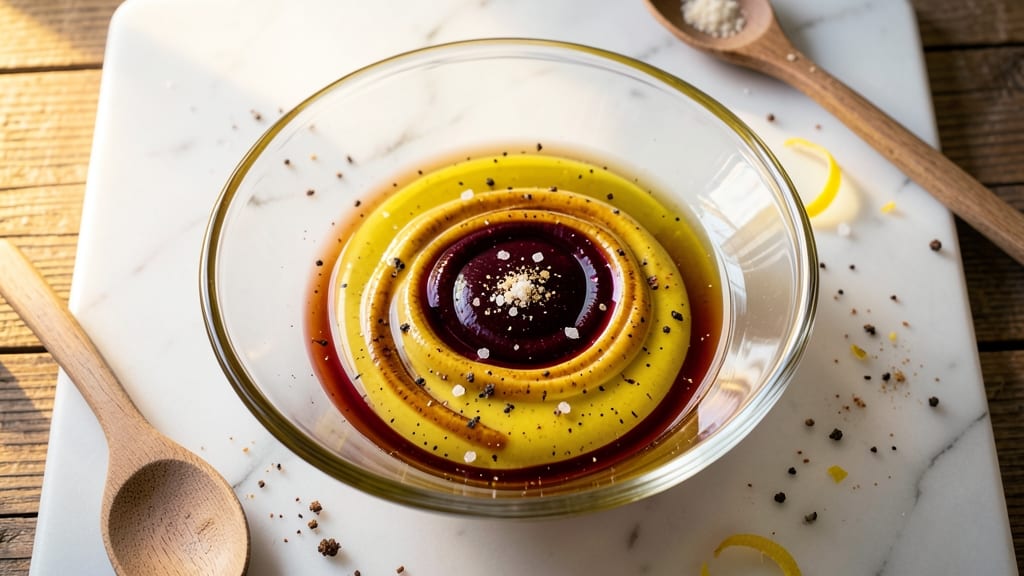
This classic vinaigrette salad dressing recipe delivers that perfect balance of tangy, bright acidity and rich oil—just like your favorite restaurant versions. The secret lies in precise ratios and proper emulsification, creating a dressing that clings beautifully to greens without separating. I've perfected this over years of testing, and it's become my go-to for everything from simple salads to drizzling over grilled vegetables.
The foundation is simple: 3 parts oil to 1 part vinegar, with just enough mustard to bind and a pinch of salt to enhance flavors. Dijon mustard adds depth while keeping the texture smooth, and a touch of honey or sugar balances the acidity for a well-rounded taste.
This ratio ensures every batch turns out consistent, whether you're using red wine vinegar for classic flavor or apple cider vinegar for a fruity twist.
What makes this dressing truly special is its versatility. It elevates any salad—from crisp romaine to hearty kale—while also working as a marinade or finishing sauce. The emulsification technique guarantees it won't separate, even after sitting in your fridge for days.
Store it in an airtight container for up to a week, or make a double batch to have on hand for quick meals.
For extra flavor, customize with fresh herbs like tarragon or chives, or add a pinch of garlic powder for an umami kick. The possibilities are endless, but the base remains foolproof. Let's get started on creating your perfect vinaigrette.
Ingredients for classic vinaigrette salad dressing
Eight simple ingredients for restaurant-quality vinaigrette that stays creamy and bright.
| Ingredient | Amount | Notes |
|---|---|---|
| Extra-Virgin Olive Oil 🫒 | ¾ cup | High-quality, fruity variety preferred |
| Red Wine Vinegar 🍷 | ¼ cup | Balsamic works too for sweetness |
| Dijon Mustard 🥬 | 1 tbsp | For smooth texture and binding |
| Granulated Sugar 🍯 | 1 tsp | Balances acidity perfectly |
| Kosher Salt 🧂 | ½ tsp | Enhances all flavors |
| Freshly Ground Black Pepper 🌶️ | ¼ tsp | Freshly cracked for best flavor |
| Garlic Powder 🧄 | ¼ tsp | Optional umami kick |
| Fresh Tarragon 🌿 | 1 tbsp | Chopped finely for herbaceous note |
The olive oil is your flavor foundation—look for extra-virgin with a fruity aroma, not that harsh, bitter stuff. Trader Joe's or Whole Foods have great options, but even your regular grocery store's olive oil aisle works if it's labeled 'extra-virgin.' Red wine vinegar should smell tangy and clean, not funky. Bragg or Annie's are my go-tos, but any decent bottle will do. Fresh tarragon makes all the difference—dried won't cut it here. If you can't find it, fresh basil or parsley works in a pinch, but tarragon's that anise-like flavor is what makes this classic.
No Dijon mustard? Whole-grain mustard thinned with a splash of vinegar works in a bind. Skip the sugar? Honey or maple syrup at half the amount keeps it balanced. The garlic powder is totally optional, but if you love that umami depth, don't skip it. For a sweeter dressing, swap the red wine vinegar for apple cider vinegar—it's fruitier and pairs well with honey. If you're making this ahead, add the fresh herbs last so they stay vibrant. The emulsification happens fast, so whisk everything together quickly for that silky texture.
This keeps beautifully—up to 1 week in the fridge if stored in a clean, airtight jar. The emulsification holds, so no shaking needed before using. For extra flavor, double the batch and store half in the freezer for up to 3 months. Just let it come to room temp before shaking and using. The herbs will fade slightly over time, but the base flavor stays bright. If it separates, just whisk it up again—it'll come back together every time.
Why You'll Love This Recipe
- Five-Ingredient Magic: I swear by this combo—just oil, vinegar, mustard, sugar, and salt. No fancy gadgets, no stress. The Dijon mustard emulsifies the oil and vinegar like a dream, and honestly? It’s the kind of dressing I make when I’m too tired to think.
- Tangy, Rich, Balanced: That pinch of sugar cuts the acidity of the red wine vinegar while letting it shine, and the olive oil adds depth without overpowering. It’s bright, it’s bold, and it’s the kind of flavor that makes me reach for seconds—even when I’m not hungry.
- Weeknight Workhorse: I keep a jar in my fridge for quick salads, but it’s also my go-to for drizzling over roasted veggies or even grilled chicken. Between us, it’s the dressing I grab when I don’t want to overcomplicate things—yet it still feels special.
- Makes a Batch: I double the recipe and store it for up to two weeks. It’s cheap to make, lasts forever, and saves me from buying overpriced bottles at the store. Plus, the leftovers taste just as fresh as day one—no weird off flavors here.
Step-by-step instructions for classic vinaigrette salad dressing
Here's how to make a timeless dressing that's perfectly balanced every time.
Whisk Vinegar and Mustard Until Smooth
In a medium bowl, combine the 0.25 cup red wine vinegar, 1 tablespoon Dijon mustard, 1 teaspoon granulated sugar, 0.5 teaspoon kosher salt, 0.25 teaspoon freshly ground black pepper, and 0.25 teaspoon garlic powder. I like to use a fork first to break up any sugar clumps, then switch to a whisk for thorough mixing.
Whisk vigorously for about 30 seconds until the sugar dissolves completely and the mixture becomes smooth. This step ensures your dressing won't separate later. The sugar here isn't just for sweetness—it also helps balance the acidity of the vinegar, creating that perfect tangy-sweet flavor we all love.
Gradually Add Olive Oil While Whisking
With the whisk still in the bowl, begin adding the 0.75 cup extra-virgin olive oil very slowly—about 1 tablespoon at a time. This gradual approach prevents the oil from breaking the emulsion. Keep whisking constantly as you add each tablespoon until the mixture begins to thicken and look creamy.
I always add the oil slowly because it's easy to overdo it. You want the dressing to coat the back of a spoon but still flow freely. If it gets too thick, you can thin it with a splash of water later. The key is patience—rushing this step often leads to separation.
Fold in Fresh Tarragon for Herbaceous Depth
Once the oil is fully incorporated, stir in the 1 tablespoon finely chopped fresh tarragon using a silicone spatula. I like to press the tarragon leaves against the side of the bowl first to release their oils before folding them in. This step adds that signature herbaceous note that makes this vinaigrette stand out.
Give it one final taste and adjust seasoning if needed. You might want to add a pinch more salt or pepper, or even a tiny extra splash of vinegar if you prefer more tang. The dressing should taste bright and balanced—not too sweet, not too sharp, just perfectly harmonized.
Rest and Shake Before Using
Transfer the dressing to a clean jar with a tight-fitting lid. Let it sit at room temperature for 10-15 minutes before giving it a good shake. This resting period allows all the flavors to meld together beautifully. The dressing will naturally thicken slightly as it sits.
Before using, give the jar a vigorous shake to redistribute any separated oil. This classic vinaigrette will keep in the refrigerator for up to 1 week, though I always find myself using it up much faster. The flavors actually improve slightly as they sit, developing that complex depth that makes homemade dressing worth every minute.
Pro Tips For Making Classic Vinaigrette Salad Dressing
- Whisk in Stages: Start by mixing vinegar, mustard, sugar, and salt first—this keeps the mustard from clumping when oil hits it. Then, slowly drizzle in the olive oil while whisking like you’re trying to win a race. Stop when it’s emulsified, or you’ll end up with a greasy mess instead of a silky dressing.
- Use Cold Ingredients: Measure your vinegar, mustard, and sugar straight from the fridge—cold ingredients blend smoother and prevent the mustard from turning into a grainy paste. I learned this after making a batch where the mustard separated no matter how much I whisked.
- Measure Vinegar Precisely: A splash isn’t enough. Use a measuring spoon for the vinegar—too little and it’s bland; too much and the dressing tastes harsh. Three tablespoons for a standard batch is the sweet spot, and it’s easier than eyeballing it.
- Salt the Mustard First: Mix the salt into the Dijon mustard before adding anything else—it dissolves better and prevents clumps later. Skip this, and you’ll end up with gritty bits no matter how much you whisk. (Yes, even if you’re impatient like me.)
Make-ahead tips for this classic vinaigrette salad dressing
Batch Prep Strategy
Make a double batch of this vinaigrette to have it ready for the week—simply multiply all ingredients by 2. Store in two 8-ounce glass jars with tight lids in your fridge.
The dressing stays fresh for up to 1 week while maintaining its perfect emulsification. I always keep one jar in the fridge and one in the pantry for quick access. 💡
Freezer-Friendly Base
For long-term storage, prepare the dressing without the fresh herbs and freeze it in ice cube trays. Once frozen, transfer the cubes to a ziplock freezer bag and store for up to 3 months.
Thaw overnight in the fridge, then whisk with fresh herbs before using. This method preserves the base flavors perfectly while keeping the herbs vibrant. 🥶
Herb Preservation Tip
If you're prepping ahead, chop the fresh tarragon just before adding it to the dressing. Store the herbs separately in a small airtight container with a paper towel to absorb moisture.
This keeps them fresh for up to 5 days in the fridge. When ready to use, simply whisk them into your pre-made dressing. 🌿
Portion Control
Divide the dressing into small 4-ounce jars for easy single-serving use. Label each jar with the date and flavor variation (if customized). This makes it simple to grab just what you need for a quick salad or drizzle without wasting leftovers.
I keep these in my fridge door for convenience. ✨
Flavor Layering
For extra depth, prepare two separate vinaigrettes—one with red wine vinegar and another with apple cider vinegar. Store them in separate jars and mix equal parts when ready to use.
This creates a complex, layered flavor that's far more interesting than a single base. Keep experimenting with different vinegar blends! 🍷
Marinade Double Duty
Use half of your pre-made vinaigrette as a quick marinade for grilled chicken or fish. Store the remaining half in a separate jar. The acidity tenderizes proteins while adding bright flavor—just 15-30 minutes of marinating time is all you need. This turns one batch into two delicious uses! 🍗
Nutrition facts
Frequently asked questions
Why does my dressing separate after making it?
Separation happens when oil and vinegar aren't properly emulsified. Always add oil very slowly while whisking constantly—about 1 tablespoon at a time. The Dijon mustard acts as a natural emulsifier, but rushing the process breaks it. If it separates later, just whisk vigorously before using. The recipe's 3:1 oil-to-vinegar ratio is key for stability.
Can I substitute apple cider vinegar for red wine vinegar?
Apple cider vinegar works beautifully and adds a fruity sweetness. For best results, reduce the sugar to ½ teaspoon since the vinegar already has natural sweetness. It pairs especially well with honey instead of granulated sugar. The tang will be slightly different but equally delicious—great for autumn salads.
How do I adjust the thickness of this dressing?
For a thinner dressing, add 1-2 teaspoons of water and whisk until smooth. Need it thicker? Let it sit for 10-15 minutes—the oil will naturally separate slightly and thicken when shaken. Avoid adding extra oil, which can break the emulsion. The perfect consistency should coat the back of a spoon but still flow freely.
What herbs can I use instead of tarragon?
Fresh basil, parsley, or chives work wonderfully as substitutes. For a Mediterranean twist, try oregano or thyme. If using dried herbs, reduce to ½ teaspoon since they're more concentrated. The herb choice completely changes the flavor profile—experiment to find your favorite! Store-bought dried herb blends can work, but fresh always tastes best.
Is this dressing safe to eat if it's been in the fridge for 2 weeks?
For food safety, use it within 1 week for best quality. After that, the vinegar's acidity helps preserve it longer, but the herbs may lose freshness and the texture can change. If it smells off or has mold, discard it. The recipe's acidity makes it shelf-stable longer than many dressings, but 1 week is the ideal window for peak flavor.