
Salads
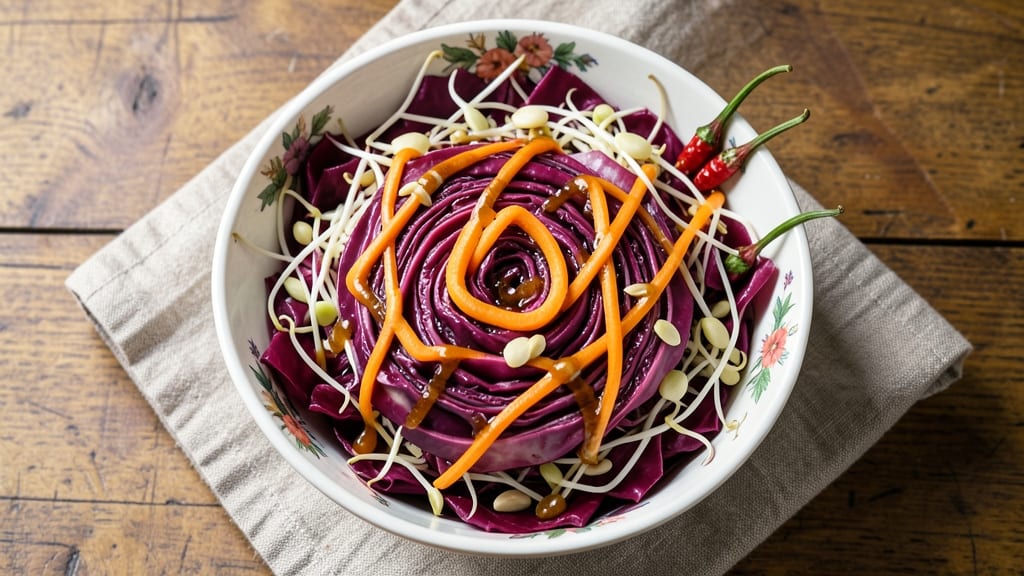
This cold Thai salad recipe delivers the perfect balance of spicy, tangy, and crunchy flavors in just 15 minutes—no cooking required. The secret lies in the traditional technique of pounding garlic, ginger, and chili into a fragrant paste, then massaging it into crisp vegetables for maximum flavor absorption.
I developed this vegetarian version after discovering how the right combination of lime, peanuts, and fresh herbs transforms simple ingredients into something restaurant-worthy.
The key to authentic texture and flavor is the hand-mixing process, where the dressing clings to every bite of shredded cabbage, carrots, and bean sprouts.
You’ll need just 10 ingredients—many of which you likely already have on hand—and a mortar and pestle (or a sturdy bowl and spoon) to create the signature Thai dressing. The result is a salad that’s vibrant, refreshing, and packed with layers of heat, tang, and nutty richness.
What sets this recipe apart is its versatility—adjust the spice level to your preference by adding more chili or a touch of sugar, and customize with add-ins like mango, avocado, or crispy tofu.
The salad stays fresh for up to 2 days, making it ideal for meal prep or bringing to potlucks. Serve it as a light lunch, a side dish, or even a topping for grilled proteins.
Ready to experience the bold flavors of Thailand without the fuss? This recipe is foolproof, nutrient-packed, and guaranteed to become a staple in your meal rotation. Let’s get started!
Ingredients for cold thai salad
Ten vibrant ingredients transform into a restaurant-quality Thai salad without cooking or fuss.
| Ingredient | Amount | Notes |
|---|---|---|
| Red Cabbage 🥬 | 4 cups | Shredded, outer leaves removed |
| Carrots 🥕 | 2 medium | Shredded or julienned |
| Bean Sprouts 🌱 | 2 cups | Fresh, rinsed thoroughly |
| Garlic Cloves 🧄 | 6 cloves | Peeled, for pounding |
| Fresh Ginger 🌿 | 2 tbsp | Grated, or 1-inch piece |
| Bird's Eye Chilies 🌶️ | 4 whole | Stems removed, seeds adjusted |
| Lime Juice 🍋 | ½ cup | Freshly squeezed |
| Peanuts 🥜 | ½ cup | Crushed, unsalted preferred |
| Fresh Thai Basil Leaves 🌿 | ½ cup | Packed, stems removed |
| Fish Sauce 🍶 | 1 tbsp | Vegetarian alternative preferred |
| Coconut Sugar 🍯 | 1 tbsp | Or light brown sugar |
| Sesame Oil 🫒 | 1 tbsp | Toasted sesame preferred |
| Vegetable Oil 🫒 | 1 tbsp | For tossing vegetables |
| Sea Salt 🧂 | ½ tsp | Fine grain preferred |
The vegetables form the salad's backbone, so prioritize freshness and crispness. Red cabbage should be vibrant purple with no yellowing leaves—Trader Joe's and Whole Foods carry pre-shredded versions that save time. Carrots work best when firm and bright orange; organic varieties often have richer flavor. Bean sprouts need thorough rinsing to remove dirt—soak in cold water for 10 minutes before using. For the dressing components, Thai basil is non-negotiable—its anise notes define the flavor, and Asian markets typically carry the freshest varieties. The peanuts should be raw and unsalted to prevent overpowering the delicate balance of flavors.
No Thai basil? Regular basil plus a pinch of anise powder works in a pinch, though the flavor won't be identical. Running short on fish sauce? Vegetarian oyster sauce or soy sauce provides umami depth, though the authentic Thai profile will differ slightly. For heat control, remove chili seeds entirely for mild flavor or leave them in for maximum spice. The coconut sugar can be swapped for agave nectar or brown sugar if needed, though coconut sugar's caramel notes are preferred. Sesame oil should be toasted—look for bottles labeled 'toasted' at specialty stores—as regular sesame oil lacks the nutty depth required. For the garlic and ginger, freshly pounded creates the signature fragrant paste; pre-minced versions won't deliver the same texture or flavor intensity.
This salad thrives on freshness—prepare components just before assembly to maintain crispness. Store vegetables separately in airtight containers for up to 2 days in the fridge, while the dressing keeps for 5 days when refrigerated. The complete salad holds for 24 hours if kept refrigerated, though texture will soften slightly. For meal prep, store components separately and assemble just before serving. The dressing can be made 3 days ahead—its flavors actually improve with time as the ingredients meld together. When reheating, avoid microwave use; instead, gently toss with a splash of water to revive crispness.
Why You'll Love This Recipe
- No-Cook Magic: I swear, this salad takes zero active cooking—just chop, toss, and let the dressing work its magic. The red cabbage softens just enough to get tender-crisp, while the carrots stay delightfully sharp, all without a pot in sight.
- Zesty Crunch Bomb: That garlic-ginger dressing? Chef’s kiss. The fresh ginger cuts through the sweetness of the carrots, while the garlic adds a punchy depth that makes every bite feel like a little flavor explosion. Honestly, the bean sprouts add this addictive crunch that keeps me going back for seconds.
- Lunchbox Hero: Between us, this is my go-to for packed lunches or potlucks—it holds up for days without wilting. I’ll prep a big batch on Sundays, and by Friday, it’s still fresh, vibrant, and way better than sad desk salads.
- Budget Crunch Fighter: Red cabbage and carrots stretch so far, and bean sprouts? They’re cheap and pack a flavor punch. I’ll make this for four people for under $10, and somehow, it always disappears faster than my willpower. (Yes, even on a Tuesday night.)
Step-by-step instructions for cold Thai salad
Here's how to assemble this vibrant salad with perfect balance of textures and flavors.
Prepare the Vegetable Base
In a large mixing bowl, combine the 4 cups of shredded red cabbage, 2 medium shredded carrots, and 2 cups of rinsed bean sprouts. This combination gives you the perfect crunch contrast - the cabbage provides crispness while the carrots add natural sweetness that balances the heat.
Use your hands to gently massage the vegetables for about 30 seconds. This helps soften the cabbage slightly and distributes any natural juices, ensuring each bite has consistent texture. The cabbage should feel slightly pliable but still maintain its structure - you're not cooking it, just prepping it for the dressing.
Create the Signature Dressing
In a small bowl, whisk together the 0.5 cup of freshly squeezed lime juice, 1 tablespoon of fish sauce, and 1 tablespoon of coconut sugar until completely dissolved. This forms the base of your dressing - the lime provides bright acidity, the fish sauce adds umami depth, and the coconut sugar balances the heat while complementing the natural sweetness of the vegetables.
Next, add the 1 tablespoon of toasted sesame oil and mix well. The sesame oil carries the aromatic notes that define Thai cuisine. Then stir in the 2 tablespoons of grated fresh ginger and 6 peeled garlic cloves that have been lightly crushed. This combination creates the complex flavor profile that makes this salad so distinctive - the ginger adds warmth while the garlic provides a savory backbone.
Incorporate Heat and Final Touches
Finely chop the 4 whole bird's eye chilies (adjust seeds based on desired heat level) and add them to the dressing mixture. The chilies should be minced small enough to distribute evenly but not so fine that they become invisible - you want that signature Thai heat in every bite without overwhelming the other flavors.
Pour the dressing over the prepared vegetables and toss gently but thoroughly. The vegetables should be evenly coated but still retain their individual textures. Let the salad marinate for at least 10 minutes at room temperature - this allows the flavors to meld together while keeping the vegetables crisp rather than soggy.
Assemble and Garnish
Just before serving, add the 0.5 cup of crushed peanuts and 0.5 cup of fresh Thai basil leaves to the salad. The peanuts provide a satisfying crunch contrast to the soft cabbage, while the basil adds fresh herbal notes that brighten the dish. Toss everything together one final time to distribute these elements evenly.
Finish with a sprinkle of 0.5 teaspoon of fine sea salt and a drizzle of any remaining dressing from the bowl. The salt enhances all the flavors while the extra dressing ensures each serving has that perfect balance of tangy, spicy, and sweet elements. Serve immediately while the vegetables are still crisp and the flavors are at their peak.
Pro Tips For Making Cold Thai Salad
- SHRED CABBAGE THIN: That thick, chewy cabbage bite ruins everything. Use a sharp knife and slice lengthwise first—then cut into matchsticks. If you’re lazy, a mandoline works, but don’t skip the final quick chop with kitchen shears for real texture.
- PEEL GINGER LIKE A PRO: Skip the messy peeler—just smack the ginger root hard on the counter with the flat of your knife. The skin will pop right off. Then, slice thinly (1/8-inch max) so it blends smoothly into the dressing without chunks.
- DRESSING FIRST, NOT LAST: Toss your shredded veggies with half the dressing immediately—it softens the cabbage and carrots just enough to prevent that sad, limp pile. Add the rest right before serving so the sprouts stay crisp.
- SAVE THE SPROUTS: Rinse bean sprouts twice in cold water, then spin dry in a salad spinner or clean towel. Wet sprouts turn your salad into a soggy mess, and no one wants that—especially not after all your prep work.
Essential equipment for this recipe
Mortar and Pestle
The heart of authentic Thai salad flavor lies in the traditional mortar and pestle technique for pounding garlic, ginger, and chilies. I recommend a ceramic mortar and pestle (like the Oxo Good Grips) for its durability and heat retention—it helps release more aromatic oils from the ingredients.
For a budget-friendly alternative, use a sturdy glass bowl with a wooden spoon or even the back of a heavy knife. The key is to pound the ingredients vigorously for 2-3 minutes until they form a fragrant paste—this is what creates that signature Thai depth of flavor. 🌶️
Sharp Knives and Mandoline
Precision cutting is essential for maintaining texture contrast in this salad. A sharp chef's knife (I use a Victorinox Fibrox) is perfect for shredding cabbage and julienning carrots.
For faster prep, a mandoline slicer (like the Benriner) with a julienne blade creates perfectly even strips—just be sure to use the safety guard! For bean sprouts, a small pairing knife works best for trimming the ends before rinsing.
Investing in quality knives makes prep faster and safer, especially when handling slippery vegetables like cabbage. 🥬
Mixing Bowls and Tongs
Use a large stainless steel bowl (I prefer Ozeri Artisan) for tossing the salad—its smooth surface prevents dressing from sticking. For serving, a wide, shallow bowl (like a ceramic Thai salad bowl) showcases the vibrant colors beautifully.
When tossing, silicon or bamboo salad tongs (instead of metal) prevent crushing the vegetables while ensuring even coating. For the dressing prep, a small glass bowl lets you see the colors transform as ingredients meld together. 🥜
Measuring Tools
Accurate measurements are crucial for balancing this salad's complex flavors. A stainless steel measuring cup set (like OXO Good Grips) ensures precision with lime juice and fish sauce. For the coconut sugar, a small scoop or spoon works best—pack it tightly to avoid air pockets.
A microplane (I use Bamix) is ideal for grating fresh ginger quickly and finely. For sesame oil, a small squeeze bottle makes drizzling easier than pouring. These tools help maintain consistency, especially when adjusting spice levels. 💡
Optional Pro Tools
For extra convenience, consider a handheld citrus juicer (like OXO Good Grips) to extract every last drop from limes—this boosts the dressing's brightness. A small food processor (for crushing peanuts) or rolling pin (for extra cabbage prep) can save time, though they're not essential.
If you love Thai flavors, a Thai mortar and pestle set (available at Asian markets) often includes specialized tools for different textures. These optional upgrades elevate the experience but aren't required for a delicious salad. ✨
Nutrition facts
Frequently asked questions
Can I make this salad without a mortar and pestle?
While traditional Thai salads use a mortar and pestle to pound ingredients into a fragrant paste, you can achieve great results with a sturdy glass bowl and wooden spoon or even a food processor for 10-15 seconds. For best flavor, crush the garlic, ginger, and chilies as finely as possible before mixing with other ingredients. The key is to release those aromatic oils—just work them vigorously for 2-3 minutes by hand.
How can I adjust the spice level for kids or sensitive eaters?
Start by removing all seeds and membranes from the bird's eye chilies before mincing. For extra mildness, reduce the number of chilies to 2-3 instead of 4. You can also add 1 extra tablespoon of coconut sugar to balance the heat naturally. If needed, serve the salad with a side of coconut milk or plain yogurt for dipping to cool the spice.
What's the best way to store leftovers?
Store the vegetables and dressing separately in airtight containers for up to 2 days in the fridge. When ready to serve, toss them together and let sit for 5 minutes to revive the flavors. For best texture, avoid storing the fully assembled salad—this helps keep the vegetables crisp. The dressing alone keeps for 5 days in the fridge.
Can I substitute any of the vegetables?
Yes! For a sweeter twist, add ½ cup of shredded mango or pineapple (add just before serving). You can also swap in green papaya (julienned) for extra crunch or cucumber (peeled and thinly sliced). Just keep the total vegetable volume similar—about 8 cups total—to maintain the salad's balance.
Why does my salad taste bland after sitting in the fridge?
Cold temperatures mute flavors, so always let the salad sit at room temperature for 10-15 minutes before serving to wake up the aromas. If it still tastes flat, add a fresh squeeze of lime juice and a sprinkle of fish sauce or soy sauce to boost umami. The peanuts and basil should be added fresh before serving for maximum brightness.