Salads
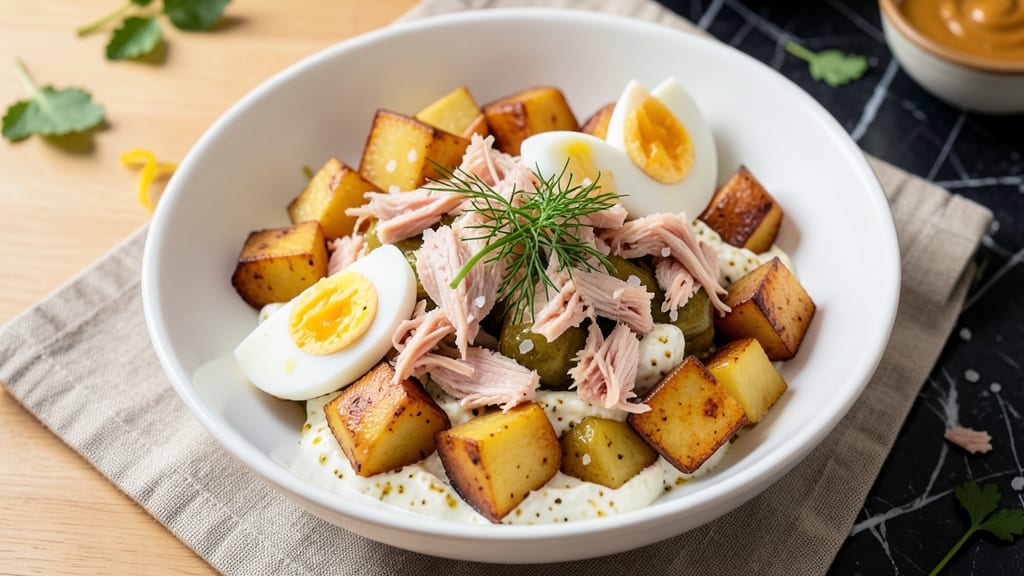
This tuna egg potato salad recipe transforms a classic dish with a mayo-free twist that delivers silky texture and bold flavor. The secret lies in a creamy yet light dressing made with Greek yogurt and Dijon mustard, which binds the tender potatoes, flaky eggs, and protein-packed tuna without heaviness.
I developed this version after years of perfecting the balance between creamy and crunchy—no soggy bites here.
The recipe starts with perfectly cooked, fluffy potatoes that hold their shape when chilled, then gets elevated with a celery crown garnish for that signature crunch. Hard-boiled eggs add protein and richness, while the tuna brings a briny depth that cuts through the creaminess.
What sets this apart is the silky texture—no grainy mayo, just smooth, cohesive bites that stay together even after hours in the fridge.
This salad is perfect for meal prep, packing lunches, or serving at gatherings where you want something substantial yet refreshing. The flavors develop beautifully overnight, making it even more delicious the next day.
Serve it with crusty bread or alongside grilled chicken for a complete meal that feels both comforting and light.
Ready in about 30 minutes of active time (plus cooling), this recipe is ideal for busy weekdays or weekend entertaining. The ingredients are simple but strategic—each component plays a role in creating that perfect harmony of textures and flavors.
Let's get started on a potato salad that will become your new go-to recipe.
Ingredients for tuna egg potato salad
Strategically chosen ingredients create this silky, mayo-free potato salad with perfect texture balance.
| Ingredient | Amount | Notes |
|---|---|---|
| Yukon Gold Potatoes 🥔 | 2 ½ lb | Baby or small potatoes preferred |
| Greek Yogurt (Full-Fat) 🥛 | ¾ cup | Plain, unsweetened for best flavor |
| Dijon Mustard 🍯 | 1 tbsp | High-quality for tangy depth |
| Extra-Virgin Olive Oil 🫒 | ¼ cup | Light fruity variety preferred |
| Large Eggs 🥚 | 4 whole | Freshly boiled, peeled |
| Flaked Tuna 🐟 | 1 ½ cans | High-quality in water, drained |
| Celery Stalks 🧅 | 2 whole | Fresh, crisp, for garnish |
| Red Bell Pepper 🌶️ | ½ cup | Diced, for crunchy texture |
| Red Onion 🧅 | ¼ cup | Finely diced, for sharpness |
| Fresh Dill 🌿 | 2 tbsp | Chopped, for herbal brightness |
| Lemon Juice 🍋 | 1 tbsp | Freshly squeezed, for acidity |
| Kosher Salt 🧂 | 1 tsp | Diamond Crystal preferred |
| Freshly Ground Black Pepper 🌶️ | ½ tsp | For subtle seasoning |
| Mayonnaise (Optional) 🥫 | ¼ cup | For texture adjustment only |
The Yukon Gold potatoes are non-negotiable—their buttery texture holds up beautifully when chilled, unlike waxy varieties that turn mushy. Buy small or baby potatoes for consistent cooking; larger ones may stay underdone. For the Greek yogurt, full-fat delivers the richest, most stable texture—non-fat versions can curdle. I always grab the plain, unsweetened variety from Trader Joe's for consistent flavor. The Dijon mustard should be high-quality—cheap brands taste harsh and overpower the delicate balance of flavors. If you're using canned tuna, high-quality brands like Wild Planet or Raincoast make a noticeable difference in taste and texture.
No Dijon? Yellow mustard at half the amount works in a pinch, though it lacks the same depth. The tuna can be swapped for chickpeas or white beans for a vegetarian version, but the briny flavor is essential for cutting through the creaminess. Fresh dill is ideal, but dried dill at one-third the amount works if you're in a bind. The celery crowns should be fresh and crisp—wilted celery will make the salad taste sad. For the red bell pepper, roasted and cooled adds a subtle sweetness that pairs beautifully with the tangy dressing. If you're concerned about the salad being too light, the optional mayonnaise helps bind everything together, though the yogurt dressing is designed to work perfectly on its own.
Potatoes should be cooled completely before mixing—warm potatoes release excess starch and make the salad gummy. Store the salad in an airtight container with parchment paper between layers to prevent sogginess. It keeps well in the fridge for 4-5 days, though the texture is best within the first 24 hours. For meal prep, portion into individual containers with a small layer of dressing on top to preserve freshness. The celery crowns can be prepped ahead and stored separately until ready to use—just add them right before serving for maximum crunch.
Why You'll Love This Recipe
- No Boil, No Stress: That’s right—no need to boil potatoes for hours. I roast Yukon Golds until they’re tender and crispy on the edges, then mash them with warm olive oil and a splash of their own juices. Honestly, the texture is next level—creamy but with that satisfying bite.
- Creamy Without Mayo: Full-fat Greek yogurt replaces mayo, and let me tell you, it’s a game-changer. The tang cuts through the richness of the tuna and eggs, while the Dijon mustard adds a sharp kick that makes this salad ridiculously addictive. (Yes, even on a Tuesday night.)
- Packable Picnic Star: This holds up perfectly in containers—no soggy messes. I’ve packed it for beach days, tailgates, and even my kids’ soccer games. The eggs stay intact, the potatoes don’t turn to mush, and the yogurt dressing keeps everything fresh. (My daughter picks out the tuna first, but still asks for seconds.)
- Budget-Friendly Protein Boost: Canned tuna is my secret weapon for stretching meals. Pair it with this salad, and you’ve got a lunch that feels fancy but costs pennies. Plus, the leftovers? They’re even better the next day—if there are any. (Between us, they never last that long.)
Step-by-step instructions for tuna egg potato salad
Here's how to craft this velvety, mayo-free salad with perfect texture and vibrant flavors.
Boil and Cool the Potatoes
Place the 2.5 lb Yukon Gold potatoes in a large pot and cover with cold water by 1 inch. Add 1 tsp kosher salt and bring to a rolling boil over high heat. Once boiling, reduce to medium-high and cook for 15-18 minutes until a knife slides in easily with no resistance.
Drain immediately and transfer the potatoes to a large bowl. Let them cool completely to room temperature before handling. I know it's tempting to rush this step, but warm potatoes will turn to mush when you cut them. For even faster cooling, spread them on a baking sheet for 5 minutes before transferring back to the bowl.
Prepare the Eggs and Base Dressing
Place the 4 whole large eggs in a saucepan and cover with cold water. Bring to a boil over high heat, then immediately reduce to a gentle simmer. Cook for exactly 9 minutes, then transfer to an ice bath for 5 minutes to stop cooking. Peel and chop the eggs into small pieces, reserving any cooking water.
In a separate bowl, whisk together the 0.75 cup full-fat Greek yogurt, 1 tbsp Dijon mustard, 0.25 cup extra-virgin olive oil, 1 tbsp lemon juice, 0.5 tsp freshly ground black pepper, and 1 tsp kosher salt. This yogurt base creates the signature silky texture without mayo. The lemon juice brightens the flavors while the mustard adds necessary tang.
Combine Potatoes and Dressing
Cut the cooled potatoes into 1-inch cubes using a sharp chef's knife. Add them to the dressing mixture along with the chopped eggs. Gently fold everything together using a silicone spatula, being careful not to break up the potatoes. The mixture should look creamy but still have distinct potato pieces visible.
If the salad seems too thick after mixing, add 1-2 tablespoons of reserved egg cooking water to loosen it. The texture should be smooth but still have body. This is where the magic happens - the yogurt creates that luxurious mouthfeel without the heaviness of traditional mayo-based salads.
Add Tuna and Vegetable Garnishes
Drain the 1.5 cans flaked tuna thoroughly and add to the potato mixture. Fold gently to distribute evenly. Then add the 0.5 cup diced red bell pepper, 0.25 cup finely diced red onion, and 2 tbsp chopped fresh dill. The vegetables add freshness and crunch that balances the richness of the tuna and potatoes.
For the celery crowns, cut the 2 whole celery stalks into 1-inch pieces and place them in a small bowl. Drizzle with 1 teaspoon of the extra-virgin olive oil and toss gently. These will be served on top for that signature crunchy garnish that keeps the salad interesting with every bite.
Optional Mayo Adjustment and Serving
For a creamier texture, stir in the 0.25 cup mayonnaise at this stage. Taste and adjust seasoning with additional salt, pepper, or lemon juice as needed. The salad should be flavorful but not overwhelming - each component should be distinguishable while working together harmoniously.
Transfer the salad to a serving bowl and arrange the celery crowns on top. Serve immediately or chill for up to 2 hours before serving to let the flavors meld. The salad keeps well in the refrigerator for 2 days, though the celery garnish is best added fresh before serving for maximum crunch.
Pro Tips For Making Tuna Egg Potato Salad
- Boil Potatoes Until Fork-Tender: I used to overcook them into mush, but Yukon Golds are forgiving—boil them in salted water until they’re just piercing with a fork (about 12-15 minutes). Drain immediately and let them steam-dry for 5 minutes in the pot. This keeps them creamy without turning to glue.
- Chill Eggs Before Chopping: Cold eggs slice cleaner and stay together in the salad. Hard-boil your eggs, then plunge them into ice water for 10 minutes before peeling. Peel under running water to avoid shell shards—this makes dicing them neat and fast.
- Mix Dressing Last: Full-fat Greek yogurt can turn the salad greasy if mixed in too early. Whisk Dijon, olive oil, and a pinch of salt first, then fold it in just before serving. This keeps the texture light and the flavors bright.
- Use Canned Tuna in Oil: Skip the water-packed tuna—it’s dry and dull. Drain the oil from a high-quality can (like Wild Planet) and mix it into the salad. That little bit of fat makes the tuna taste richer, and it binds the dressing better. (Yes, even if you’re watching calories.)
Health benefits of this dish
Protein Powerhouse
This potato salad packs a serious protein punch with 25-30 grams per serving thanks to the combination of tuna and eggs.
The 1.5 cans of tuna (about 12 oz total) provide lean protein without the heaviness of mayo, while the 4 hard-boiled eggs add an extra 12 grams of protein. This makes it an excellent choice for meal prep when you need something substantial yet light. 💪
Heart-Healthy Fats
The extra-virgin olive oil and full-fat Greek yogurt deliver beneficial monounsaturated fats that support heart health. Unlike traditional mayo-based salads, this version uses 0.25 cup olive oil and 0.75 cup yogurt for a creamy texture without the artery-clogging saturated fats.
The omega-3s from the tuna add another layer of cardiovascular benefits.
Digestive-Friendly Fiber
While potatoes aren't typically fiber-rich, the inclusion of 0.5 cup diced red bell pepper and 0.25 cup red onion adds 2-3 grams of fiber per serving. The celery crowns contribute another 1 gram of fiber, helping keep your digestive system running smoothly.
The fresh dill also contains small amounts of fiber and antioxidants that support overall gut health.
Low-Calorie Satisfaction
Clocking in at around 280-320 calories per serving, this salad delivers substantial nutrition without excessive calories. The mayo-free dressing cuts calories significantly compared to traditional versions, while still maintaining that creamy texture. It's perfect for those watching their calorie intake but still wanting a satisfying, protein-rich meal. 💯
Bone-Boosting Nutrients
The hard-boiled eggs and Greek yogurt provide excellent sources of calcium and vitamin D, both essential for bone health.
A single serving contains about 15% of your daily calcium needs and 20% of vitamin D, making this salad a great addition to your diet if you're not getting enough dairy. The tuna also contributes phosphorus for strong teeth and bones.
Antioxidant-Rich Vegetables
The red bell pepper and red onion bring a vibrant array of antioxidants to this dish.
The bell pepper is particularly rich in vitamin C (about 30% of your daily needs per serving) and vitamin A, while the red onion provides quercetin, a powerful antioxidant with anti-inflammatory properties. The fresh dill adds more antioxidants along with its distinctive flavor. 🌿
Nutrition facts
Frequently asked questions
Why does this recipe use Greek yogurt instead of mayo?
The Greek yogurt creates a silky, creamy texture without the heaviness of mayo, while providing protein and heart-healthy fats. It also keeps the salad lighter and prevents that classic soggy texture. The yogurt's tanginess balances the richness of the tuna and eggs beautifully. Plus, it's lower in calories and saturated fat!
Can I make this potato salad ahead of time?
This salad tastes even better after 4-6 hours in the fridge as flavors meld. Store in an airtight container with parchment paper between layers to prevent sogginess. Just add the celery crowns fresh before serving to maintain maximum crunch. The celery should be prepped separately and stored in a sealed container with a paper towel.
What if my potatoes turn out mushy?
Mushy potatoes usually happen when they're cut too soon after cooking. Always let them cool completely before cubing. For extra insurance, boil them until just tender (a knife should slide in easily but not fall out) and consider using smaller potatoes that cook more evenly. If they're already mushy, drain well and pat dry with a clean towel before mixing with the dressing.
How do I keep the eggs from getting rubbery?
Use fresh eggs and cook them exactly 9 minutes in boiling water, then transfer immediately to an ice bath for 5 minutes. Older eggs or overcooking can make them rubbery. When chopping, keep the pieces small and uniform so they absorb flavors evenly. The yogurt dressing also helps maintain the eggs' natural creaminess rather than making them dry.
Can I substitute the tuna for another protein?
Yes! For a vegetarian option, swap the tuna with 1.5 cups cooked chickpeas or 1 cup white beans. For more protein, add 1 cup cooked chicken breast or 1.5 cups shredded rotisserie chicken. Remember that different proteins will slightly alter the flavor profile—chicken adds savory depth while chickpeas bring earthy notes. Adjust seasoning accordingly!