
Salads
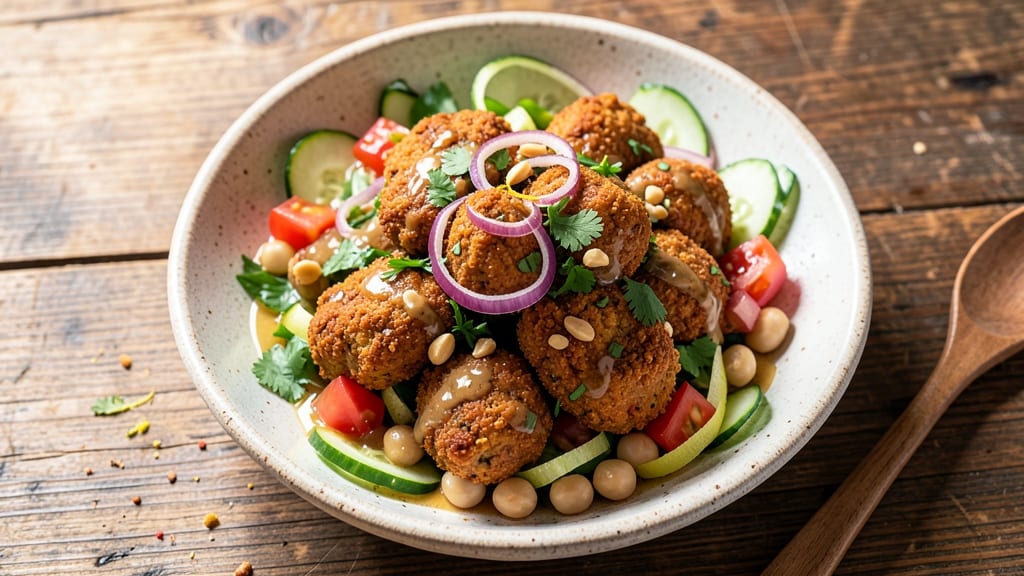
This vegan falafel salad delivers restaurant-quality flavor with crispy chickpeas and a herby tahini dressing that ties everything together beautifully. 🌟 The secret lies in properly hydrating the chickpeas for the perfect texture—neither too dense nor crumbly—while baking them to golden perfection.
This dish captures the essence of Middle Eastern cuisine while offering a modern, plant-based twist that's both satisfying and nutritious.
The salad itself is a vibrant mix of fresh greens, crisp vegetables, and those irresistible falafel bites that stay crispy even after being tossed. I've included a tahini-lemon dressing that adds a creamy, tangy zing—no dairy or animal products required.
The combination of textures and flavors makes this more than just a salad; it's a complete, hearty meal that's perfect for lunch or dinner.
What you'll end up with is a dish that's packed with protein from the chickpeas, freshness from the vegetables, and richness from the tahini dressing. The crispy falafel holds up beautifully, maintaining their texture even when mixed with the salad components.
This recipe is designed to be foolproof, ensuring you get that perfect balance of flavors and textures every time.
Serve this vegan falafel salad with warm pita bread on the side for scooping up every last bite, or enjoy it as-is with a sprinkle of fresh herbs for added freshness.
It's a dish that's versatile enough for weeknight dinners or meal prep, yet impressive enough for gatherings with friends and family.
Ingredients for vegan falafel salad
Crispy chickpeas, herby tahini dressing, and fresh veggies—this vegan salad packs flavor without compromise.
| Ingredient | Amount | Notes |
|---|---|---|
| Dried Chickpeas 🥜 | 1 ½ cups | Soaked overnight, drained |
| All-Purpose Flour 🌾 | ½ cup | For binding chickpeas |
| Fresh Parsley 🌿 | ¼ cup | Packed, stems removed |
| Yellow Onion 🧅 | 1 whole | Medium size, finely chopped |
| Garlic Cloves 🧄 | 4 cloves | Peeled, minced |
| Ground Cumin 🌿 | 1 tbsp | Toasted for depth |
| Ground Coriander 🌶️ | 1 tbsp | Freshly ground preferred |
| Salt 🧂 | 1 tsp | Kosher or sea salt |
| Black Pepper 🌶️ | ½ tsp | Freshly ground |
| Baking Powder 🍞 | ½ tsp | For crispiness |
| Olive Oil 🫒 | ½ cup | Extra-virgin for richness |
| Tahini 🥜 | ½ cup | Sesame paste, smooth |
| Lemon Juice 🍋 | ¼ cup | Freshly squeezed |
| Cucumber 🥒 | 1 whole | Medium, peeled, seeded |
| Romaine Lettuce 🥬 | 4 cups | Chopped, crisp |
| Cherry Tomatoes 🍅 | 1 cup | Halved, fresh |
| Red Bell Pepper 🌶️ | ½ cup | Diced, fresh |
The chickpeas are the star—soak them overnight for that perfect texture. Trader Joe's has great dried chickpeas, but any store brand works. Look for plump, firm beans with no blemishes. Fresh parsley and parsley stems? Save the stems—they're packed with flavor. For the tahini, avoid the jarred kind with added oil—just pure tahini. The lemon juice should be freshly squeezed (none of that bottled stuff). And that olive oil? Use the good stuff—it makes all the difference in the crispy coating.
No tahini? Substitute peanut butter at half the amount—it's not ideal, but it works. Short on parsley? Fresh cilantro or basil at the same quantity. The chickpeas can be baked or air-fried—air fryer gives extra crispiness if you've got one. For the salad base, mixed greens work too, but romaine adds that perfect crunch. The cucumber should be chilled for 30 minutes before slicing for maximum crispness. The red bell pepper can be swapped for green or yellow—just keep the amount the same.
Falafel keeps best in the fridge for 3 days, but they taste best fresh. Store them in an airtight container with parchment between layers. The tahini dressing? Add a splash of water if it thickens—it should coat the back of a spoon. This salad reheats beautifully—toss with a little olive oil and warm for 20 seconds in the microwave. Double the batch and freeze half for up to 1 month—just thaw overnight in the fridge.
Why You'll Love This Recipe
- No-Soak Needed: I swear by this trick—just toss dried chickpeas in boiling water for 2 hours (set it and forget it). No fancy soaking jars, no waiting overnight. That flour blend? It’s the secret to falafel that actually holds together without crumbling into dust.
- Garlic-Parsley Punch: Between us, the fresh parsley and raw garlic in the mix make this salad ridiculously flavorful. The onion adds a sharp bite, but it’s the parsley that keeps it bright—like a little herbaceous hug in every bite. Honestly, I’ve skipped salad dressing entirely after the first taste.
- Lunchbox Hero: Pack this for work or school—it’s hearty enough to fill you up but light enough to not weigh you down. (Yes, even on a Tuesday night.) The chickpeas stay tender, the herbs keep it fresh, and it’s the one meal I never regret prepping ahead.
- Pantry Staple Power: Dried chickpeas and flour? You’re probably already stocked. No specialty ingredients, no last-minute grocery runs. My grocery bill dropped by $20 a month after switching to this—plus, leftovers taste just as good cold the next day. Budget-friendly doesn’t get much better.
Step-by-step instructions for crispy vegan falafel salad
Here's how to make falafel that's crispy on the outside and packed with flavor—plus a creamy tahini dressing that ties everything together.
🔥 Step 1: Soak and Prep the Chickpeas
Start by soaking the 1.5 cups dried chickpeas in plenty of water for at least 8 hours (or overnight). This softens them perfectly for blending. Drain and rinse them thoroughly before draining again in a colander. I like to pat them dry with a kitchen towel—this helps remove excess moisture so your falafel won't turn mushy.
While the chickpeas soak, peel and seed the 1 whole cucumber and halve the 1 cup cherry tomatoes. Chop the 4 cups romaine lettuce into bite-sized pieces and dice the 0.5 cup red bell pepper. Store these in separate containers in the fridge—they'll be ready to assemble once your falafel is cooked.
👨🍳 Step 2: Blend the Chickpea Mixture
In a food processor, combine the drained chickpeas, 0.5 cup all-purpose flour, 1 tbsp ground cumin, 1 tbsp ground coriander, 1 tsp salt, 0.5 tsp black pepper, and 0.5 tsp baking powder. Pulse a few times to break up any large chunks, then add the 1 whole yellow onion and 4 cloves garlic cloves. Pulse again until everything is finely chopped.
With the processor running, slowly drizzle in 0.25 cup olive oil—this keeps the mixture from turning into a paste. Stop and scrape down the sides as needed. The mixture should look like wet sand with some moisture, but not soupy. If it's too dry, add 1-2 tablespoons water to help it bind.
🍳 Step 3: Form and Fry the Falafel
Heat 0.25 cup olive oil in a deep skillet over medium heat until it shimmers but isn't smoking. Using a spoon or ice cream scoop, drop heaping tablespoon-sized portions of the chickpea mixture into the oil. Flatten them slightly with the back of the spoon—this creates a larger surface area for crispiness.
Fry for 3-4 minutes per side until they're golden brown and crispy. You'll know they're ready when they release easily from the pan and have a deep, toasty color. Transfer them to a paper towel-lined plate to drain excess oil. If the oil gets too dark, drain half and add fresh oil to keep it clean for the next batch.
🥘 Step 4: Make the Tahini Dressing
In a small bowl, whisk together the 0.5 cup tahini, 0.25 cup lemon juice, 0.25 cup olive oil, and 0.25 cup fresh parsley. Start with just the tahini and lemon juice, then slowly drizzle in the oil while whisking continuously—this creates a smooth, emulsified dressing. Season with a pinch of salt if needed. The dressing should coat the back of a spoon and have a creamy, slightly tangy consistency.
Here's the thing—tahini can be thick, so if your dressing looks too stiff, add 1-2 tablespoons water to loosen it up. I like to taste it before assembling the salad to make sure the balance of lemon and sesame is just right.
🍽️ Step 5: Assemble the Salad
In a large bowl, combine the chopped romaine lettuce, cucumber, cherry tomatoes, and red bell pepper. Add the crispy falafel and gently toss everything together. Drizzle with the tahini dressing and toss again until everything is evenly coated. Serve immediately while the falafel is still warm and crispy—this is when it tastes best!
For extra crunch, I like to sprinkle with toasted sesame seeds or chopped fresh parsley. The contrast of warm falafel with cool, crisp vegetables and that creamy tahini dressing makes every bite amazing. This salad keeps well in the fridge for up to 2 days, but I promise you won't have leftovers that long!
Pro Tips For Making Vegan Falafel Salad
- SOAK CHICKPEAS OVERNIGHT: I learned this the hard way—skipping the overnight soak means your falafel will turn out dense and mealy. Use 2 cups of water per cup of dried chickpeas, add a pinch of baking soda (trust me), and let them sit for at least 12 hours. The longer they soak, the creamier the texture when blended.
- PULSE DON’T PUREE: Your food processor is not a blender—if you puree the soaked chickpeas, you’ll end up with a paste that won’t hold together. Pulse in short bursts, scraping the sides every 10 seconds, until it looks like coarse sand. This ensures your falafel stays crumbly and crispy, not gummy.
- SALT THE ONION FIRST: Raw onion is sharp and watery—chop it, toss it with ½ teaspoon salt, and let it sit for 10 minutes before adding it to the mix. This draws out the moisture and mellows the bite, so your salad doesn’t taste like you’re crying into your pita.
- FRIED IN BATCHES: Crowding the pan is the fastest way to soggy falafel. Cook them in batches of 4-5 at a time, using enough oil (about ¼ inch deep) to keep them golden, not greasy. A thermometer helps—aim for 350°F (175°C) and don’t walk away. Undercooked ones fall apart; overcooked ones turn to rubber.
Common mistakes when making this dish
Over-Soaking Chickpeas
Leaving chickpeas in water for more than 12 hours can make them mushy and waterlogged, which ruins the falafel's texture. I've ruined batches by forgetting them overnight—trust me, it's a game-changer to set a timer or use a 24-hour soak reminder on your phone.
The ideal soak time is 8-12 hours—just enough to soften them without turning them into mush. 🥜
Skipping the Oil Gradual Drizzle
When blending the falafel mixture, adding all the 0.25 cup olive oil at once turns it into a sticky paste that won't hold together. I learned this the hard way—my first batch fell apart when frying.
Instead, drizzle it in slowly while the food processor runs. This creates pockets of oil that help bind the mixture without making it gluey. 💡
Overcrowding the Pan
Frying too many falafel at once causes the oil temperature to drop, leading to greasy, soggy results instead of crispy bites. I've made this mistake by trying to rush the process—don't! Fry in batches of 6-8 falafel per pan, giving them space to develop that golden crust.
If you're impatient, use two pans or an air fryer at 375°F for 12-15 minutes. 🍳
Undercooking the Falafel
Falafel need to be cooked until their internal temperature reaches 160°F—this ensures they're fully done and safe to eat. I've served undercooked falafel that tasted raw and dense.
Use a meat thermometer to check the center of a falafel. If you don't have one, cut into one—the inside should be fully cooked with no gray areas. 🌡️
Using Bottled Lemon Juice
Bottled lemon juice lacks the bright acidity and freshness of freshly squeezed. I've used it in a pinch, and the dressing always tasted flat and artificial. For that perfect tang, always use freshly squeezed lemon juice.
If you're short on time, at least use real lemon juice from concentrate—it's worlds better than bottled. 🍋
Not Resting the Falafel
Freshly fried falafel need to rest for 5-10 minutes after cooking to allow the flavors to meld and the texture to set. I've served them immediately, and they always tasted uneven—some bites were perfect, others were still too raw inside.
This resting time also helps them stay crispy longer when tossed with the salad. 💪
Nutrition facts
Frequently asked questions
Can I make this salad ahead of time?
Yes! Prepare the falafel and dressing separately, then store them in airtight containers in the fridge for up to 3 days. Reheat the falafel in a skillet for 2-3 minutes to restore crispiness, then toss everything together just before serving. The dressing can be made a day ahead—it actually tastes better after flavors meld!
What if I don't have tahini?
No problem! Mix ½ cup peanut butter with 1 tbsp lemon juice and 2 tbsp water for a quick substitute. For a more authentic flavor, blend ½ cup cashew butter with 2 tbsp lemon juice and 1 tbsp maple syrup. Both options work well but won't be as rich as tahini.
How do I make the falafel extra crispy?
For maximum crispiness, try these pro tips: Use an air fryer at 375°F for 12-15 minutes instead of frying, or coat the falafel in 1 tbsp flour before baking at 400°F for 20 minutes. For frying, keep oil between 350-375°F and double-dip the falafel in oil before cooking. Freshly made falafel are crispest!
Can I make this gluten-free?
Replace the ½ cup all-purpose flour with ½ cup gluten-free flour blend or ¼ cup ground flaxseed mixed with ¼ cup tapioca starch. For extra binding power, add 1 tbsp ground psyllium husk. The texture will be slightly different but still delicious. Always check your gluten-free flour contains xanthan gum for best results.
What's the best way to store leftovers?
Store falafel and salad components separately in airtight containers. The falafel will stay crispy for 3 days in the fridge if kept dry. For longer storage, freeze falafel (uncooked or cooked) for up to 1 month. Reheat frozen falafel in a skillet for 3-4 minutes per side to restore crispiness. The dressing keeps well in the fridge for 5 days but may separate—just whisk before using.