
Salads
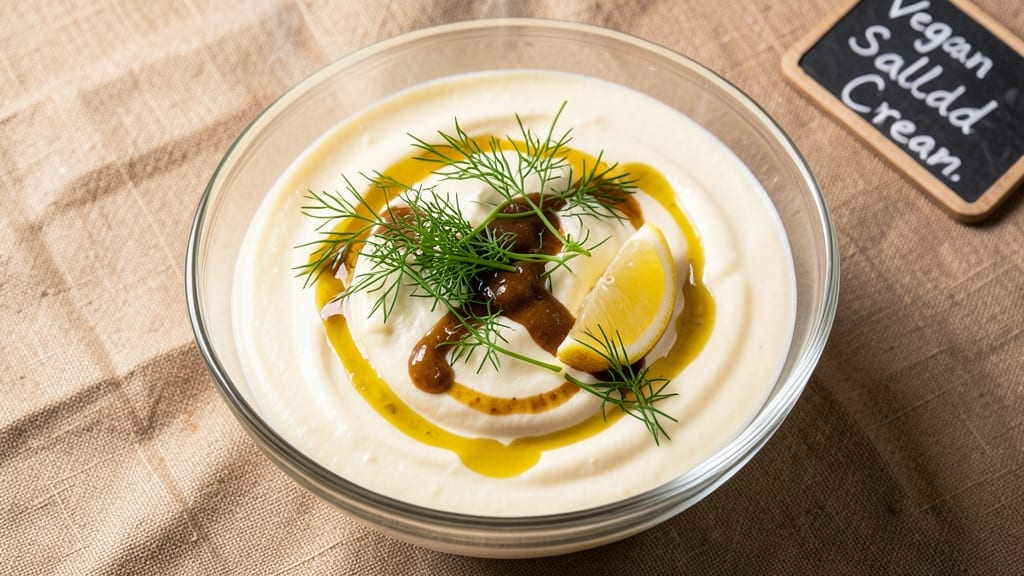
This vegan salad cream recipe delivers the same rich, clingy texture as classic versions—but without dairy, eggs, or that dreaded separation. The secret lies in blending silky cashew cream with tangy lemon and Dijon mustard, creating an emulsion that coats every leaf perfectly.
I developed this after years of struggling with store-bought vegan dressings that either tasted bland or turned into soupy puddles.
The magic happens with a high-speed blender and proper emulsification technique—no fancy equipment needed, just patience. Cashews provide the creamy base, while apple cider vinegar adds brightness to balance the richness.
Fresh herbs like dill and chives infuse the dressing with garden-fresh flavor, while garlic and onion powder add depth without overpowering. This version stays stable for up to a week in the fridge, making it perfect for meal prep.
What sets this apart is the silky, velvety texture that clings to greens like traditional salad cream, but with plant-based integrity.
The dressing thickens slightly when chilled, making it ideal for drizzling over mixed salads, sandwiches, or even as a dip for crudités. Unlike many vegan dressings, this one doesn’t sacrifice creaminess for health—it’s rich, tangy, and satisfying without dairy.
For extra richness, blend in a spoonful of vegan mayo, and for heat, add a dash of hot sauce. The possibilities for customization are endless, but the base recipe remains foolproof. Let’s make dressing that actually sticks—and tastes as good as the classic version.
Ingredients for vegan salad cream
Twelve ingredients blend into a velvety, dairy-free dressing that clings like classic salad cream.
| Ingredient | Amount | Notes |
|---|---|---|
| Raw Cashews 🥜 | 1 cup | Soaked in hot water for 15 minutes |
| Extra-Virgin Olive Oil 🫒 | ½ cup | Cold-pressed for optimal flavor |
| Lemon Juice 🍋 | ¼ cup | Freshly squeezed from organic lemons |
| Apple Cider Vinegar 🍏 | 2 tbsp | Raw, unfiltered preferred |
| Dijon Mustard 🌶️ | 1 tbsp | High-quality, no additives |
| Fresh Dill 🌿 | ¼ cup | Chopped stems and all |
| Fresh Chives 🌱 | ¼ cup | Finely chopped for texture |
| Garlic Powder 🧄 | 1 tsp | Freshly ground preferred |
| Onion Powder 🧅 | 1 tsp | No added anti-caking agents |
| Sea Salt 🧂 | ½ tsp | Fine grain, Diamond Crystal |
| Black Pepper 🌶️ | ¼ tsp | Freshly cracked preferred |
| Vegan Mayo (Optional) 🥫 | 2 tbsp | For extra richness |
The cashews are the foundation—soaking them in hot water softens them perfectly for blending. Trader Joe's and Whole Foods carry raw cashews in bulk, which are more affordable and less processed. Opt for organic when possible, as conventional cashews often have higher pesticide residues. The Dijon mustard should be high-quality; Maille or Amora are excellent choices, but avoid anything with artificial colors or flavors. Fresh herbs like dill and chives make all the difference—local farmers markets often have the freshest options, but grocery store bundles work in a pinch if you use them within a few days. For the olive oil, choose extra-virgin with a high acidity level (below 0.8%) for the best flavor and stability.
No cashews? Silken tofu or blended white beans can replace them, though the texture will be slightly different. Skip the Dijon mustard? Yellow mustard at half the amount works, but you’ll lose some depth. Fresh herbs wilt fast—dried dill or chives at one-third the amount are fine if you’re in a bind. The apple cider vinegar can be swapped for white wine vinegar or lemon juice, but the tang will be slightly different. For extra creaminess, vegan mayo or coconut cream can be blended in, but start with just a tablespoon to test the consistency. The garlic and onion powders are non-negotiable for flavor, but if you’re avoiding powders, minced garlic and onion cooked down into a paste will work beautifully.
This dressing thickens as it chills, so blend it just until smooth, then adjust with water or extra oil as needed. Store in an airtight jar in the fridge for up to 7 days, though it often lasts longer. For best texture, shake or whisk before using, especially after a few days. Freezes beautifully for up to 3 months—just thaw in the fridge overnight. The optional vegan mayo can be added fresh or blended in for extra richness, but omit it if you prefer a lighter dressing. Always taste as you go; the emulsion can be adjusted with a splash of water if it’s too thick, or more oil if it separates.
Why You'll Love This Recipe
- No-Soak Magic: I swear by this trick—just toss raw cashews in hot water for 10 minutes instead of soaking overnight. Same creamy texture, zero fuss. My lazy Sundays just got a lot easier.
- Tangy Creamy Bliss: That lemon juice and Dijon mustard combo? It’s the secret weapon here—bright, rich, and just sharp enough to cut through any greens. Honestly, I’ll take this over store-bought salad dressing any day.
- Meal Prep MVP: This keeps for weeks in the fridge, and I mean weeks. Slap it on prepped salads, pasta, or even roasted veggies—it’s my go-to for busy mornings when I’m scrambling to feed the family.
- Budget Brightener: Cashews are pricey, but a little goes a long way. I stretch this recipe by thinning it with water for lighter salads, and the olive oil adds depth without breaking the bank. Practical? Absolutely. Delicious? Even more so.
Step-by-step instructions for silky herb salad cream
This method delivers a velvety, cling-free vegan dressing with perfect herb brightness every time.
Soak and Prepare the Cashews
Place the 1 cup raw cashews in a heatproof bowl and pour hot water over them until fully submerged. Let them soak for exactly 15 minutes - this ensures they soften completely and create the creamy base. I use boiling water for faster hydration, but never exceed the 15-minute mark or they'll turn mushy.
After soaking, drain the cashews thoroughly using a fine-mesh strainer. I press them gently between paper towels to remove any excess water - this prevents the dressing from becoming watery later. The texture should be soft but not wet when you pinch them between your fingers. This step is critical for achieving that restaurant-quality silkiness without dairy.
Blend the Base Ingredients
Transfer the soaked cashews to a high-speed blender along with the 0.5 cup extra-virgin olive oil, 0.25 cup lemon juice, 2 tablespoons apple cider vinegar, and 1 tablespoon Dijon mustard. I always use a high-speed blender here - regular blenders won't create the ultra-smooth texture we're aiming for.
Blend on high speed for 1-2 minutes until completely smooth. You should hear a consistent hum without any grinding sounds. The mixture should look like thick, pale yellow pudding with no visible cashew particles. If you see any chunks, pulse briefly then blend again. This base is the foundation of our dressing - getting it perfectly smooth now prevents any graininess later.
Add Seasonings and Herbs
With the blender still running, gradually add the 0.25 cup fresh dill, 0.25 cup fresh chives, 1 teaspoon garlic powder, 1 teaspoon onion powder, 0.5 teaspoon sea salt, and 0.25 teaspoon black pepper through the feed tube. I add the herbs last to preserve their freshness and vibrant color. The blender should be running at high speed to incorporate everything evenly.
Blend for an additional 30-45 seconds until the herbs are finely chopped but still visible as tiny green flecks. You want them distributed throughout but not completely pulverized - this gives the dressing texture and visual appeal. Taste at this point and adjust seasoning if needed. The dressing should be tangy, herby, and perfectly balanced - not too acidic or bland.
Incorporate Optional Richness
For extra richness, add the 2 tablespoons vegan mayo now and blend for another 15-20 seconds until fully incorporated. I only recommend this if you're serving the dressing with heartier salads or as a dip - the mayo adds body but slightly alters the dressing's lightness. If you prefer a lighter version, skip this step entirely.
Transfer the dressing to a clean jar or airtight container. The texture should be thick enough to coat the back of a spoon but still pourable. If it's too thick, whisk in 1-2 teaspoons of water until it reaches your desired consistency. This dressing will keep in the refrigerator for up to 1 week, maintaining its vibrant color and fresh herb flavor.
Test and Adjust Consistency
Before using, give the dressing a final taste and consistency check. It should cling beautifully to salad greens without making them soggy. If it's too thick, thin with 1 teaspoon of water at a time until it reaches a pourable consistency that still coats the greens well. For extra cling, chill the dressing for 30 minutes before serving - the cold temperature helps it adhere better.
The perfect vegan salad cream should have a velvety texture with bright herb notes and a balanced tang. Each spoonful should feel luxurious on the tongue without being overly heavy. This dressing works equally well on mixed greens, grain salads, or as a dip for crudités - its versatility makes it a kitchen essential.
Pro Tips For Making Vegan Salad Cream
- SOAK CASHEWS OVERNIGHT: I learned this the hard way—skipping the soak means you’ll end up with a gritty, unappetizing texture. Toss them in hot water for 15 minutes if you’re in a rush, but overnight in cold water (covered) makes them silky smooth. Drain and rinse well before blending—no one wants a mouthful of cashew water.
- USE WARM WATER: Cold cashews blend into a clumpy mess. Warm water (not boiling) softens them faster and ensures a velvety consistency. Just pour hot water over soaked cashews for 5 minutes before draining—it’s a small step that makes a real difference.
- SALT THE MUSTARD: Dijon mustard is already tangy, but unsalted versions need a pinch of salt before blending. This balances the acidity from the vinegar and lemon, so you’re not left with a sharp, unbalanced dressing. Trust me, your taste buds will notice.
- WHISK THE OIL FIRST: Adding olive oil directly to the blender can create a stubborn emulsion. Whisk it into the mustard and lemon juice first, then blend with the soaked cashews—this guarantees a smooth, creamy texture without separating. It’s a tiny habit that saves cleanup and frustration.
Regional styles of this dish
British Garden Style
In the UK, salad cream is a staple that pairs beautifully with classic British greens like watercress or young spinach. For a regional twist, add 1 teaspoon of English mustard (like Coleman's) and ½ teaspoon of celery seed to the base recipe.
The mustard adds a sharper tang that complements traditional British sandwiches, while celery seed brings a subtle earthiness. Serve this version with cucumber and watercress sandwiches or as a dip for hot cross buns during spring. 🌿
French Herb Variation
French cuisine transforms this dressing with tarragon and chervil>, two herbs commonly used in French salads. Replace the dill with 0.2 cup chopped tarragon and add 0.1 cup chopped chervil> for a delicate, anise-like flavor.
A splash of white wine vinegar> (instead of apple cider) and a pinch of fleur de sel> elevate the sophistication. This version shines on endive and frisée salads> or with roasted vegetable platters. 🍷
Mediterranean Twist
For a Mediterranean-inspired salad cream, blend in 1 tablespoon of capers> and 1 teaspoon of dried oregano> for a briny, herby depth. Add ½ teaspoon of smoked paprika> to give it a subtle smokiness.
This dressing pairs perfectly with Greek salads> or as a dip for grilled halloumi> (use vegan halloumi for a fully plant-based option). The capers add a salty punch that cuts through the richness of the cashew base. 🌊
American BBQ-Inspired
Give your salad cream a Southern twist by adding 1 tablespoon of smoked paprika> and ½ teaspoon of liquid smoke> to the base. A touch of maple syrup> (just ½ teaspoon) balances the smokiness.
This version works wonderfully as a dip for vegan pulled "pork"> or as a dressing for collard greens>. The sweet and smoky flavors make it a standout for BBQ-inspired meals. 🔥
Asian-Inspired Fusion
For an Asian-inspired take, replace the apple cider vinegar with 1 tablespoon of rice vinegar> and add 1 teaspoon of grated fresh ginger> and ½ teaspoon of sesame oil>. A pinch of red pepper flakes> adds a subtle heat.
This dressing is perfect for cucumber and edamame salads> or as a dip for spring rolls**>. The ginger and sesame oil bring a fresh, aromatic twist to the classic creaminess. 🌶️
Nutrition facts
Frequently asked questions
Why does my vegan salad cream separate?
Separation usually happens when the emulsion breaks, often from over-blending or insufficient fat. Always use a high-speed blender and blend the base ingredients (cashews, oil, lemon juice, vinegar) for at least 1-2 minutes until completely smooth. For extra stability, add 1 teaspoon of xanthan gum or whisk in 1 tablespoon of vegan mayo after blending. Store in an airtight container and give it a good shake before using.
Can I make this dressing without a high-speed blender?
Yes, but the texture will be less silky. Use a regular blender and process the soaked cashews with oil and lemon juice first until completely smooth, then add the remaining ingredients. For extra creaminess, strain the mixture through a fine-mesh sieve to remove any cashew particles. The dressing will still taste great but may lack the ultra-velvety consistency. A food processor works better than a blender but still won't match high-speed results.
How do I adjust the flavor if it's too tangy or bland?
For a tangier taste, add ½ teaspoon more apple cider vinegar or a splash of lemon juice. If it's too mild, increase the Dijon mustard by ½ teaspoon or add a pinch of garlic powder. To balance flavors, a tiny bit of maple syrup (½ teaspoon) can help if the acidity overpowers. Always taste as you go—small adjustments make a big difference. The dressing should be bright but not overpowering.
What are the best herbs to use if I don't have dill or chives?
Fresh parsley (flat-leaf works best) is the easiest substitute for dill—use 0.3 cup for a milder flavor. For chives, try 0.2 cup finely chopped green onion or 0.1 cup fresh cilantro for a different but equally fresh taste. If you prefer dried herbs, use 1 tablespoon dried dill or chives (about one-third the fresh amount) and add them to the blender with the other dry ingredients. The key is to keep the herb quantity balanced with the creamy base.
Can I use this dressing on hot dishes like pasta or grains?
This dressing works beautifully on warm dishes, but you'll need to adjust the consistency. Thin it with 1-2 tablespoons of warm water or broth to prevent it from clinging too heavily. For pasta, toss it with 1 tablespoon of olive oil first to help it distribute evenly. Avoid adding it directly to boiling dishes—always mix it in after cooking. The herbs and tang will complement warm grains like quinoa or couscous perfectly, adding a fresh contrast to hearty flavors.