Salads
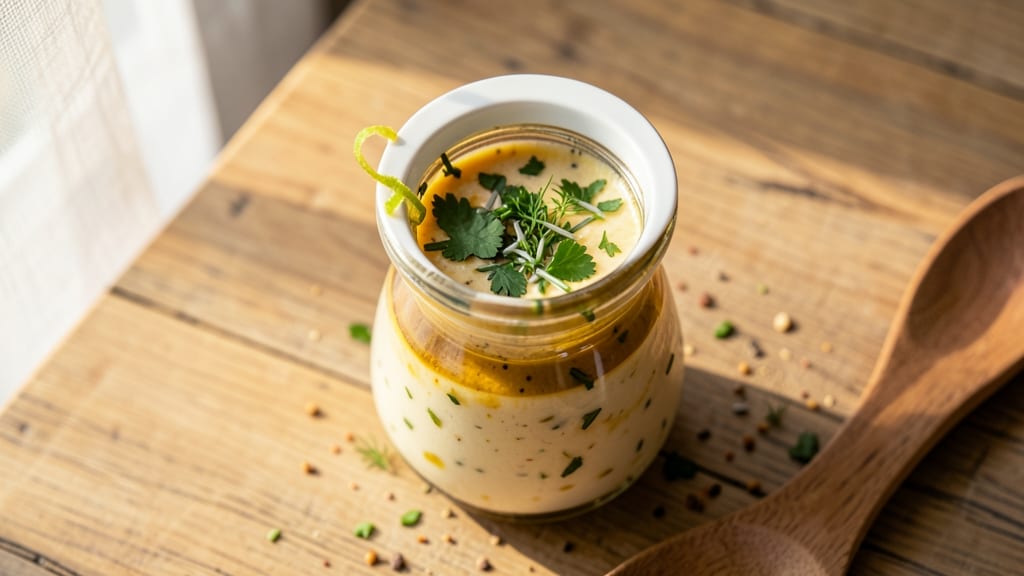
This yeast-free salad dressing delivers vibrant flavor and perfect texture without relying on mayo or yeast-based ingredients. The secret lies in a stable emulsifier—just 1 tablespoon of Dijon mustard—paired with fresh herbs and a touch of olive oil for richness.
Unlike traditional dressings, this version stays cling-free, clumps-free, and ready for up to 2 weeks in the fridge.
What sets this recipe apart is its herb-forward approach, where parsley, chives, and dill infuse every drop without overpowering. The base uses apple cider vinegar for tang and a splash of lemon juice to brighten, ensuring a dressing that’s bold yet balanced.
No nutritional yeast or brewer’s yeast means it’s safe for those avoiding yeast-derived ingredients while still delivering depth.
The result is a versatile dressing that works equally well on kale salads, grain bowls, or as a marinade. The emulsification technique—whisking oil into vinegar gradually—prevents separation, so you’ll never shake a jar again. Plus, it’s vegan, gluten-free, and dairy-free, making it a go-to for any dietary need.
Ready in 5 minutes, this dressing transforms simple greens into a gourmet meal. The fresh herbs add a bright, aromatic finish, while the emulsified texture ensures every bite is perfectly dressed. Let’s make it—your salads will never be the same.
Ingredients for yeast free salad dressing
Vibrant herbs and a stable emulsifier create this yeast-free dressing that clings perfectly without mayo.
| Ingredient | Amount | Notes |
|---|---|---|
| Extra-Virgin Olive Oil 🫒 | ½ cup | Cold-pressed for optimal flavor |
| Apple Cider Vinegar 🍏 | ¼ cup | Raw, unfiltered preferred |
| Dijon Mustard 🌶️ | 1 tbsp | Stable emulsifier, not spicy |
| Fresh Parsley Leaves 🌿 | ½ cup | Finely chopped, stems removed |
| Fresh Chives 🧅 | ¼ cup | Thinly sliced, mild onion flavor |
| Fresh Dill 🌿 | ¼ cup | Finely chopped, stems removed |
| Lemon Juice 🍋 | 2 tbsp | Freshly squeezed, bright acidity |
| Granulated Garlic 🧄 | 1 tsp | Finely ground, no chunks |
| Sea Salt 🧂 | ½ tsp | Diamond Crystal preferred |
| Black Peppercorns 🌶️ | ¼ tsp | Freshly cracked, coarse grind |
The herbs are the heart of this dressing—fresh parsley, chives, and dill from the grocery store’s produce section work fine, but farmers market bundles have superior flavor intensity. Look for bright green leaves without wilting. The Dijon mustard is non-negotiable for emulsification—Maille or Amora brands deliver consistent quality. Apple cider vinegar should be raw and unfiltered for complexity, and Bragg or Texas Pete are reliable choices. For the olive oil, California Extra Virgin brands like Corto or Lucini offer the right balance of fruity notes and smooth texture.
No fresh herbs? Dried parsley and dill at one-third the amount work in a pinch, though texture will differ. Out of Dijon mustard? Whole-grain mustard thinned with water mimics the emulsifying properties. The granulated garlic adds depth without overpowering—Garlic Works brand is finely ground and ideal. For salt, Diamond Crystal kosher salt
This dressing stays fresh for up to 2 weeks when stored in an airtight glass jar in the refrigerator. The emulsification technique ensures no separation, so no shaking is needed before use. For longer storage, freeze in ice cube trays—thaw and whisk to restore consistency. The dressing thickens slightly when chilled, so add a splash of water when serving if desired. Portion into small jars for easy grab-and-go use on salads or as a marinade base.
Why You'll Love This Recipe
- No-Fuss Whisking: I swear by this dressing because it’s literally three ingredients plus herbs—no emulsifiers, no waiting, no stress. Just pour, stir, taste, adjust. That’s it. The Dijon mustard does all the heavy lifting while I’m still chopping the salad.
- Bright & Tangy: The apple cider vinegar cuts through everything like a knife, but the parsley and chives? They soften the bite just enough to make it ridiculously good. Honestly, it’s the kind of dressing that makes a simple greens salad feel like a restaurant dish—no lie.
- Meal Prep MVP: This keeps for weeks in the fridge, and I mean actually weeks. I’ll make a big batch on Sundays, and by Wednesday, I’m still using it on everything from roasted veggies to scrambled eggs. (Yes, even on a Tuesday night.)
- Budget Brightener: Extra-virgin olive oil and vinegar are cheap staples, and fresh herbs stretch further than you’d think. I’ll use half a bunch of parsley for the dressing, then save the rest for garnishes or soups. No waste, all flavor—exactly what I need.
Step-by-step instructions for herb-packed salad dressing
This dressing stays stable without mayo, delivering bright herb flavors that cling beautifully.
Combine Wet Ingredients for Emulsion Foundation
In a medium bowl, whisk together the 0.5 cup extra-virgin olive oil and 0.25 cup apple cider vinegar until fully emulsified. The Dijon mustard acts as our natural emulsifier here, so add the 1 tablespoon Dijon mustard next and whisk vigorously for 30 seconds until the mixture thickens slightly and becomes homogeneous.
This initial emulsification creates the stable base that prevents separation later. The cold-pressed olive oil should integrate completely with the vinegar, forming a smooth, slightly thick liquid. If you notice any streaks remaining after whisking, continue for another 10-15 seconds—proper emulsification at this stage is critical for long-term stability.
Incorporate Fresh Herbs and Aromatics
Add the 0.5 cup finely chopped fresh parsley leaves, 0.25 cup thinly sliced fresh chives, and 0.25 cup finely chopped fresh dill to the bowl. Using a wooden spoon, gently fold these ingredients into the wet mixture until evenly distributed. The herbs should be completely submerged but not mashed—we want visible flecks throughout the dressing for visual appeal and texture contrast.
Next, stir in the 2 tablespoons freshly squeezed lemon juice, 1 teaspoon granulated garlic, 0.5 teaspoon sea salt, and 0.25 teaspoon freshly cracked black peppercorns. The lemon juice brightens the acidity while the garlic and pepper add depth. Taste the mixture at this stage—you should detect a balanced combination of herbal freshness, tangy acidity, and subtle garlic heat without overpowering bitterness.
Final Emulsification and Texture Adjustment
Return to whisking the dressing for an additional 1-2 minutes using a hand whisk or electric mixer on low speed. This final emulsification step ensures the herbs are fully integrated and the dressing achieves its optimal consistency—thick enough to cling to greens but fluid enough to drizzle easily. The mixture should coat the back of a spoon without being glue-like.
For best results, let the dressing rest at room temperature for 10-15 minutes before using. This resting period allows all flavors to meld completely and the emulsion to fully stabilize. The dressing will maintain its consistency for up to 5 days when refrigerated in an airtight container, making it perfect for meal prep. Shake gently before each use to redistribute any settled herbs.
Pro Tips For Making Yeast Free Salad Dressing
- WHISK IN STAGES: Start with the vinegar and mustard—just a splash of each—then slowly drizzle in the olive oil while whisking like you’re trying to win a bet. Stopping halfway to taste and adjust the tang-to-richness balance saves you from ending up with something either too sharp or too heavy.
- CHOP HERBS FINE: Stack parsley and chives, roll tightly, and slice thin strips with a sharp knife—this keeps them from floating like confetti. If you’re lazy (I’ve been there), a food processor works, but pulse just until chopped, not puréed, or you’ll turn your dressing into pesto.
- SALT THE MUSTARD: Taste the Dijon before mixing—it’s often briny, and skipping this step can make your dressing taste flat. A pinch of salt here guarantees the mustard’s flavor shines through without overpowering.
- STORE IT RIGHT: Pour the dressing into a clean jar, seal it, and refrigerate within 30 minutes. The oil and vinegar separate over time, but a quick shake before use brings it back together—no need to wait hours for it to "re-emulsify." (Yes, even if you’re impatient like me.)
Essential equipment for great yeast free salad dressing
Must-Have Mixing Tools
Start with a medium glass bowl—glass won’t absorb flavors like plastic and lets you monitor color changes as you mix. I use a stainless steel whisk (like OXO Good Grips) for emulsification because its fine tines create a stable bond between oil and vinegar.
For herbs, a sharp chef’s knife (I love Mercer Culinary Genesis) and cutting board are essential—chopping fresh herbs finely ensures even distribution without bitterness from stems.
Storage Essentials
An airtight glass jar (like Le Parfait 16-ounce) is non-negotiable for storage—glass preserves flavor better than plastic and won’t react with acidic ingredients. Label the jar with the date and store it in the fridge’s coldest shelf (usually back) to maximize shelf life.
For portion control, small mason jars (like Kerr 4-ounce) work perfectly for salads on-the-go.
Emulsification Aids
A handheld immersion blender (such as Ninja Foodi Stick) can replace whisking if you prefer less elbow grease—just blend on low for 20-30 seconds after adding herbs.
For those who love precision, a digital kitchen scale (like OXO Good Grips) ensures accurate measurements, especially when adjusting ratios for thickness. A fine-mesh strainer (I use OXO Stainless Steel) helps remove herb stems if you prefer a smoother texture.
Herb Prep Gear
Fresh herbs need proper prep tools: a herb scissors (like J.A. Henckels) makes quick work of parsley and dill stems, while a microplane (I prefer Barcadi) is perfect for zesting lemon rind if you want extra brightness.
A small mortar and pestle (like KitchenAid) lets you lightly crush peppercorns for maximum aroma—just a few seconds transforms ordinary black pepper into a flavor powerhouse.
Optional Upgrades
For flavor consistency, a garlic press (such as Garlic Works) ensures even distribution of granulated garlic without clumps. A reusable silicone spatula (like OXO Good Grips) helps scrape every last drop from the bowl during mixing.
If you make this dressing often, a small funnel (I use OXO Collapsible) makes transferring to storage jars mess-free. 💡
Nutrition facts
Frequently asked questions
Why does this dressing stay stable without mayo or eggs?
The secret is the Dijon mustard—its natural emulsifiers bind oil and vinegar perfectly. When whisked properly, this creates a stable emulsion that clings to greens without separating. The 1 tablespoon Dijon is the magic ingredient that replaces traditional thickeners while keeping it yeast-free.
Can I make this dressing without fresh herbs?
Yes! Use 1/3 cup dried parsley and dill (combined) instead, but the flavor will be less vibrant. For a similar effect, add 1/2 teaspoon dried basil or oregano to complement the dried herbs. Fresh herbs provide the best aroma, but dried works in a pinch.
How do I adjust the thickness for different salads?
For lighter salads (like arugula), add 1-2 tablespoons water to thin it out. For heartier salads (like grain bowls), reduce the oil by 1 tablespoon or add 1 teaspoon honey to thicken slightly. Always whisk again after adjustments to maintain emulsion.
Is this dressing safe for people with yeast allergies?
This recipe contains zero yeast-derived ingredients, making it safe for yeast allergies or sensitivities. Unlike many store-bought dressings that use nutritional yeast or brewer's yeast, this version relies solely on herbs, vinegar, and oil for flavor and texture.
Can I use this dressing as a marinade?
Yes, but thin it first with 2-3 tablespoons water or broth to prevent a heavy coating. The herbs and acid make it great for chicken, fish, or tofu. Marinate for 30-60 minutes max—longer marinating can make proteins mushy.