
Salads
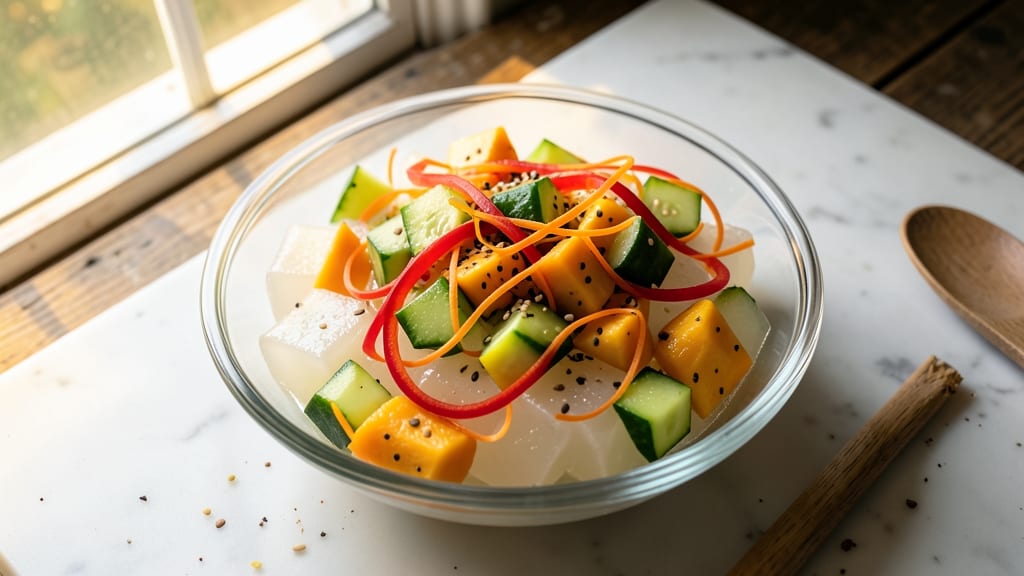
This agar salad recipe transforms simple ingredients into a light, refreshing dish with a satisfying jiggly texture—perfect for vegans or anyone craving something different. The secret lies in agar-agar, a plant-based gelatin substitute that creates that signature wobble without animal products. I developed this recipe after struggling to find a vegan alternative that still delivered restaurant-quality texture.
The magic happens when you dissolve agar-agar in hot liquid, then mix it with your favorite fruits, vegetables, and dressing before chilling. For perfectly set results, use 1 teaspoon of agar per cup of liquid and let it cool completely in the fridge for at least 2 hours.
The texture is firm yet tender, making it ideal for both hot and cold weather.
What you'll end up with is a visually stunning salad that's as nutritious as it is delicious—think crisp cucumbers, juicy mango, or sweet carrots suspended in a light, flavorful gel.
The versatility means you can adapt this recipe to any season or dietary preference, whether you're looking for a protein-packed meal or a light dessert.
Serve it chilled as a refreshing appetizer, a protein-rich main course, or even a fruity dessert. The possibilities are endless, and the process is simpler than you'd think. Let's get started!
Ingredients for agar salad
Simple ingredients that transform into a restaurant-quality vegan jiggle—no animal products needed.
| Ingredient | Amount | Notes |
|---|---|---|
| Agar-Agar Powder 🌿 | 1 tsp | Per cup of liquid |
| Vegetable Broth 💧 | 2 cups | Low-sodium preferred |
| Fresh Cucumber 🥒 | 1 ½ cups | Diced, skin on |
| Red Bell Pepper 🌶️ | 1 whole | Diced, seeds removed |
| Mango Chunks 🥭 | 1 ½ cups | Fresh or frozen thawed |
| Carrots 🥕 | 1 cup | Julienned or thinly sliced |
| Fresh Mint Leaves 🌿 | ¼ cup | Chopped, for garnish |
| Lemon Juice 🍋 | 2 tbsp | Freshly squeezed |
| Maple Syrup 🍯 | 2 tbsp | For subtle sweetness |
| Tahini Dressing 🥛 | ¼ cup | Store-bought or homemade |
| Olive Oil 🫒 | 1 tbsp | Extra-virgin for richness |
| Sea Salt 🧂 | ½ tsp | Diamond Crystal preferred |
| White Pepper 🌶️ | ¼ tsp | Freshly ground |
| Edible Flowers (optional) 🌸 | ⅛ cup | For garnish, food-safe only |
Agar-agar is the star here. Penzeys or bulk bins at Whole Foods carry the best quality—look for pure, powdered agar without additives. The vegetable broth should be low-sodium to avoid overpowering flavors. For the tahini dressing, Trader Joe's has a great pre-made version, but homemade (tahini + lemon + water) is even better. The fresh produce matters too—bright, firm mango and crisp cucumbers make all the difference. If using frozen mango, thaw it first and pat dry to avoid excess moisture in your salad.
No agar-agar? Kappa carrageenan works as a substitute at half the amount, but texture will differ slightly. Short on tahini? Almond butter or cashew cream adds richness. The maple syrup can be swapped for agave or date syrup if preferred. For a savory version, skip the sweetener and add 1 tbsp soy sauce to the broth. The edible flowers? Local farmers markets often have food-safe varieties—just confirm they're pesticide-free. If you can't find them, skip them entirely; the salad still shines.
This salad sets best when chilled for at least 2 hours—overnight is ideal. Store in an airtight container with a thin layer of broth on top to prevent drying. Keeps for 3-4 days in the fridge, though texture may soften slightly after day 2. For a firmer set, reduce broth by 2 tbsp. Garnishes like mint and edible flowers should be added just before serving. Portion into small bowls for elegant appetizers or larger containers for a protein-rich main course.
Why You'll Love This Recipe
- No-Cook Magic: I swear by this when I’m too hot to stand near the stove—just whisk agar into warm broth, let it set, and chop veggies while it cools. Zero oven, zero fuss, and still feels like a real dish.
- Sweet-Savory Balance: That first bite of cool, jelly-like agar with crisp cucumber and sweet mango? It’s like a tropical salsa meets a light, refreshing soup. The bell pepper adds a bright kick that keeps it interesting without overpowering.
- Meal Prep MVP: Honestly, I make a big batch on Sundays and it lasts all week—packs well for lunches, stays crisp in the fridge, and even holds up in a thermos for work. Swap mango for pineapple or add shredded carrots? No problem.
- Budget Brightener: Agar turns cheap veg broth into something special, and the ingredients cost next to nothing. Plus, it stretches further than any salad—feed four for the price of two portions of greens, and you’ll still have leftovers for days.
Step-by-step instructions for agar salad recipe
Here's how to create this vibrant, refreshing dish with perfect texture every time.
Prepare the Vegetable Base
Begin by dicing the 1 whole red bell pepper into small, even pieces and removing the seeds. Cut the 1.5 cups fresh cucumber into ½-inch cubes, leaving the skin on for texture. For the 1 cup carrots, use a mandoline or sharp knife to julienne them into thin strips—this creates elegant ribbons that hold their shape beautifully in the agar setting.
Place all prepared vegetables in a large mixing bowl. Add the 1.5 cups mango chunks (fresh or thawed) and gently toss everything together. The mango's natural sweetness will complement the savory vegetables perfectly. Set this mixture aside while you prepare the agar broth.
Create the Agar Broth Mixture
In a medium saucepan, combine the 2 cups vegetable broth, 1 tsp agar-agar powder, 2 tbsp lemon juice, 2 tbsp maple syrup, 0.5 tsp sea salt, and 0.25 tsp white pepper. Stir well to ensure the agar is fully dispersed—this prevents clumping and ensures a smooth gel.
Bring the mixture to a gentle boil over medium-high heat, then reduce to a simmer and cook for 5 minutes while stirring occasionally. The agar needs this time to fully activate and create a strong gel structure. You'll notice the mixture thicken noticeably as it cooks.
Combine and Set the Salad
Remove the saucepan from heat and carefully pour the hot agar mixture over the vegetable mixture in your bowl. Stir gently but thoroughly to distribute the liquid evenly. Add the 1 tbsp olive oil and 0.25 cup tahini dressing, mixing just until combined—this creates a silky, creamy texture that balances the firmness of the agar.
Pour the entire mixture into a shallow, heatproof dish or individual serving cups. For a decorative presentation, you can use clear glass containers that will showcase the vibrant colors. Let the salad cool to room temperature, then refrigerate for at least 4 hours or overnight until completely set.
Garnish and Serve
Once fully set, remove the agar salad from the refrigerator. Use a sharp knife to loosen the edges if needed, then invert onto a serving platter or divide into bowls. Sprinkle the 0.25 cup chopped fresh mint leaves evenly over the top for a bright, herby finish. If using, scatter the 0.125 cup edible flowers artistically around the edges for an elegant touch.
Serve immediately while still slightly chilled. The texture should be firm yet tender, with a gentle wobble that's characteristic of agar-based dishes. Each bite delivers a perfect balance of sweet, savory, and refreshing flavors with that satisfying jiggly texture you'll love.
Pro Tips For Making Agar Salad
- Boil Agar Fast: Mix agar powder into cold broth first—it clumps like a nightmare when tossed in hot liquid. Stir vigorously while heating, then bring to a full boil for exactly 1 minute (no more, or it turns rubbery). I learned this the hard way after serving a salad that felt like chewing on a bike tire.
- Dice Cucumber Last: Cut cucumbers too early, and they’ll weep water into your broth. Wait until the agar mixture cools to room temperature before adding them—this keeps your salad crisp, not soggy. (Yes, even if you’re impatient like me.)
- Skip the Overmixing: Stirring the agar mixture after it sets turns it gummy. Pour it into your bowl or mold while it’s still hot, then let it cool undisturbed. I used to obsess over mixing, but the texture’s smoother when you resist the urge to "fix" it.
- Use Ripe Mango: Unripe mango turns mushy in the broth, while overripe chunks dissolve into a sad pulp. Pick fruit that yields slightly to gentle pressure—it’ll hold its shape and sweeten the salad without turning it into a sauce. (Your future self will notice the difference.)
Common mistakes when making perfect results
Overcooking the Agar
I’ve ruined more agar salads than I’d like to admit by overcooking the agar mixture. Once you bring it to a boil, keep the heat at a gentle simmer—never a rolling boil.
Overcooking breaks down the agar’s ability to gel properly, resulting in a weak, watery texture instead of that satisfying jiggle. Simmer for exactly 5 minutes, then remove from heat immediately.
The mixture will continue to thicken slightly as it cools, but don’t let it boil again after the initial activation. 🔥
Underestimating Chill Time
Patience is key with agar salads—skipping the proper chilling time is a common mistake that leads to disappointment.
While the recipe calls for at least 4 hours, I’ve seen many home cooks rush it and end up with a salad that’s still too soft or even liquidy. Overnight chilling is ideal for a firm, restaurant-quality texture.
If you’re short on time, try setting the salad in the freezer for 1-2 hours (but don’t freeze solid—just enough to firm up).
Using the Wrong Agar Ratio
The magic number for agar-agar is 1 teaspoon per cup of liquid, and deviating from this ratio can throw off your entire dish. Using too little results in a weak, runny texture, while too much creates a rubbery, unappetizing consistency.
Stick to the 1:1 ratio (agar to liquid) for the perfect balance of firmness and tenderness. If you’re experimenting with substitutions like carrageenan, remember it requires half the amount but may not set as cleanly. 🌿
Adding Cold Ingredients to Hot Agar
One of the biggest texture killers is pouring cold ingredients—like freshly chopped veggies or dressing—into the hot agar mixture. The sudden temperature drop can cause the agar to prematurely set in clumps or create an uneven texture.
Always let the agar mixture cool to room temperature before combining it with your vegetables and dressings. This ensures a smooth, even gel throughout. Trust me, your salad will thank you!
Skipping the Stirring Step
After adding the hot agar mixture to your vegetables, it’s tempting to give it a quick stir and call it a day. But gentle but thorough stirring is crucial for distributing the agar evenly.
If you skip this step, you’ll end up with pockets of liquid broth or uneven texture—some parts firm, others still soupy. Stir just until everything is fully coated, then let it set undisturbed. The result? A silky, uniform jiggle in every bite. ✨
Using the Wrong Containers
Not all containers are created equal when it comes to agar salads. Deep, narrow dishes or plastic containers can make it nearly impossible to remove the salad without breaking it apart. Instead, opt for shallow, wide dishes or individual serving cups with a flat base.
Glass containers are ideal because they allow you to see the vibrant layers and make unmolding easier. If you’re serving as appetizers, small ramekins work perfectly—they’re easy to invert and impress your guests. 💫
Nutrition facts
Frequently asked questions
Can I make this agar salad without agar-agar?
While agar-agar is ideal for that signature jiggly texture, you can substitute with 1.5 teaspoons kappa carrageenan per cup of liquid. However, carrageenan creates a slightly softer set and may require longer chilling time (6+ hours). For a non-gelatin option, try 1 tablespoon chia seeds or flaxseeds soaked in liquid overnight, but the texture will be more pudding-like than firm.
How do I store leftover agar salad?
Transfer leftovers to an airtight container with a thin layer of broth on top to prevent drying. It keeps for 3-4 days in the fridge, though texture may soften slightly after day 2. For longer storage, freeze individual portions for up to 1 month—thaw overnight in the fridge before serving. Reheat gently in a microwave (30-second intervals) if you prefer a warmer texture.
Can I make this salad spicy or savory instead of sweet?
Swap the maple syrup for 2 tbsp soy sauce or tamari and add 1 tbsp sriracha or chili crisp to the broth. Use savory veggies like shredded cabbage, radishes, or avocado, and garnish with sesame seeds or scallions. For umami depth, stir in 1 tbsp miso paste when combining the agar mixture with vegetables.
Why did my agar salad turn out too soft?
This usually happens from undercooking the agar (simmer for exactly 5 minutes) or insufficient chilling time. Double-check your agar ratio (1 tsp per cup liquid) and ensure you chilled it for at least 4 hours. If using substitutions like carrageenan, increase chilling time to 6+ hours. For a quick fix, return to the fridge for another 2 hours or freeze briefly to firm up.
What are the best veggies for a savory agar salad?
For savory versions, try shredded cabbage, radishes, or daikon for crunch, plus avocado or pickled vegetables for richness. Add protein with tofu cubes or edamame, and boost flavor with ingredients like kimchi, furikake seasoning, or toasted nuts. The key is balancing textures—keep at least 50% firm vegetables to complement the gel's softness.