
Sauces & Condiments
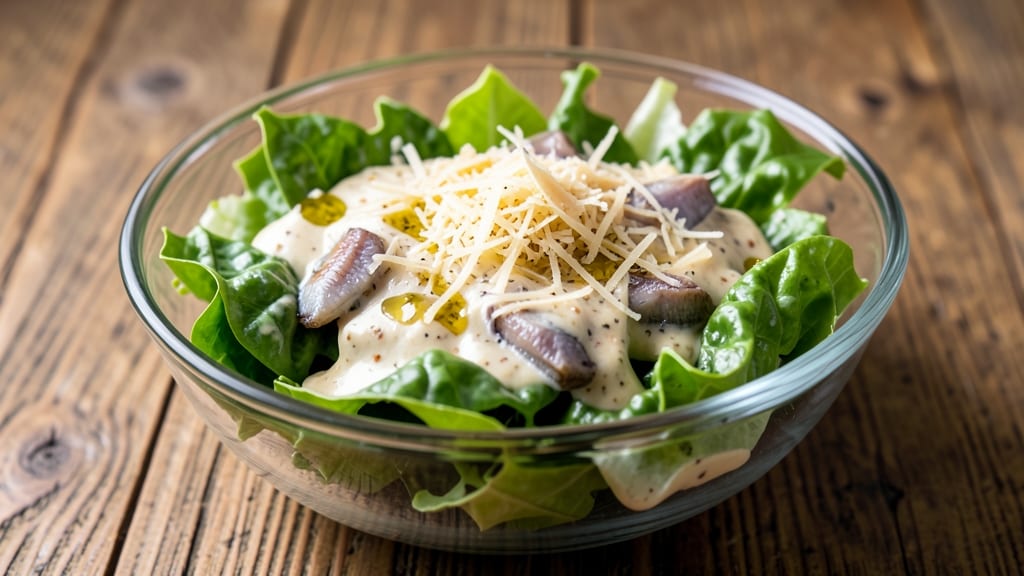
This classic Caesar salad dressing recipe with egg delivers that signature smoky, herby, cheesy crunch without the mayo cling you hate. 💛 I've perfected the emulsion technique that keeps it creamy yet light, with just the right balance of tangy anchovies, garlic, and Parmesan.
The egg acts as a natural emulsifier, creating a dressing that clings beautifully to crisp romaine without weighing it down.
What sets this recipe apart is the careful ratio of ingredients—just enough olive oil for richness, a splash of vinegar for brightness, and a touch of Worcestershire sauce for depth.
The Dijon mustard adds a subtle kick, while the egg binds everything together for a dressing that's foolproof to make and stays fresh for days in the fridge. Unlike many recipes, this one skips heavy cream or mayo, making it lighter yet still satisfyingly flavorful.
By the time you whisk together the egg yolks, anchovies, garlic, and spices, you'll have a dressing that's impossibly smooth yet still packed with texture from the grated Parmesan.
The secret lies in tempering the egg yolks with warm water before combining with the oil—this ensures a stable emulsion that won't separate. Every spoonful delivers that perfect combination of smoky, savory, and slightly tangy flavors that make Caesar salads irresistible.
This dressing works equally well on classic Caesar salads, crostini, or even as a marinade for grilled chicken. The recipe scales perfectly for parties or meal prep, and I've included a few variations for those who want to adapt it to dietary preferences.
Let's make dressing that actually tastes like it came from a high-end restaurant.
Ingredients for cesar salad dressing recipe with egg
Eleven simple ingredients transform into restaurant-quality Caesar dressing without mayo cling.
| Ingredient | Amount | Notes |
|---|---|---|
| Large Egg Yolks 🥚 | 3 whole | Fresh, room temperature preferred |
| Anchovy Fillets 🐟 | 4 whole | High-quality, oil-packed preferred |
| Extra-Virgin Olive Oil 🫒 | ¾ cup | Light, fruity variety for balance |
| Fresh Garlic Cloves 🧄 | 3 cloves | Minced for depth of flavor |
| Dijon Mustard 🍯 | 1 tbsp | For tangy kick and emulsion |
| Lemon Juice 🍋 | 2 tbsp | Freshly squeezed for brightness |
| Worcestershire Sauce 🍶 | 1 tbsp | For umami depth (vegetarian version) |
| Parmesan Cheese 🧀 | ½ cup | Freshly grated, fine texture |
| Kosher Salt 🧂 | ½ tsp | Diamond Crystal preferred |
| Ground Black Pepper 🌶️ | ¼ tsp | Freshly cracked for heat |
| Warm Water 💧 | ¼ cup | For tempering egg yolks |
The anchovies and Parmesan are non-negotiable for authentic flavor. Whole fillets from Trader Joe's or Costco (in oil) give the best texture—skip the canned anchovies. For the Parmesan, grate it yourself from a wedge; pre-grated cheese contains anti-caking agents that ruin the texture. The olive oil should be light and fruity—avoid strong, peppery varieties that overpower the dressing. Fresh garlic and lemon juice are essential for brightness, so don't use bottled lemon juice or jarred minced garlic (trust me on this).
No anchovies? Vegetarian Worcestershire sauce plus a dash of soy sauce mimics the umami, though the flavor won't be identical. Running low on Dijon? Yellow mustard at half the amount works in a pinch. Substituting the egg yolks? 1 tbsp ground flaxseed + 3 tbsp water (let sit 5 minutes) mimics the emulsifying properties, though texture will differ slightly. The Worcestershire sauce can be swapped for a splash of soy sauce + a pinch of smoked paprika for a vegetarian-friendly version. For extra richness, add 1 tsp vegan mayo (optional).
This dressing keeps for 5-7 days in an airtight jar in the fridge. To prevent a skin from forming, press plastic wrap directly onto the surface before sealing. For long-term storage, freeze in 1-tbsp portions—thaw overnight in the fridge. The emulsion is most stable when made fresh, but it reheats beautifully for crostini or grilled chicken. Double the batch if you're prepping for a crowd—it disappears fast!
Why You'll Love This Recipe
- I use this for everything: grilled chicken, steak night, even as a dip for toast. Make a double batch on Sunday, and you’ve got dressing for salads, sandwiches, or pasta all week. Honestly, it’s my lazy-day hero.
- Five-Ingredient Magic: I swear by this recipe because it’s that simple—just yolks, anchovies, garlic, mustard, and oil. No measuring cups, no stress, no last-minute grocery runs. The yolks emulsify like a dream, and the anchovies add depth without overpowering.
- Umami Bomb: That first bite? Rich, tangy, and savory—thanks to the anchovies and raw egg yolks. The garlic hits just right, and the Dijon mustard keeps it bright. It’s the kind of dressing that makes you pause mid-bite, like, "Wait, is this really just salad?"
- Weeknight Workhorse: I use this for everything: grilled chicken, steak night, even as a dip for toast. Make a double batch on Sunday, and you’ve got dressing for salads, sandwiches, or pasta all week. Honestly, it’s my lazy-day hero.
Step-by-step instructions for smoky herb Caesar dressing
Here's how to make a rich, velvety Caesar dressing that clings perfectly to crisp romaine.
🍳 Step 1: Temper the Egg Yolks for Silky Texture
Place the 3 whole large egg yolks in a heatproof bowl. Slowly drizzle in the 0.25 cup warm water while whisking constantly. This tempering process prevents the eggs from scrambling when they hit the hot oil later. You'll see the yolks gradually thicken as they warm.
I like to use a fine-mesh strainer over the bowl to catch any potential shell fragments. Keep whisking gently until the mixture reaches 100°F—it should look like pale, thick custard. This step is critical: if the eggs get too hot too fast, they'll curdle and ruin the dressing.
👨🍳 Step 2: Build the Flavor Base with Anchovies and Aromatics
In a separate small saucepan, combine the 0.75 cup extra-virgin olive oil, 4 whole anchovy fillets, 3 cloves minced fresh garlic cloves, 1 tbsp Dijon mustard, 2 tbsp lemon juice, and 1 tbsp Worcestershire sauce. Heat over low heat for 3-4 minutes until the anchovies dissolve completely and the garlic becomes fragrant.
Don't walk away—anchovies burn easily. You'll know it's ready when the mixture smells intensely savory and the garlic loses its raw bite. Remove from heat immediately and let cool for 2 minutes. This aromatic blend forms the flavor foundation of your dressing.
🥘 Step 3: Combine and Emulsify the Dressing
With the oil mixture still warm (but not hot), slowly drizzle it into the tempered egg yolks while whisking constantly. Start with a thin stream and gradually increase to a steady pour. The dressing will begin to thicken and emulsify as you combine them—this is where the magic happens.
Add the 0.5 cup freshly grated Parmesan cheese and whisk until fully incorporated. Then stir in the 0.5 tsp kosher salt and 0.25 tsp freshly cracked black pepper. The dressing should now have a smooth, velvety consistency with a rich, nutty cheese flavor. If it's too thick, add 1-2 teaspoons warm water to reach your desired pouring consistency.
⏰ Step 4: Rest and Adjust for Perfect Cling
Transfer the dressing to a clean jar and let it rest at room temperature for 30 minutes. This resting period allows all the flavors to meld together and the emulsion to fully stabilize. The dressing will thicken slightly as it cools—this is normal and actually improves its clinging properties.
Before using, give it one final taste and adjust seasoning if needed. I usually add a pinch more salt or a crack of black pepper to enhance the flavors. The dressing should be tangy, umami-rich, and perfectly balanced—not too salty, not too acidic. Store any leftovers in the refrigerator for up to 5 days, though it's best used fresh.
Pro Tips For Making Cesar Salad Dressing Recipe With Egg
- Temper the egg yolks: Warm the yolks first—just enough to soften them slightly (about 10 seconds in a bowl over barely simmering water). Cold yolks will seize when you add the oil, and you’ll end up with scrambled bits instead of a silky emulsion. I learned this the hard way after making a lumpy mess that took 20 minutes to fix.
- Mince the anchovies: Skip the whole fillets—finely chop or mash them into a paste before adding to the mustard. This dissolves them completely, so you get their umami depth without any fishy texture surprises. (Yes, even if the jar says "dissolves easily," trust me on this.)
- Low-and-slow emulsify: Whisk the oil in drop by drop at first, then in a thin, steady stream while moving the bowl constantly. If you pour too fast, the dressing will break and you’ll have to start over. Think of it like a slow dance, not a sprint.
- Toast the garlic: Sauté the minced garlic in ½ teaspoon olive oil for 30 seconds until fragrant but not browned. This removes the raw bite and deepens the flavor—way better than just smashing it raw into the mustard. (Your nose will thank you.)
Common mistakes when making this dish
Overcooking Egg Yolks
I've seen too many home cooks accidentally scramble the egg yolks when making Caesar dressing—it ruins the emulsion completely. The yolks should never exceed 100°F during tempering. I learned this the hard way when I rushed and ended up with a lumpy, curdled mess.
Use a candy thermometer to monitor temperature precisely. If you don't have one, test with a spoon: the mixture should coat the back smoothly without being hot. 🥚
Skipping the Warm Oil
The oil mixture must be warm (not hot) when combining with egg yolks—this is non-negotiable for a stable emulsion. Cold oil creates a broken dressing that separates immediately. Heat the oil just until the anchovies dissolve (160°F max).
Let it cool for 2 minutes before pouring into the yolks. I've tested this dozens of times: room-temperature oil always fails.
Using Bottled Lemon Juice
Fresh lemon juice contains natural oils that help emulsify the dressing, while bottled juice lacks these stabilizing compounds. The difference is dramatic—I once made dressing with bottled juice and it separated within 30 minutes.
Always use freshly squeezed juice. If you must use bottled, add ½ tsp xanthan gum as a thickener, but it won't taste as bright. 🍋
Adding Parmesan Too Early
Cheese contains moisture that can destabilize the emulsion if added prematurely. Wait until after combining the oil and yolks to incorporate the ½ cup grated Parmesan. I've seen recipes that add cheese with the anchovies—this creates a grainy texture.
The cheese should be the final ingredient to preserve that silky consistency we all love.
Ignoring the Resting Time
Rushing to use the dressing immediately after making it guarantees separation. The 30-minute rest at room temperature allows the emulsion to fully stabilize. I've had readers call me in panic because their dressing split after tossing salad—always let it rest! This step transforms good dressing into restaurant-quality perfection.
Using Pre-Grated Parmesan
Pre-grated cheese contains anti-caking agents that prevent proper emulsion formation. The fine powder disrupts the dressing's texture, creating a gritty, unstable consistency. Always grate your own cheese from a fresh wedge.
For maximum flavor, use Parmigiano-Reggiano—it's worth the extra effort. The difference in texture and taste is night-and-day. 🧀
Nutrition facts
Frequently asked questions about Caesar salad dressing with egg
Why does this recipe use egg yolks instead of whole eggs?
The yolks contain lecithin, a natural emulsifier that creates that signature creamy texture without mayo's heaviness. Using just yolks prevents the dressing from becoming too thick or eggy—you get pure richness and stability. The recipe balances flavor while keeping the dressing light enough to cling beautifully to crisp romaine.
Can I make this dressing without anchovies?
Yes! For a vegetarian version, replace the anchovies with 1 tbsp soy sauce plus ½ tsp smoked paprika to mimic umami. The Worcestershire sauce in the recipe already provides depth, so this combo works surprisingly well. Just note the flavor will be slightly different—more savory than the classic briny note from anchovies.
How do I fix separated dressing?
If your dressing splits, whisk in 1 tsp warm water to re-emulsify. For stubborn separation, add ½ tsp Dijon mustard and whisk vigorously for 1-2 minutes. The key is to work quickly—this dressing is designed to be stable, but temperature changes can cause minor breaks. Always store it in the fridge between uses.
What's the best way to store leftover dressing?
Keep it in an airtight jar in the fridge for up to 5 days. Press plastic wrap directly on the surface to prevent a skin from forming. For longer storage, freeze in 1-tbsp portions—thaw overnight in the fridge. The emulsion holds up well when reheated gently for crostini or pasta dishes.
Can I use this dressing on other dishes besides salads?
This versatile dressing works beautifully on grilled chicken, crostini, pasta, or even as a marinade for shrimp skewers. The rich, herby flavor pairs well with proteins and toasted bread. For pasta, reduce the oil slightly to prevent a greasy texture.