
Salads
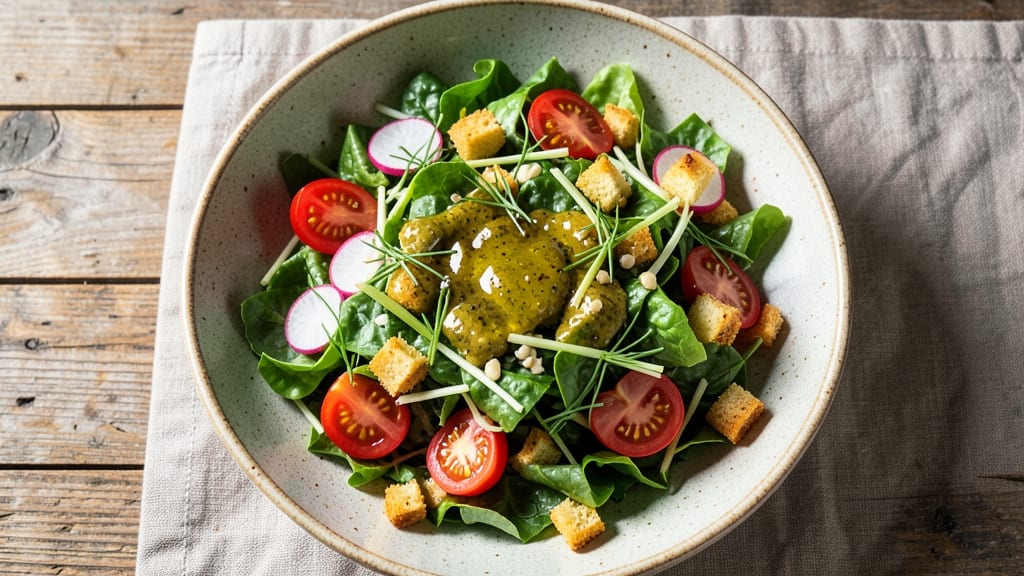
This chopped salad vinaigrette recipe transforms any bowl of greens into a vibrant, herb-infused masterpiece with just five simple ingredients. The secret lies in the 3:1 oil-to-acid ratio, which creates a silky emulsion that clings perfectly to chopped vegetables without overpowering their natural flavors.
I developed this recipe after years of testing—it’s the one that finally balances tangy brightness with rich, herby depth every time.
What makes this dressing truly special is its versatility and simplicity. You’ll use basic pantry staples like olive oil, red wine vinegar, Dijon mustard, and fresh herbs, but the technique ensures restaurant-quality results.
The whisking method breaks the oil into fine droplets, creating a smooth, velvety texture that coats every leaf and ingredient in your salad. No special equipment needed—just a bowl and a whisk.
The result is a dressing that’s bright enough to cut through rich ingredients like avocado or cheese, yet delicate enough to let the natural flavors of your vegetables shine.
This is the kind of dressing that elevates a simple chopped salad into something truly special—perfect for meal prep, potlucks, or a quick weeknight dinner. The herbs stay fresh and aromatic, and the tangy-sweet balance makes it irresistible.
Use it on your favorite chopped salads, grain bowls, or even as a marinade for grilled vegetables. The recipe makes enough for two generous servings, so double it if you’re feeding a crowd. Here’s everything you need to create this foolproof, herb-infused dressing in just minutes.
Ingredients for chopped salad vinaigrette
Five ingredients, perfect balance—this herb-infused vinaigrette elevates any salad in minutes.
| Ingredient | Amount | Notes |
|---|---|---|
| Extra-Virgin Olive Oil 🫒 | ¾ cup | High-quality, fruity variety preferred |
| Red Wine Vinegar 🍷 | ¼ cup | Dry, bold flavor for tang |
| Dijon Mustard 🌿 | 1 tbsp | Whole grain for texture |
| Fresh Tarragon 🌿 | ¼ cup | Finely chopped, stems removed |
| Fresh Chives 🌿 | ¼ cup | Finely chopped for mild onion flavor |
| Granulated Garlic 🧄 | ½ tsp | Or 1 minced garlic clove |
| Sea Salt 🧂 | ½ tsp | Diamond Crystal preferred |
| Black Peppercorns 🌶️ | ¼ tsp | Freshly cracked for aroma |
The olive oil is non-negotiable here—look for extra-virgin with fruity notes at Whole Foods or Trader Joe's. Their bulk section has great options too. Red wine vinegar should be dry, not sweet—Bragg or Annie's are reliable brands. Fresh herbs make all the difference: tarragon adds an anise-like depth, while chives bring subtle onion brightness. If you can't find fresh tarragon, dried at one-third the amount works in a pinch, but it won't be as vibrant. The garlic? Granulated is convenient, but fresh minced cloves give more complexity if you're feeling fancy.
No Dijon mustard? Whole-grain mustard is the closest substitute—it adds that same textural contrast. Short on tarragon? Fresh basil or parsley at the same amount keeps it fresh-tasting. The 3:1 oil-to-acid ratio is key—if you're doubling, stick to that ratio or the dressing will be too sweet or too sharp. For extra richness, add 1 tsp of honey or maple syrup. The salt and pepper are simple but crucial—Diamond Crystal kosher salt dissolves perfectly, and freshly cracked peppercorns add aroma that pre-ground can't match.
This dressing keeps beautifully—store in an airtight jar in the fridge for up to 1 week. The flavors actually improve overnight as everything melds. For meal prep, divide into small jars so you can grab just what you need. If it thickens, just whisk in a splash of water or vinegar. The emulsion breaks down over time, but a quick whisk brings it back to silky perfection. Double the recipe and freeze half—perfect for when you're short on time. Just thaw in the fridge overnight.
Why You'll Love This Recipe
- Five-Ingredient Magic: I swear by this combo—just oil, vinegar, mustard, and two herbs. That’s it. No measuring cups, no fancy tools, just a jar and a whisk. Honestly, I’ve made it in my kitchen while waiting for pasta to boil.
- Herb-Packed Punch: The tarragon and chives hit different—bright, slightly sweet, with that tangy mustard bite. It’s the kind of dressing that makes even a simple chopped salad feel like a restaurant dish. (Yes, even on a Tuesday night.)
- Meal Prep MVP: Make a big batch on Sunday, and you’ve got dressing for salads, roasted veggies, or even drizzled over grilled chicken all week. Between us, I’ve used it on everything from charcuterie boards to scrambled eggs. It’s that good.
- Dollar Stretcher: Extra-virgin olive oil is an investment, but this recipe uses just enough to make it worth it. A little goes a long way, and the vinegar and mustard? Cheap as chips. I’ve fed my whole family for under five bucks with this dressing alone.
Step-by-step instructions for herb-infused vinaigrette
Here's how to make a bright, herb-packed dressing that elevates any chopped salad.
Whisk Together the Base Ingredients
In a medium bowl, combine the 0.75 cup extra-virgin olive oil with the 0.25 cup red wine vinegar. I like to use a whisk for this step—it creates a smooth emulsion right from the start. Add the 1 tablespoon Dijon mustard and whisk vigorously for about 30 seconds until fully incorporated.
The Dijon mustard acts as an emulsifier, helping the oil and vinegar blend seamlessly. You'll notice the mixture thicken slightly as you whisk—this is normal and indicates the mustard is working. If you prefer a smoother texture, you can strain the dressing through a fine-mesh sieve later, but I find the slight graininess adds character.
Add the Fresh Herbs and Aromatics
Next, fold in the 0.25 cup finely chopped fresh tarragon and 0.25 cup finely chopped fresh chives using a rubber spatula. The tarragon brings an anise-like sweetness while the chives add a delicate onion note—together they create a complex herb profile that stands up to bold salad ingredients. Sprinkle in the 0.5 teaspoon granulated garlic and whisk gently to distribute evenly.
Here's the thing—fresh herbs make all the difference. If your tarragon or chives have woody stems, remove them completely before chopping. For maximum flavor, I recommend using the herbs within a day of purchasing, as they lose potency quickly once cut. The dressing should now have a vibrant green hue with visible herb flecks throughout.
Season and Emulsify the Dressing
Add the 0.5 teaspoon sea salt and 0.25 teaspoon freshly cracked black peppercorns to the bowl. Give everything one final whisk to combine. At this point, you might notice the dressing separating slightly—that's completely normal. To fix this, simply whisk vigorously for another 30-45 seconds until it comes back together into a smooth, glossy emulsion.
The key to a perfect vinaigrette is patience during this emulsification process. If the dressing still looks broken after whisking, add 1 teaspoon water at a time while whisking continuously. The water helps bind the oil and vinegar molecules together. Taste and adjust the seasoning—you might need a touch more salt or a splash of vinegar to balance the flavors to your preference.
Let It Rest and Develop Flavor
Cover the bowl with plastic wrap and let the dressing rest at room temperature for at least 15 minutes before using. This resting period allows the flavors to meld together and the dressing to reach its full potential. I know it's tempting to use it immediately, but trust me—this short wait makes a noticeable difference in the final result.
During this time, the herbs will release their essential oils and the garlic will develop a more complex aroma. The dressing should take on a richer color and a more cohesive texture. If you're short on time, you can use it after 5 minutes, but the flavor will be more vibrant after the full 15 minutes. Store any leftovers in an airtight container in the refrigerator for up to 5 days, though I rarely have any leftovers!
Pro Tips For Making Chopped Salad Vinaigrette
- Whisk Like You Mean It: Mix the Dijon mustard and vinegar first—no oil yet—until it’s fully emulsified and smooth. Adding olive oil to unmixed mustard just makes a clumpy mess that won’t blend properly, and you’ll end up with a salad dressing that separates like a bad relationship.
- Chop Herbs at the Last Minute: Fresh tarragon and chives lose their brightness fast once cut, so save them for the final step. Toss them in just before serving—this keeps their color vibrant and flavor sharp, not wilted or bitter.
- Balance the Vinegar Slowly: Start with just 1 tablespoon of red wine vinegar and taste before adding more. Too much upfront makes the dressing harsh; you can always add olive oil later to mellow it out, but you can’t take vinegar away.
- Use Cold Oil, Not Room-Temp: Pull the extra-virgin olive oil straight from the fridge—it emulsifies better when cold, giving you a smoother, silkier dressing. Warm oil makes the mustard and vinegar fight each other, and your dressing will split faster than a bad joke.
Serving suggestions for leftovers
Salad Pairings
This herb-infused vinaigrette shines on classic chopped salads like my go-to mixed greens with cucumber, cherry tomatoes, and red onion. The bright acidity balances the crunchy textures perfectly.
For a heartier option, toss it with roasted sweet potatoes, avocado, and crispy chickpeas—the tarragon adds an unexpected depth that complements the earthy flavors. 🥗
Try it on grain bowls too! I love pairing it with quinoa, shredded kale, and grilled chicken for a protein-packed meal. The dressing clings beautifully to the grains while keeping the dish light.
For a vegetarian option, swap in white beans and roasted vegetables—the herby notes make the dish feel fresh and vibrant.
Protein Additions
Add grilled shrimp or seared scallops to your salad for a restaurant-worthy twist. The dressing's tangy brightness cuts through the richness of seafood beautifully. For a vegetarian option, crispy tofu or marinated tempeh works wonderfully—just toss them with the dressing before serving to let the flavors meld. 🍤
Don’t overlook hard-boiled eggs or smoked salmon as protein upgrades. The eggs add a creamy contrast, while the salmon’s delicate flavor pairs perfectly with the tarragon and chives. I often add a sprinkle of everything bagel seasoning on top for extra texture and a savory kick.
Garnish Ideas
Finish your salad with toasted pumpkin seeds or sunflower seeds for crunch—just sprinkle them on top right before serving. A few crumbled feta or goat cheese adds creaminess that balances the dressing’s acidity. For a pop of color, toss in edible flowers or thinly sliced radishes. 🌸
Fresh mint leaves or basil can elevate the herb profile even further. If you’re feeling fancy, drizzle with a touch of honey or balsamic glaze for extra sweetness. The key is to keep garnishes light so the dressing remains the star of the show.
Meal Prep Tips
Make this dressing ahead of time and store it in a small mason jar in the fridge. When ready to use, simply shake it up—no whisking required! I like to prep two days’ worth of salads at once, storing the dressing and salad components separately to keep everything crisp. 📅
For make-ahead salads, store the dressing in a separate container and toss it with the salad just before eating. This prevents sogginess and keeps the greens fresh. If you’re prepping for a crowd, double the recipe and freeze half—just thaw it overnight in the fridge before using.
Nutrition facts
Frequently asked questions
Can I make this vinaigrette without fresh herbs?
Yes! If you don't have fresh tarragon or chives, use 1 tablespoon dried tarragon (one-third the amount) or 1 tablespoon dried parsley for a similar herbaceous note. For extra flavor, add 1 teaspoon dried basil or thyme—just remember dried herbs are more concentrated, so start with less.
How do I fix a dressing that's too thick or separated?
If your dressing thickens, whisk in 1 teaspoon water or vinegar at a time until it reaches your desired consistency. For separation, whisk vigorously for 30-45 seconds—the mustard will re-emulsify it. If it still looks broken, add 1 teaspoon Dijon mustard and whisk again.
What's the best way to store leftover vinaigrette?
Store in an airtight jar or container in the fridge for up to 5 days. The flavors actually improve overnight! For longer storage, freeze half the batch in a small jar—thaw in the fridge overnight before using. Always shake well before serving to re-emulsify.
Can I use this dressing on other dishes besides salads?
It works beautifully as a marinade for grilled vegetables or chicken (30-60 minutes max). Try drizzling it over roasted potatoes or warm grains like quinoa or farro. The herby notes also make it perfect for dipping bread or topping avocado toast.
Why does my vinaigrette taste bitter?
Bitter flavors usually come from over-whisking herbs or using old vinegar. Try reducing the herbs to 2 tablespoons total or adding 1 teaspoon honey to balance the acidity. If using red wine vinegar, check the date—older vinegar can develop harsh notes. For extra depth, add 1/4 teaspoon lemon zest to brighten the flavor.