
Salads
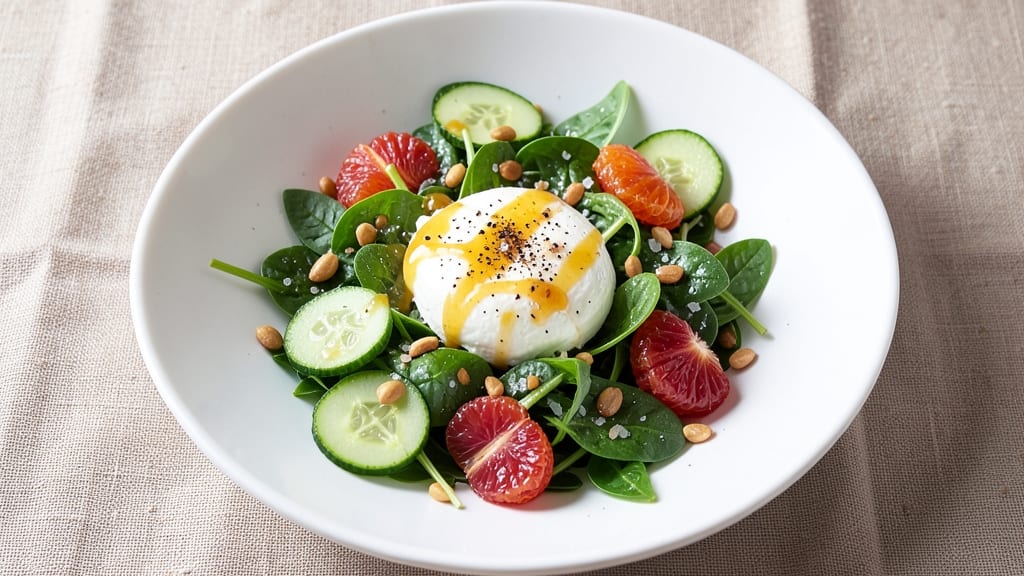
This citrus burrata salad transforms a simple lunch into a restaurant-worthy experience by balancing bright, juicy citrus with velvety burrata and crisp greens. The secret lies in the citrus segments—hand-cut for maximum sweetness and acidity—and the perfect dressing that ties everything together without overpowering the delicate cheese.
I developed this recipe after years of experimenting with burrata dishes, and it’s the one that finally delivers on both creaminess and freshness.
The foundation starts with arugula and baby spinach, their peppery bite complementing the rich burrata and tangy citrus. The burrata itself is the star—ripped into generous pieces and arranged to melt slightly under the citrus’s vibrant acidity.
A light honey-lime dressing adds just enough sweetness to balance the sharpness, while toasted nuts or seeds provide a satisfying crunch. Every bite is a harmony of textures and flavors, making this salad feel indulgent yet light.
What sets this dish apart is the plating: drizzled citrus syrup over the burrata creates a glossy finish, while fresh herbs like basil or mint add a pop of color and freshness. The result is a salad that’s as visually stunning as it is delicious—creamy, bright, and perfectly balanced.
It’s the kind of dish that elevates a weeknight meal into something special without requiring hours in the kitchen.
Serve this salad as a main course with crusty bread or as a side to grilled fish or chicken. The recipe scales easily for gatherings, and leftovers keep well for a day if stored properly. Here’s how to make it shine.
Ingredients for citrus burrata salad
Fresh, velvety burrata meets vibrant citrus and crisp greens in this restaurant-worthy salad.
| Ingredient | Amount | Notes |
|---|---|---|
| Burrata Cheese 🧀 | 1 lb | Fresh, chilled, whole ball |
| Persian Cucumber 🥒 | 1 whole | Thinly sliced, skin on |
| Blood Orange Segments 🍊 | 2 cups | Hand-cut, juicy variety |
| Arugula 🌿 | 4 cups | Fresh, peppery leaves |
| Baby Spinach 🌱 | 2 cups | Tender, washed leaves |
| Extra-Virgin Olive Oil 🫒 | ¼ cup | High-quality, fruity |
| Honey 🍯 | 2 tbsp | Wildflower preferred |
| Fresh Lime Juice 🍋 | ¼ cup | Freshly squeezed |
| Pistachios 🥜 | ½ cup | Toasted, shelled |
| Fresh Basil Leaves 🌿 | ¼ cup | Thinly sliced |
| Flaky Sea Salt 🧂 | 1 tsp | For finishing |
| Freshly Cracked Black Pepper 🌶️ | ½ tsp | Freshly ground |
| Crusty Bread 🍞 | 1 piece | For serving, optional |
The burrata is the star—look for a whole ball from a specialty cheese shop or high-end grocery store like Whole Foods or Eataly. The fresher, the better; it should have a smooth, creamy texture with a slight give when pressed. Blood oranges are ideal for their natural sweetness, but navel oranges work too. For the greens, arugula and baby spinach provide the perfect peppery contrast. If you can't find Persian cucumbers, regular cucumbers work, but they'll need extra slicing for similar texture. Pistachios add a luxurious crunch—toast them in a dry pan for 2-3 minutes until fragrant and golden.
No blood oranges? Substitute with grapefruit segments for a sharper bite, or stick with navel oranges for a milder sweetness. The honey-lime dressing is non-negotiable for balance—use raw honey for the best flavor, and always fresh lime juice. If you're short on time, pre-cut the citrus segments and store them in a sealed container with a paper towel to absorb excess moisture. The pistachios can be swapped for toasted almonds or walnuts, but they'll change the flavor profile slightly. For a nut-free option, toasted pumpkin seeds add a similar crunch without the richness.
Burrata keeps best in its original packaging, consumed within 2-3 days of purchase. Store it in the coldest part of your fridge, ideally in a sealed container. The citrus segments and greens should be prepped just before serving to maintain crispness. The dressing can be made 1 day ahead and stored in an airtight container. For a showstopping presentation, plate the salad on chilled glassware and drizzle the citrus syrup over the burrata just before serving. Leftovers, if any, keep for 1 day in the fridge, but the burrata will soften—best enjoyed fresh.
Why You'll Love This Recipe
- No Knife Skills Needed: Honestly, the hardest part is opening the burrata—everything else is just tossing. Persian cucumbers slice in seconds, blood oranges pop apart with your hands, and the greens? Just tear them. I’ve made this while scrolling through emails, and it still looks intentional.
- Taste Like a Luxury Picnic: That creamy burrata? It melts into the bright, juicy blood orange segments like a dream. The arugula adds a peppery kick, and the Persian cucumber keeps it refreshing without overpowering. It’s the kind of dish that makes you feel fancy without trying.
- Weeknight Dinner or Date Night: Between us, this is my go-to when I don’t want to cook but still want to impress. For a solo night, it’s a satisfying bowl. For two? Add a drizzle of honey and a sprinkle of flaky salt, and suddenly it’s a restaurant-worthy plate. No stress, all flavor.
- Leftovers? Not a Problem: The greens stay crisp, the citrus keeps its pop, and the burrata—well, you’ll eat it all before it gets soggy. But if you’re prepping ahead, store the dressing separately and assemble right before serving. It’s the kind of salad that tastes just as good cold the next day as it does fresh.
Step-by-step instructions for citrus burrata salad
This elegant assembly balances creamy burrata with vibrant citrus and fresh greens for a restaurant-worthy dish.
Prepare the Citrus Dressing
In a small bowl, whisk together the 0.25 cup extra-virgin olive oil, 2 tbsp honey, and 0.25 cup fresh lime juice until fully emulsified. The dressing should be smooth with a bright, golden hue—this indicates proper integration of the citrus and honey. Taste and adjust seasoning with a pinch of flaky sea salt if needed, then set aside.
This dressing serves as the flavor bridge between the creamy burrata and tart citrus segments. The honey's floral notes complement the blood orange's natural sweetness while the olive oil provides a luxurious mouthfeel. Keep this mixture at room temperature until ready to use.
Assemble the Base Greens
In a large mixing bowl, combine the 4 cups arugula and 2 cups baby spinach. Gently toss with your hands just until the greens are evenly distributed—avoid overmixing to preserve their delicate texture. The leaves should look vibrant and slightly wilted from the natural oils released during handling.
This base forms the salad's foundation. The peppery arugula and tender spinach provide the perfect contrast to the creamy burrata and citrus segments. I like to use my hands for this step to ensure even distribution without bruising the leaves.
Add the Citrus and Herbs
Add the 2 cups blood orange segments and 0.5 cup toasted pistachios to the greens. Sprinkle over the 0.25 cup fresh basil leaves, then gently fold everything together with a large spoon. The blood orange segments should be evenly distributed throughout the greens, with their juices beginning to slightly macerate the leaves.
Here's where the salad starts to come together visually. The vibrant orange color of the blood orange segments creates striking contrast against the green base, while the toasted pistachios add both texture and nutty depth. The basil leaves add a fresh, aromatic dimension that ties everything together.
Arrange the Burrata and Dress
Carefully place the 1 lb burrata cheese in the center of the salad bowl, gently tearing open the cheesecloth to expose its creamy interior. Drizzle the prepared citrus dressing evenly over the greens and citrus segments, being careful not to disturb the burrata's delicate structure.
This is the moment that matters: the creamy burrata should remain intact while the dressing enhances the other components. The cheese's rich texture will contrast beautifully with the bright citrus and peppery greens. Work quickly to prevent the burrata from becoming too warm.
Finish and Serve
Sprinkle the salad with 1 tsp flaky sea salt and 0.5 tsp freshly cracked black pepper, then gently toss everything together one final time. Serve immediately on chilled plates, with the 1 piece crusty bread on the side for dipping or tearing into pieces to complement each bite.
The final presentation should showcase the salad's vibrant colors and textures. Each bite should deliver a perfect balance of creamy burrata, tangy citrus, nutty pistachios, and peppery greens. The crusty bread adds a satisfying crunch that cuts through the richness of the burrata.
Pro Tips For Making Citrus Burrata Salad
- CHILL THE BURRATA FIRST: Take that burrata out of the fridge 10 minutes before serving—room temp makes it creamier and easier to scoop. I learned this the hard way when I tried to slice it straight from the fridge and ended up with a sad, rubbery mess. Trust me, this small step makes a real difference.
- PEEL BLOOD ORANGES FAST: Use a paring knife to slice off the peel in one long strip, then pull the segments free with your fingers—no peeling each one individually. It’s faster, and you’ll get cleaner segments with less juice loss. (Yes, even if you’re impatient like me.)
- DRESS THE GREENS LAST: Toss the arugula and spinach with the dressing right before serving, or they’ll wilt into a sad, limp pile. Burrata and citrus need fresh greens to shine, so resist the urge to prep everything ahead. Two minutes extra keeps the texture crisp.
- SALT THE CUCUMBER SLICES: Sprinkle Persian cucumber slices with flaky salt right after cutting and let them sit for 5 minutes—it draws out excess water and keeps them from making your salad soggy. I skip this sometimes, and the dish always feels less balanced. Worth the wait.
Serving suggestions for this dish
Plating Like a Pro
Start with a chilled glass plate to keep the burrata cool and prevent it from melting too quickly. Arrange the arugula and spinach in a loose, natural pile at the base—this creates visual depth.
Place the blood orange segments around the edges for a pop of color, then nestle the burrata in the center, gently tearing open the cheesecloth to expose its creamy interior. 🌟
Drizzle the honey-lime dressing in a zigzag pattern over the greens and citrus, avoiding the burrata itself. Sprinkle the toasted pistachios and fresh basil leaves on top, then finish with a pinch of flaky sea salt and freshly cracked black pepper.
The contrast of textures and colors will make your plate look as delicious as it tastes.
Beverage Pairings
A crisp Italian Pinot Grigio complements the salad beautifully—its bright acidity cuts through the richness of the burrata while enhancing the citrus notes. For a non-alcoholic option, try sparkling blood orange soda (like San Pellegrino Aranciata Rossa) for a refreshing, bubbly contrast. 🍷
If you prefer beer, a light lager like Peroni or a Belgian witbier works well. The citrusy notes in the witbier mirror the blood oranges, while the lager’s crispness balances the creamy burrata. Avoid heavy, malty beers that could overpower the delicate flavors.
Serving Suggestions
This salad shines as a light lunch or elegant appetizer for dinner parties. Serve it with crusty bread on the side for dipping or tearing into pieces to complement each bite. The bread also helps soak up any extra citrus dressing, making every bite more satisfying. 🍞
For a heartier meal, pair it with grilled shrimp skewers or seared scallops—the protein adds substance while keeping the dish light. If you're serving a crowd, double the recipe and prepare the dressing and citrus segments ahead of time to streamline assembly.
Garnish Upgrades
Add edible flowers like nasturtiums or microgreens for a restaurant-worthy touch. Their delicate flavors and vibrant colors elevate the presentation without overpowering the main ingredients. I like to scatter them lightly over the burrata and greens. 🌸
For an extra layer of flavor, drizzle a light citrus syrup (simmer ¼ cup honey with ¼ cup water and 2 tbsp blood orange juice for 5 minutes) over the burrata just before serving.
This adds a glossy finish and intensifies the citrus notes. Store any leftover syrup in the fridge for up to 3 days.
Nutrition facts
Frequently asked questions
Can I substitute regular oranges for blood oranges in this salad?
Yes, but expect a slightly different flavor profile. Blood oranges provide a natural sweetness with subtle berry notes, while regular oranges are milder and less complex. For a similar tangy brightness, try grapefruit segments—they're more acidic and pair well with burrata's creaminess. If using regular oranges, increase the honey in the dressing by 1 teaspoon to balance the flavor.
How do I keep the burrata from getting too soft or melting?
Work quickly when assembling and serve immediately—burrata softens at room temperature. Keep the cheese chilled until the last moment, and use a cool plate when serving. If the salad sits too long, the burrata will become overly soft but still safe to eat. For extra stability, place the burrata on top of the greens rather than nestling it in the bowl.
What's the best way to store leftovers?
Store the salad components separately in airtight containers. Keep the greens and citrus in one container, the dressing in another, and the burrata in its original packaging. Reassemble just before serving, as the burrata won't hold its texture well when refrigerated. Leftovers keep for 1 day—the greens may wilt, but the citrus and dressing remain fresh for flavor.
Can I make this salad ahead of time?
Prepare the dressing and citrus segments 1 day ahead—they store well in the fridge. Toast the nuts and chop the herbs the day before, too. Assemble the salad just before serving to maintain crispness. The burrata is best added fresh, but you can tear it open and store it separately in its cheesecloth, covered tightly with plastic wrap, for up to 2 hours before serving.
Why does my dressing look separated?
This happens when the citrus juice and honey aren't fully emulsified. Whisk vigorously for 30 seconds or use a small blender to combine the ingredients smoothly. If it separates again, add 1 teaspoon of Dijon mustard to help stabilize the emulsion. The dressing should be silky and golden—this indicates proper integration of all components.